Description
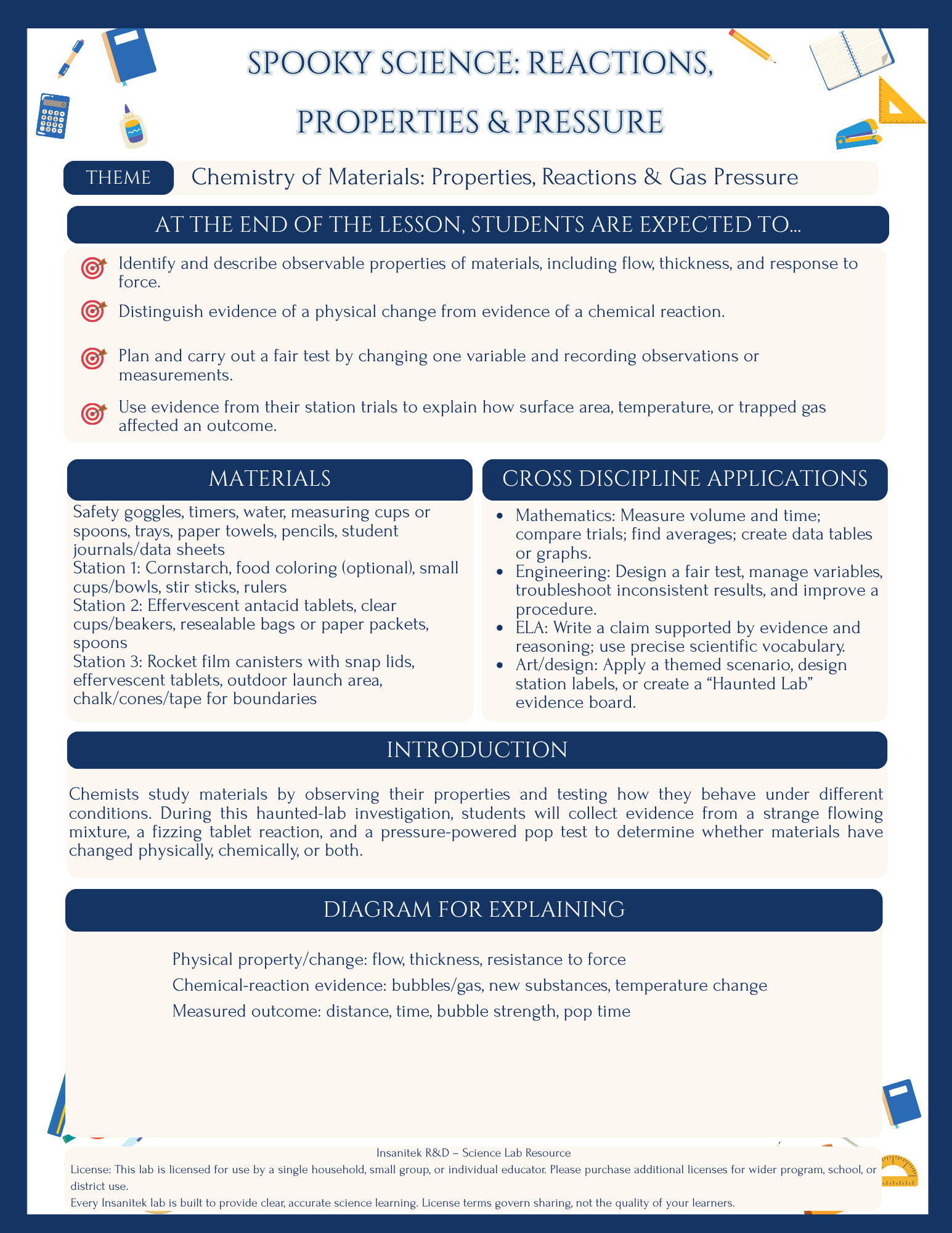
A Halloween-themed lab with real chemistry
A bowl of “ectoplasm” that flows slowly but resists a quick tap. A witch’s cauldron full of fizzing tablets. A crypt canister that pops as gas pressure builds.
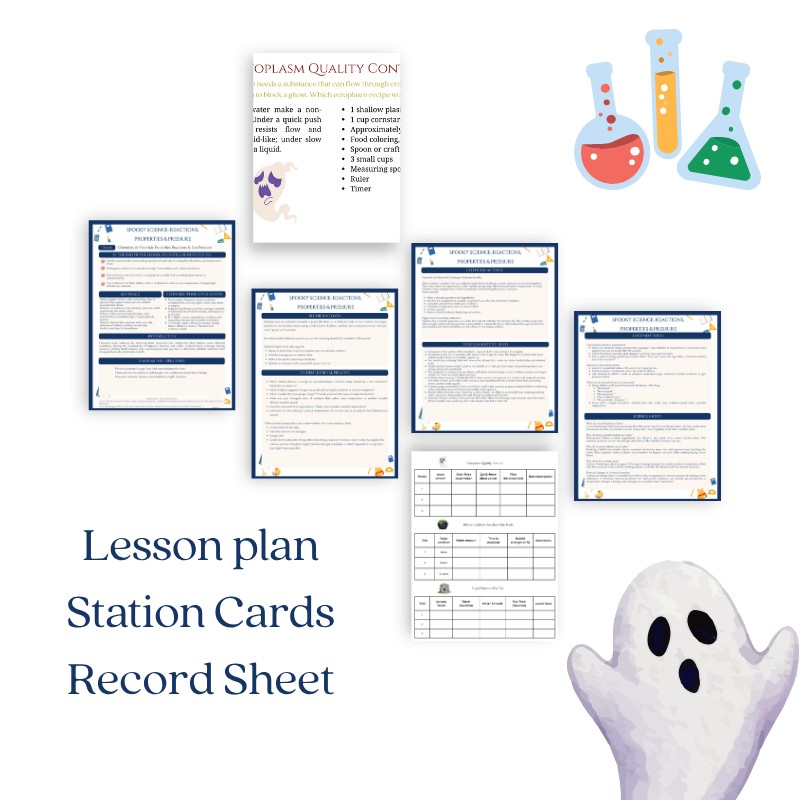
This is not just a seasonal science craft. Spooky Science: Reactions, Properties & Pressure gives homeschool learners a structured way to observe materials, measure outcomes, test variables, and build evidence-based explanations. The Halloween flavor makes it memorable; the chemistry and experimental design make it worthwhile.
Learners investigate a central scientific question:
How can we use evidence to tell whether materials are changing physically, reacting chemically, or building pressure?
What is included
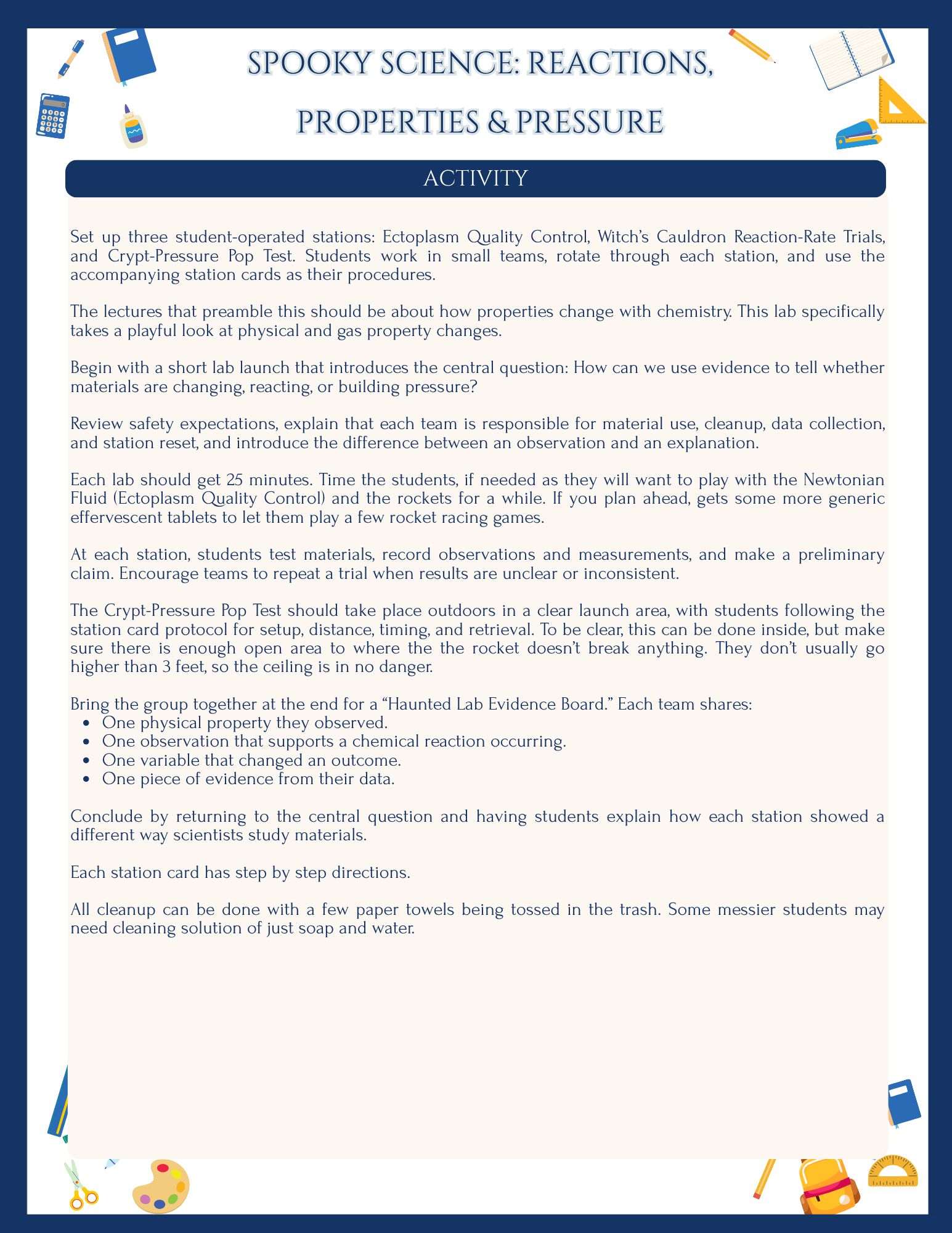
This printable workshop lab is built around three hands-on investigation stations:
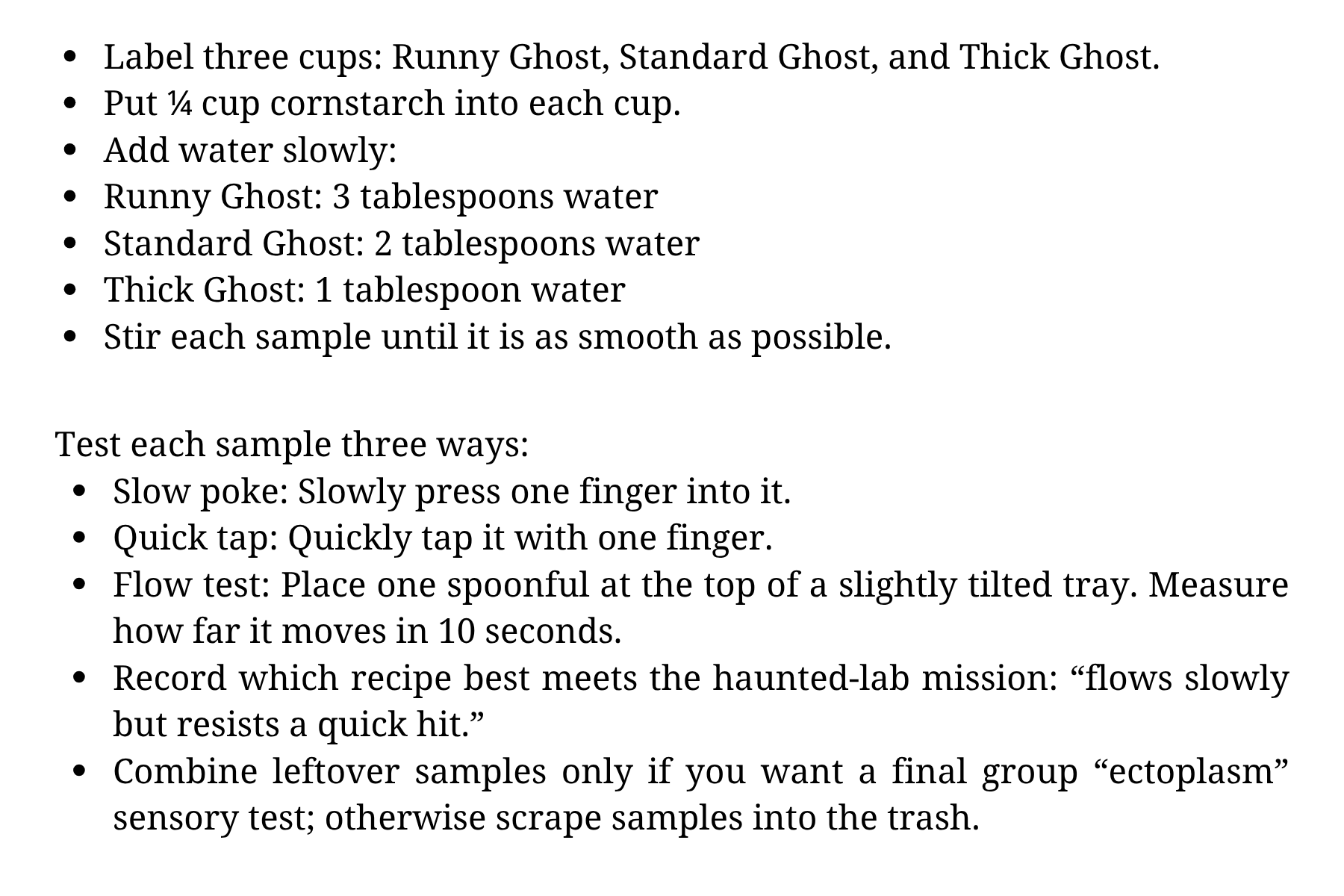
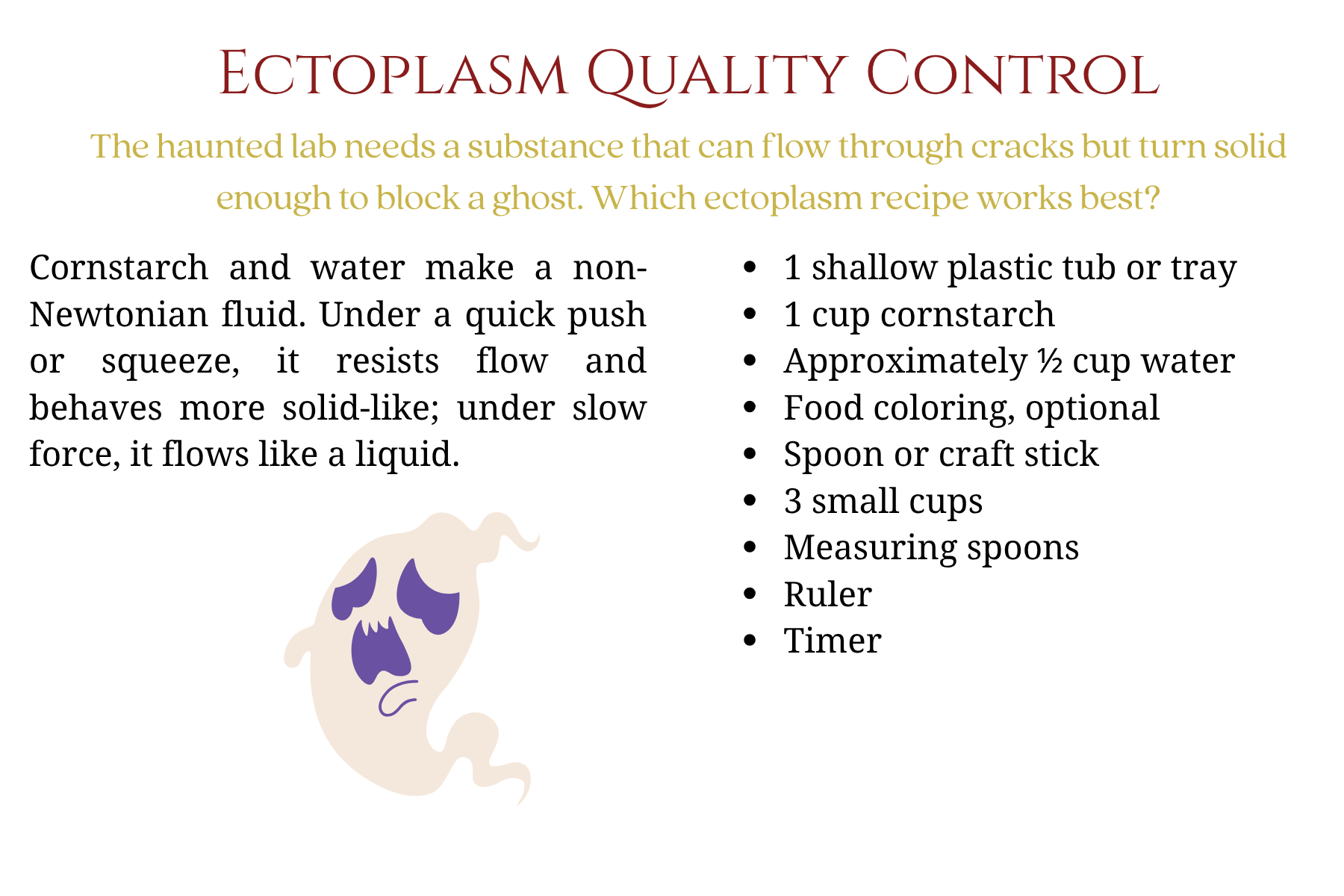
- Ectoplasm Quality Control: Make and test a cornstarch-and-water non-Newtonian fluid. Learners compare its behavior under slow versus sudden force and describe observable physical properties such as flow, thickness, and resistance.
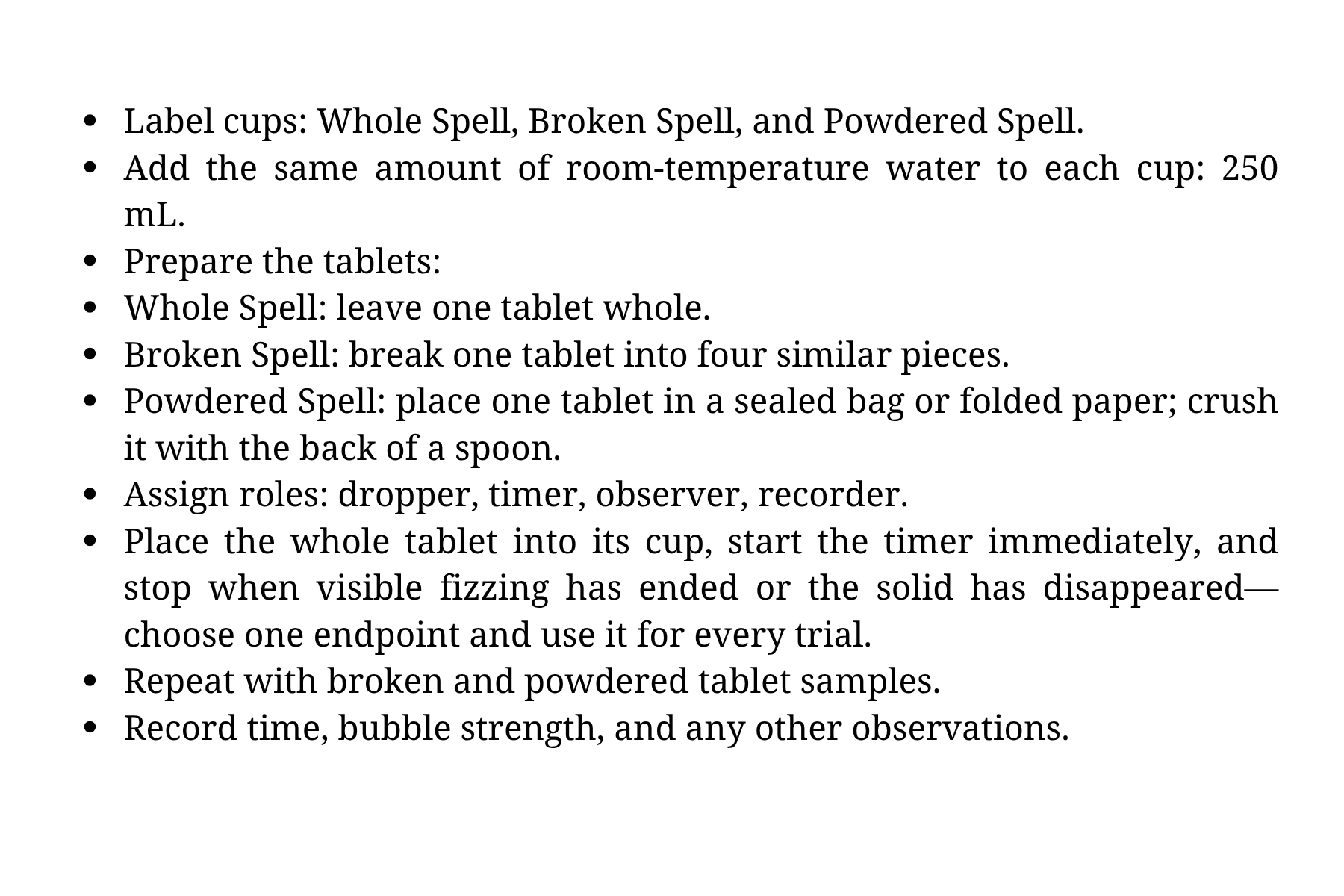
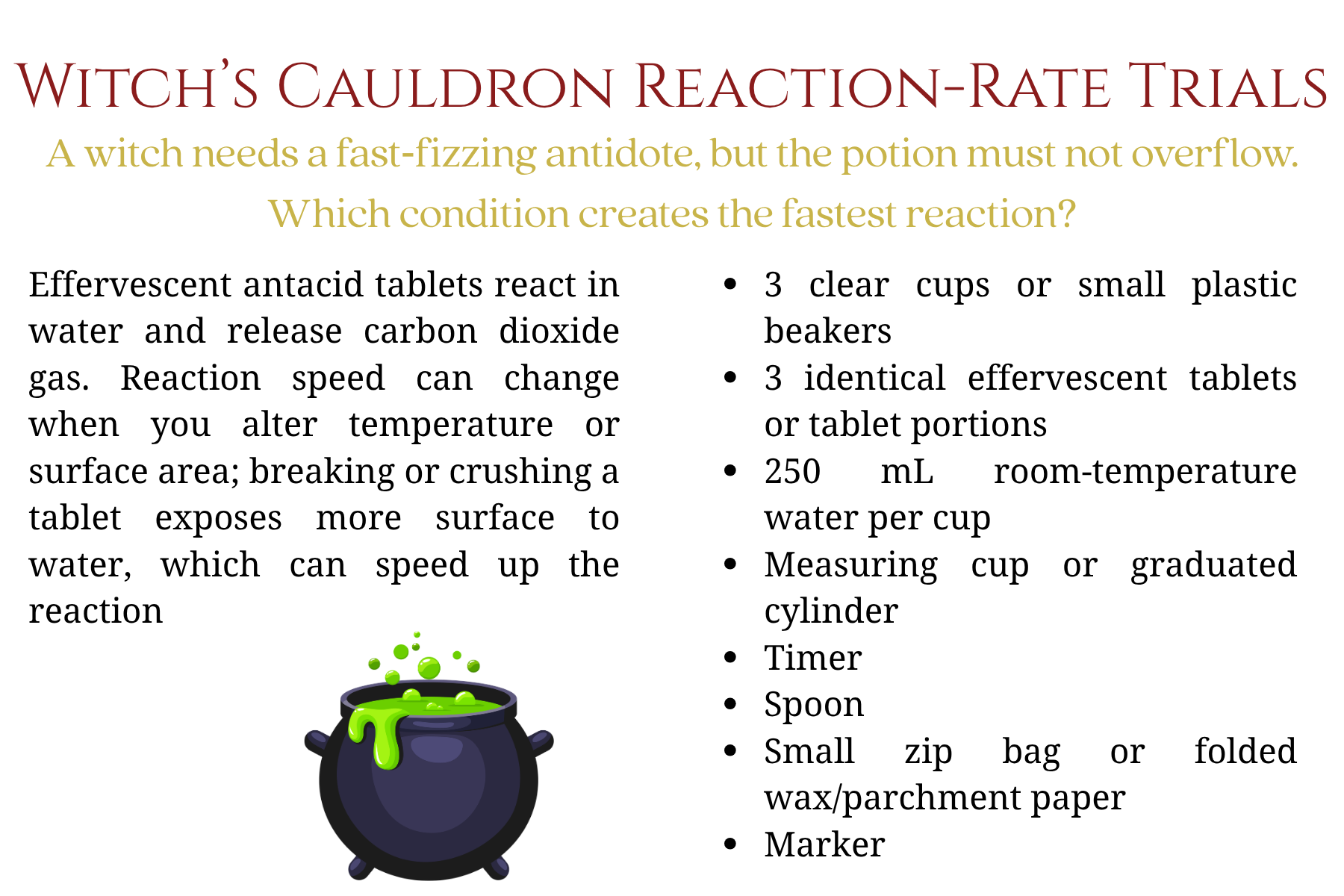
- Witch’s Cauldron Reaction-Rate Trials: Use effervescent tablets to observe carbon-dioxide gas production and explore how tablet surface area, water temperature, or other controlled changes can affect reaction speed.
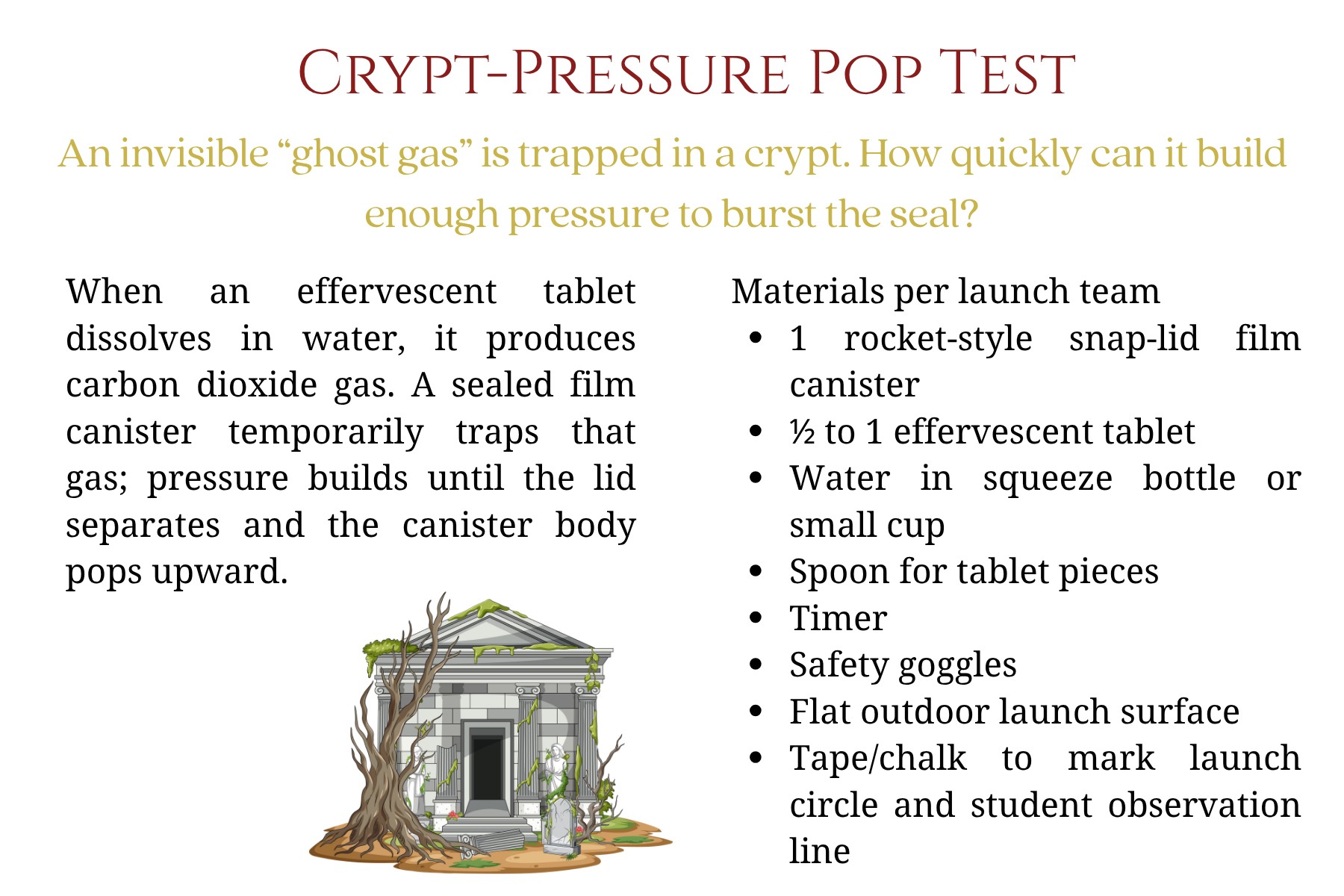
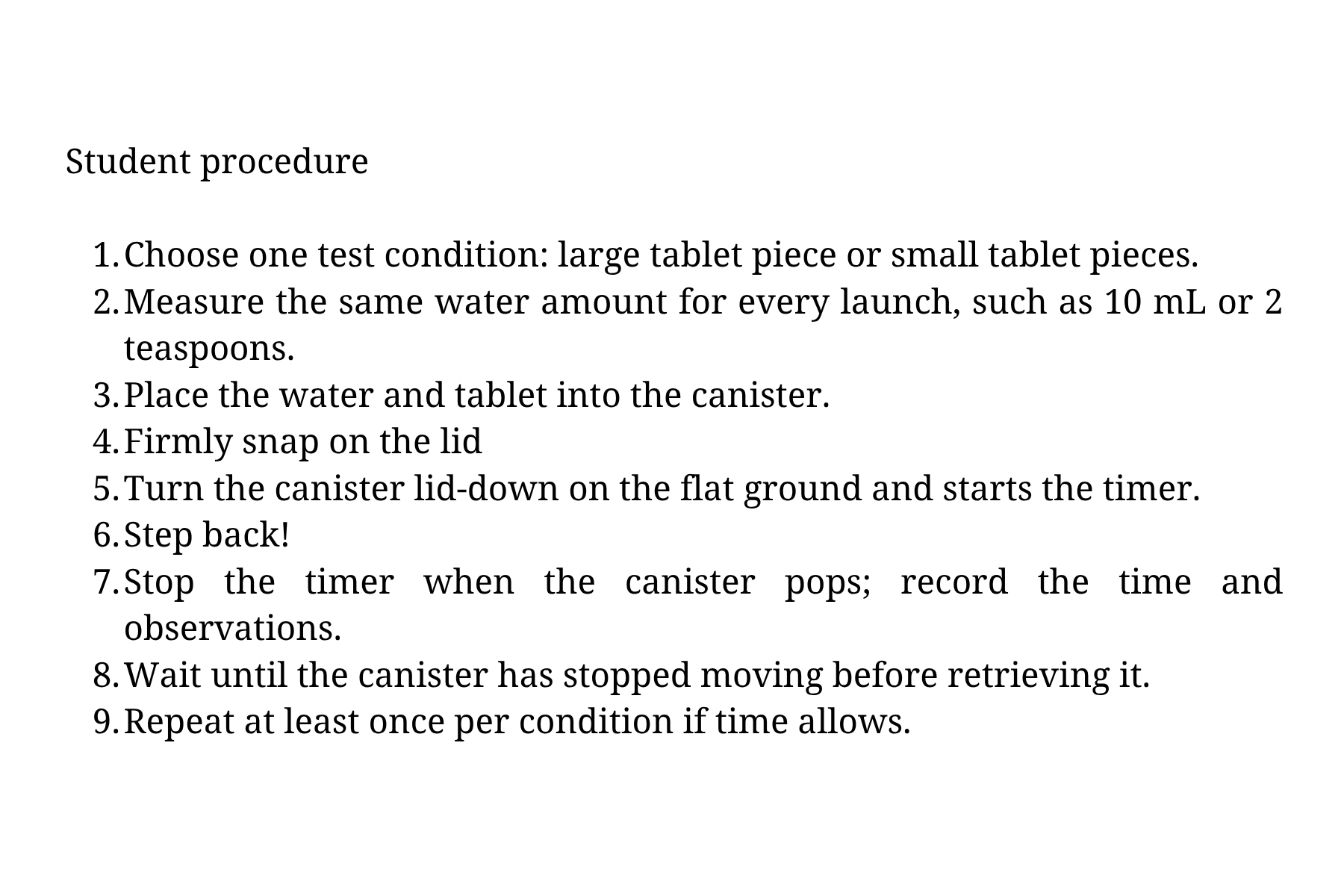
- Crypt-Pressure Pop Test: Use a rocket-style film canister and effervescent tablet to observe how trapped carbon-dioxide gas builds pressure until the lid releases. This activity is best done outdoors in a clear launch area.
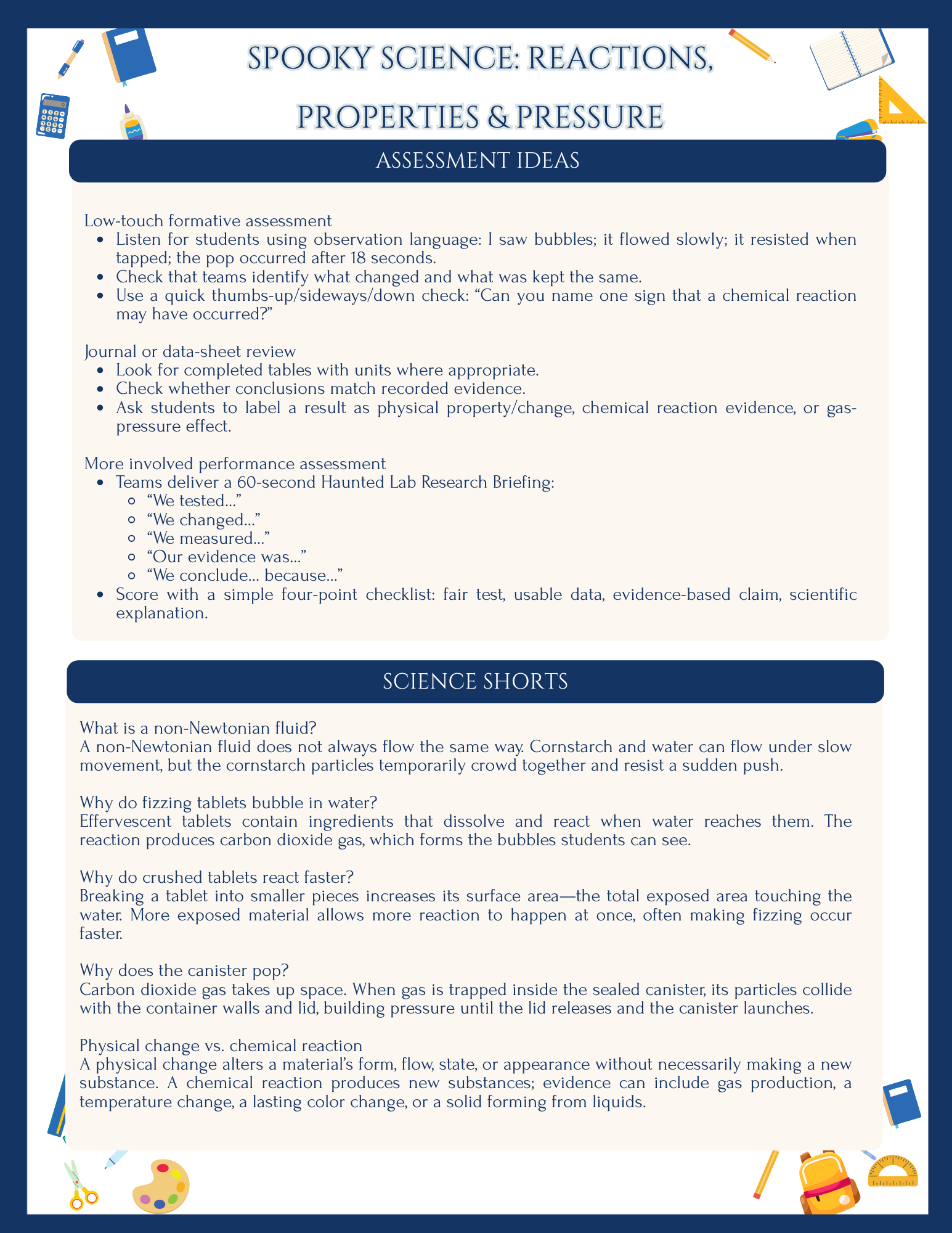
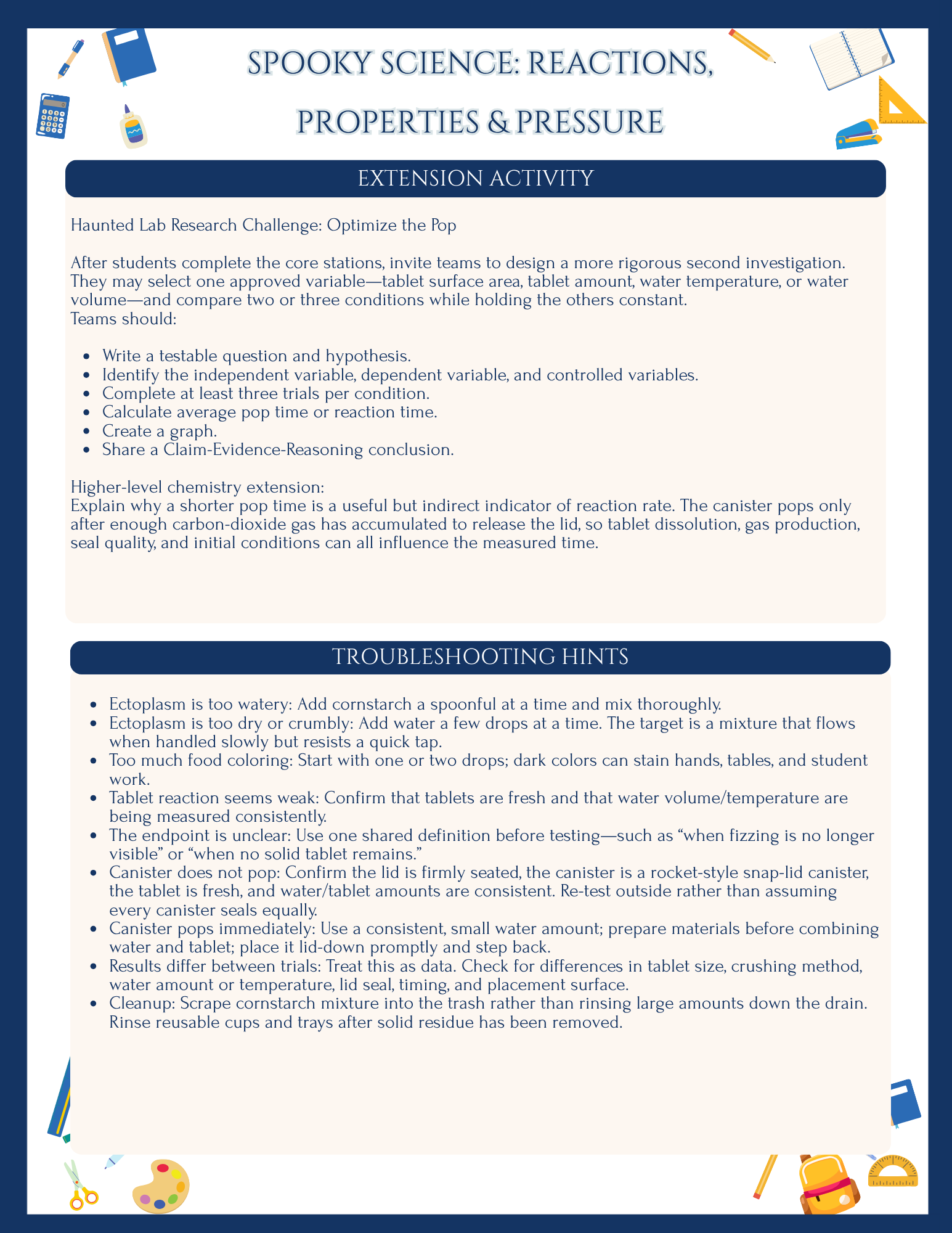
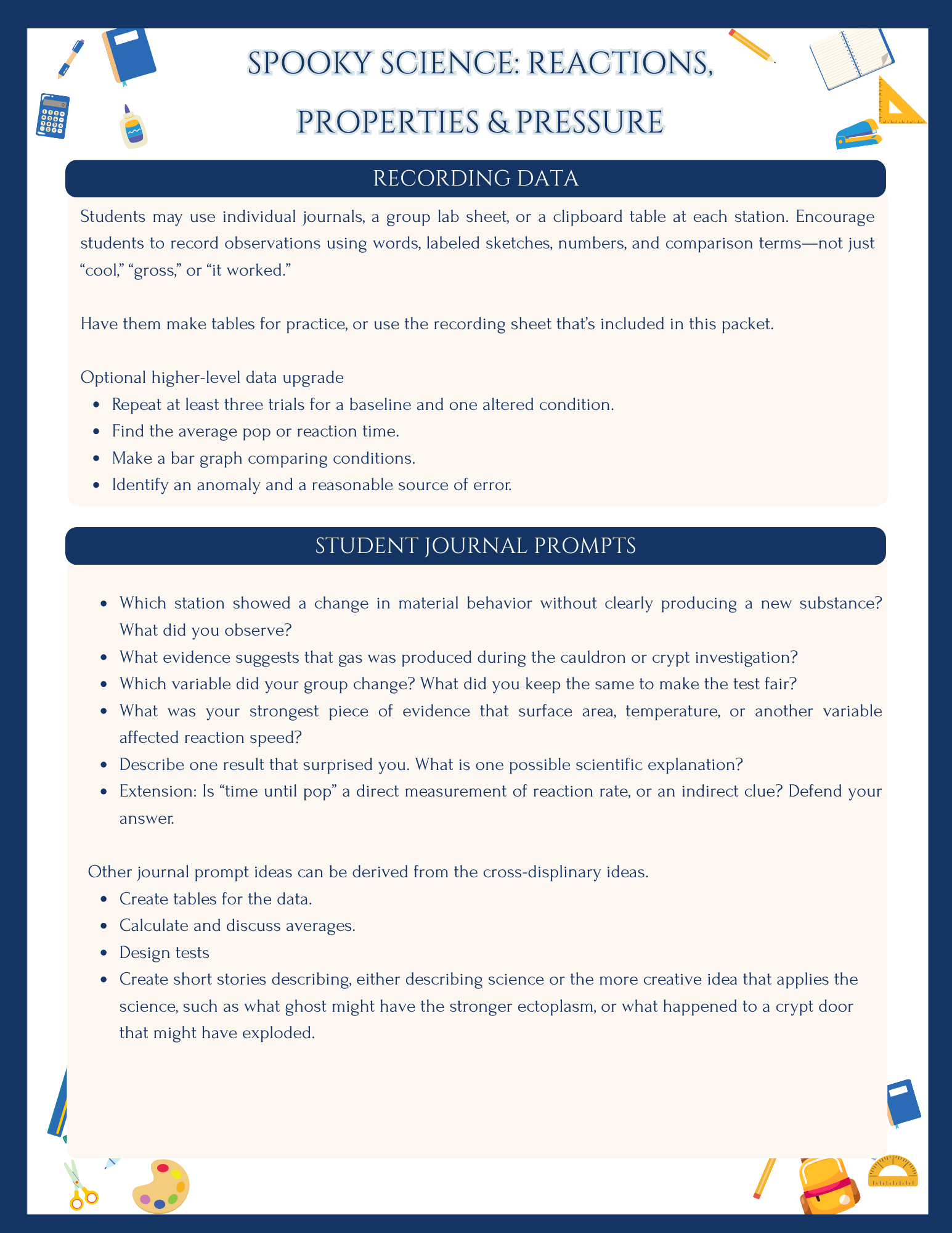
The resource also includes station procedures, student-journal prompts, data-table guidance, troubleshooting notes, science-background explanations, cleanup guidance, cross-disciplinary connections, and assessment ideas. Learners can complete the core stations as a one-day workshop or turn the activity into a deeper multi-trial investigation.
Skills learners practice
Rather than simply watching something fizz or pop, learners are asked to think and work like scientists. By the end of the lab, they can practice how to:
- Describe observable material properties, including flow, thickness, and response to force
- Distinguish a physical change from evidence that a chemical reaction may be occurring
- Recognize visible signs of gas production
- Design a fair test by changing one variable while keeping other conditions consistent
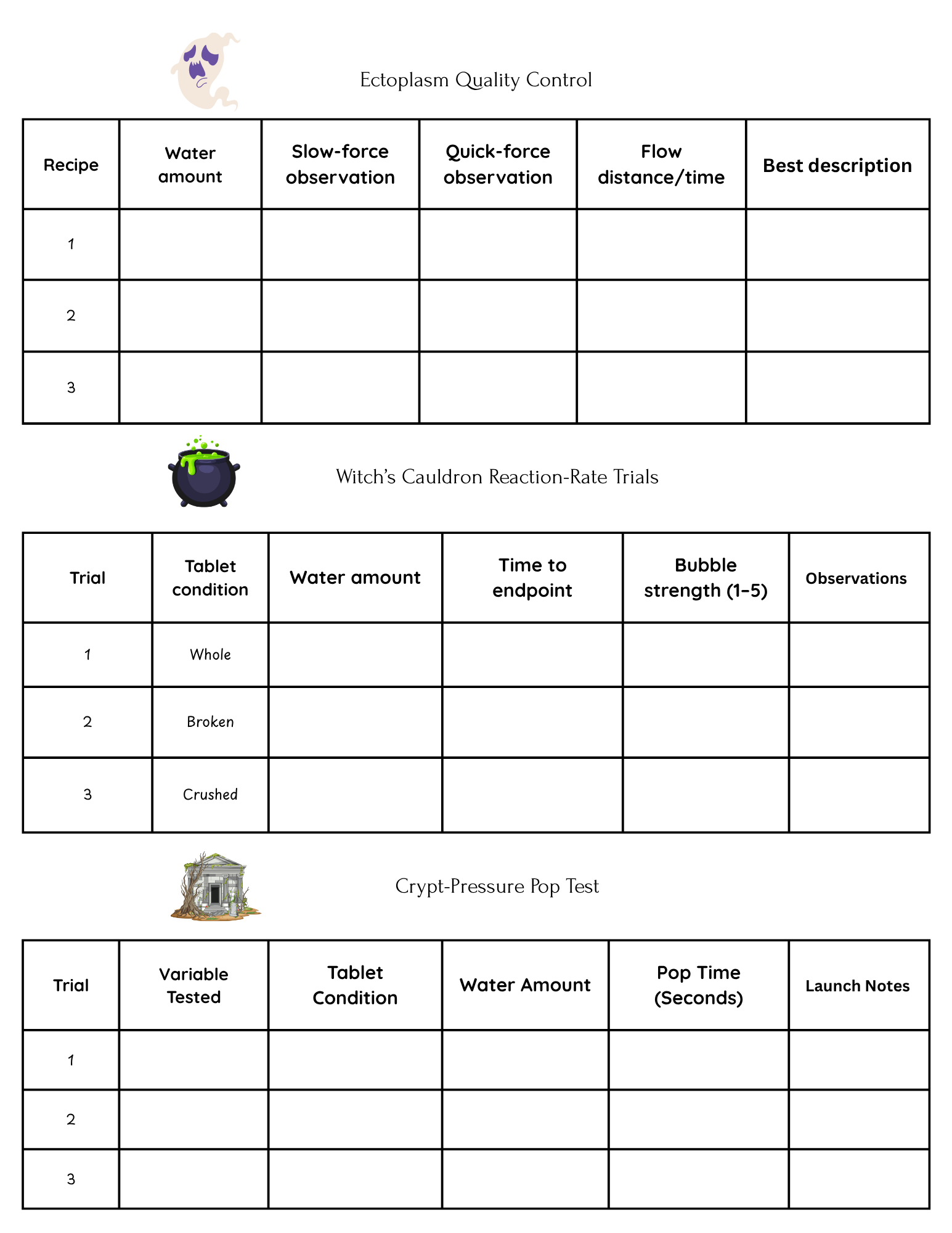
- Record observations using descriptive words, sketches, tables, measurements, and comparison language
- Use evidence from trials to make a scientific claim
- Identify possible sources of error, anomalies, and inconsistent results
- Calculate averages and graph results in the optional data extension
The advanced extension asks learners to optimize reaction or pop time by selecting a variable such as tablet amount, tablet surface area, water temperature, or water volume. It also introduces an important scientific nuance: “time until pop” can serve as an indirect clue about reaction rate, because gas production, tablet dissolution, the seal of the lid, and starting conditions can all influence the outcome.
Practical homeschool-friendly setup
This lab was written for real homes, co-ops, small workshops, and informal learning spaces—not an expensive formal laboratory. Most materials are familiar and easy to source:
- Cornstarch and water
- Optional food coloring
- Effervescent antacid tablets
- Clear cups or small containers
- Measuring spoons or cups
- Timers
- Safety goggles
- Paper towels and trays
- A rocket-style snap-lid film canister for the pressure investigation
- An outdoor or suitably open launch area
Each core station can take roughly 25 minutes, depending on how many trials learners choose to repeat and how much time they spend discussing their results. The low-mess setup is manageable with paper towels; scrape the cornstarch mixture into the trash instead of sending large amounts down the drain.
Built for curious learners—not busywork
The fun theme is an entry point, but the real purpose is scientific reasoning. Learners are encouraged to move beyond “cool,” “gross,” or “it worked” and instead record what they actually observed: bubbles, timing, force response, visible tablet changes, differences among trials, and possible explanations.
That makes this a strong option for homeschool science days, sibling groups, small co-ops, Halloween learning events, tutoring enrichment, library programming, or any family that wants science to feel playful without watering down the thinking.
This is the homeschool workshop edition. It is designed to be facilitated flexibly by a parent, caregiver, tutor, or small-group leader. Need presentation-ready materials for a more formal class environment? Look for the Tinker Tracks: Classroom Edition, which is the separate classroom-level version of this activity with PowerPoint slides and classroom-facing supports.
License and use
This resource is licensed for use by one household, one small group, or one individual educator. Please purchase additional licenses for wider program, school, or district use.
Safety note
While we recommend doing the crypt launch outside to keep messes easier to clean up, they can be done inside in a larger room with high ceilings. We used to do them inside of a gym when developing this lab. The little canisters launch about 3 feet high from whatever surface they are placed on. They travel in an arc about 5 feet away when they land. And they bounce. That should help you plan the space.



&url=https://insanitek.net/product/ski-jump-physics-marble-ramp-stem-lesson-with-vocabulary-flash-cards/&media=https://insanitek.net/wp-content/uploads/2025/11/Ski-JumpImage.jpg)
Reviews
There are no reviews yet.