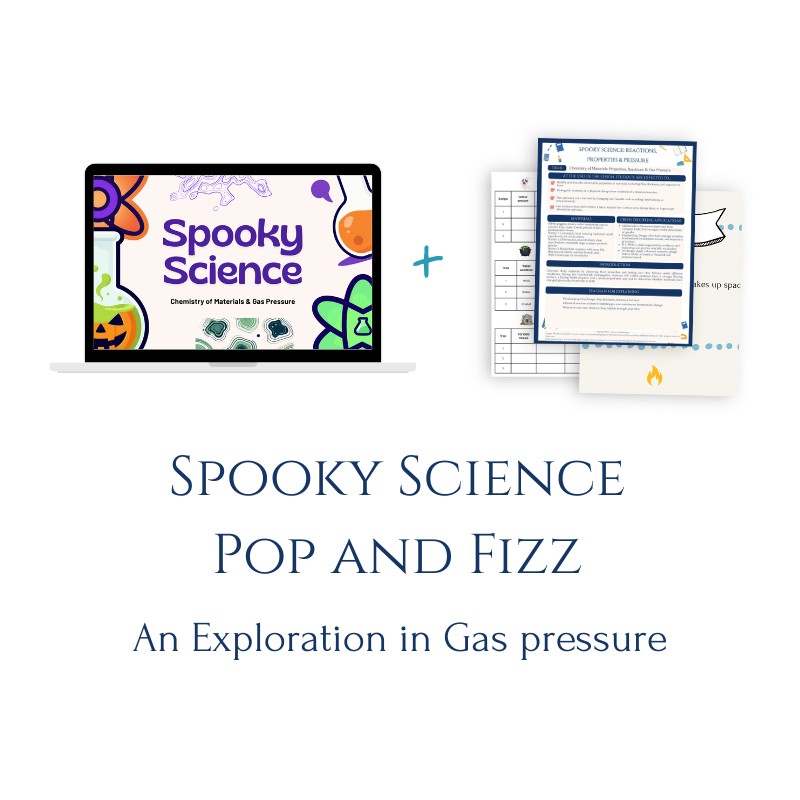
Description
A classroom-ready Halloween chemistry investigation
A strange ectoplasm mixture that flows when handled gently but resists a fast tap. A witch’s cauldron bubbling with carbon-dioxide gas. A crypt canister that pops as pressure builds.
Spooky Science: Reactions, Properties & Pressure turns those memorable moments into a structured classroom investigation of material properties, physical changes, chemical reactions, reaction rate, surface area, and gas pressure. Students are not simply watching a demonstration. They rotate through stations, make observations, gather measurements, compare conditions, and build claims from their own evidence.
This Think & Tinker Classroom Lab is designed for educators who want the instruction, facilitation, assessment, and student materials needed to run the experience in a classroom setting. It is especially suited to grades 3–5, with extensions that can support middle school chemistry and experimental-design discussion.
What your classroom receives
This classroom edition includes the full set of materials to guide the activity from introduction through assessment:
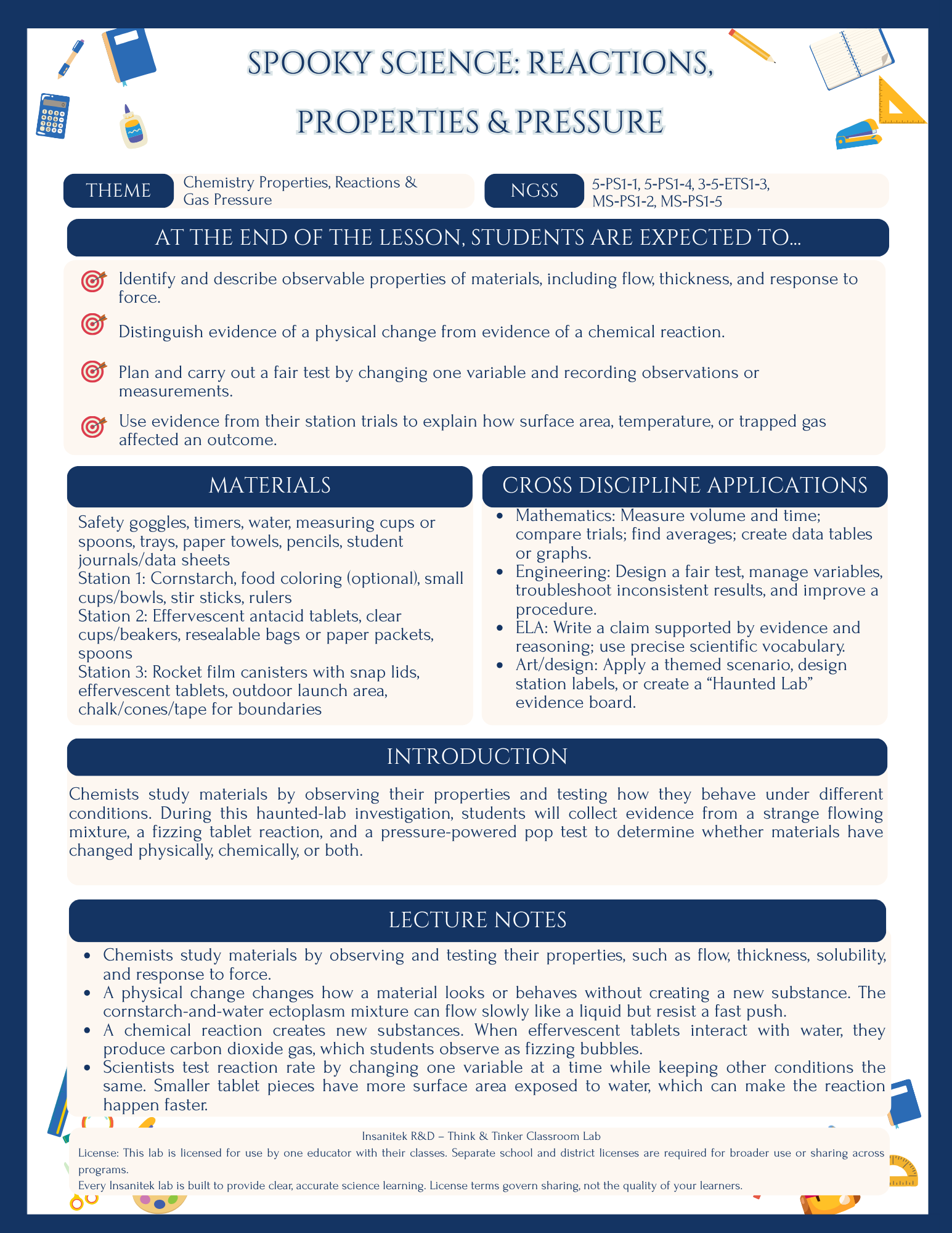
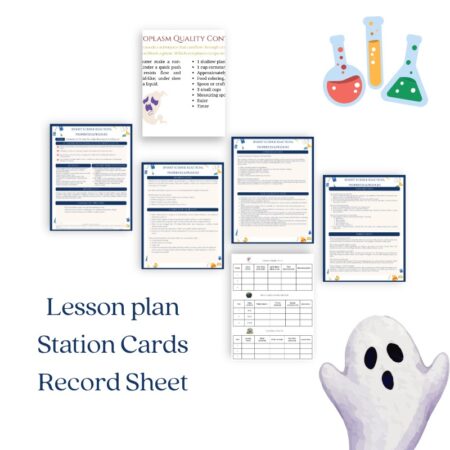
- Classroom lesson plan with materials, setup guidance, cleanup procedures, and troubleshooting
- NGSS connections: 5-PS1-1, 5-PS1-4, 3-5-ETS1-3, MS-PS1-2, and MS-PS1-5
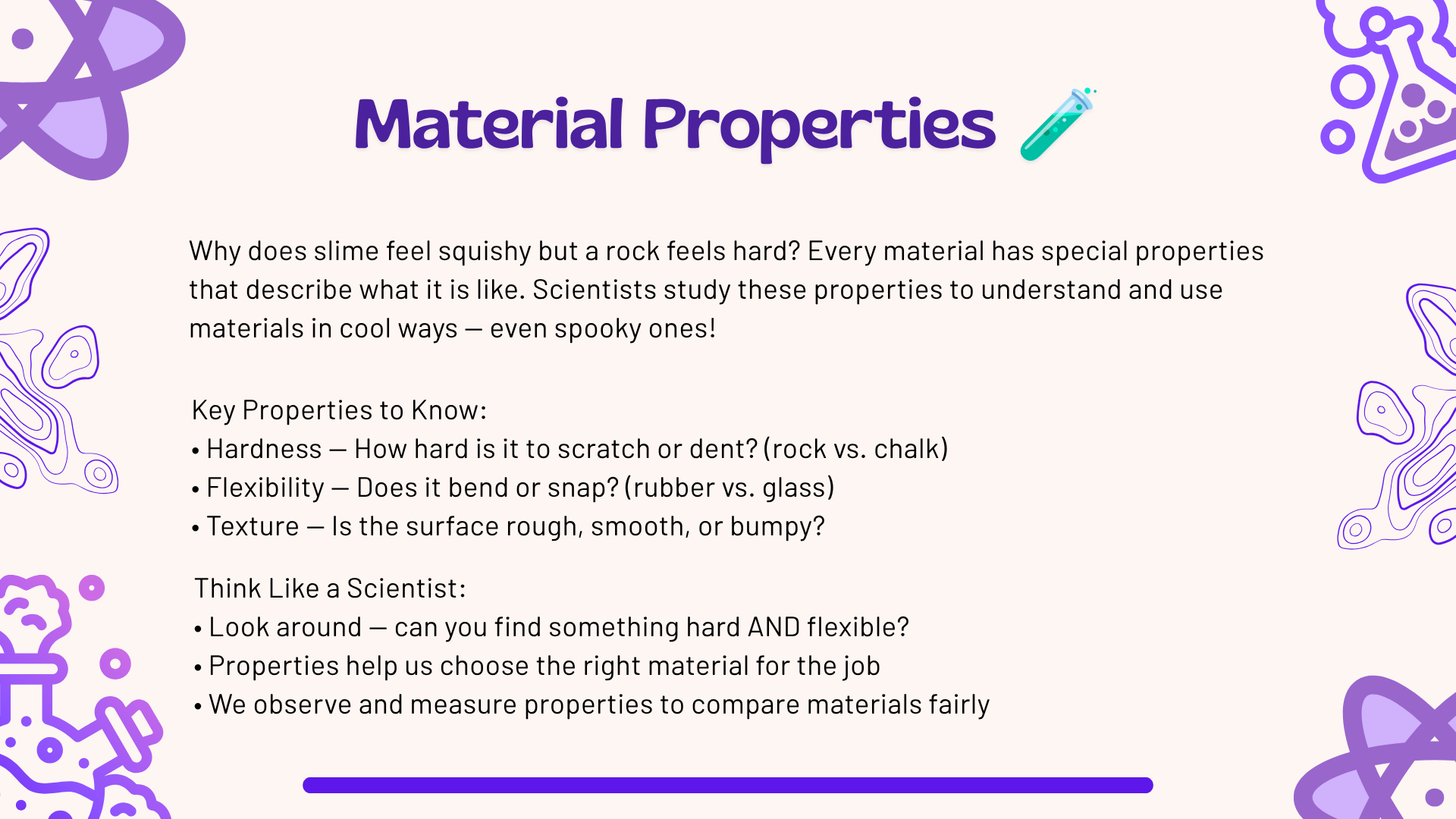
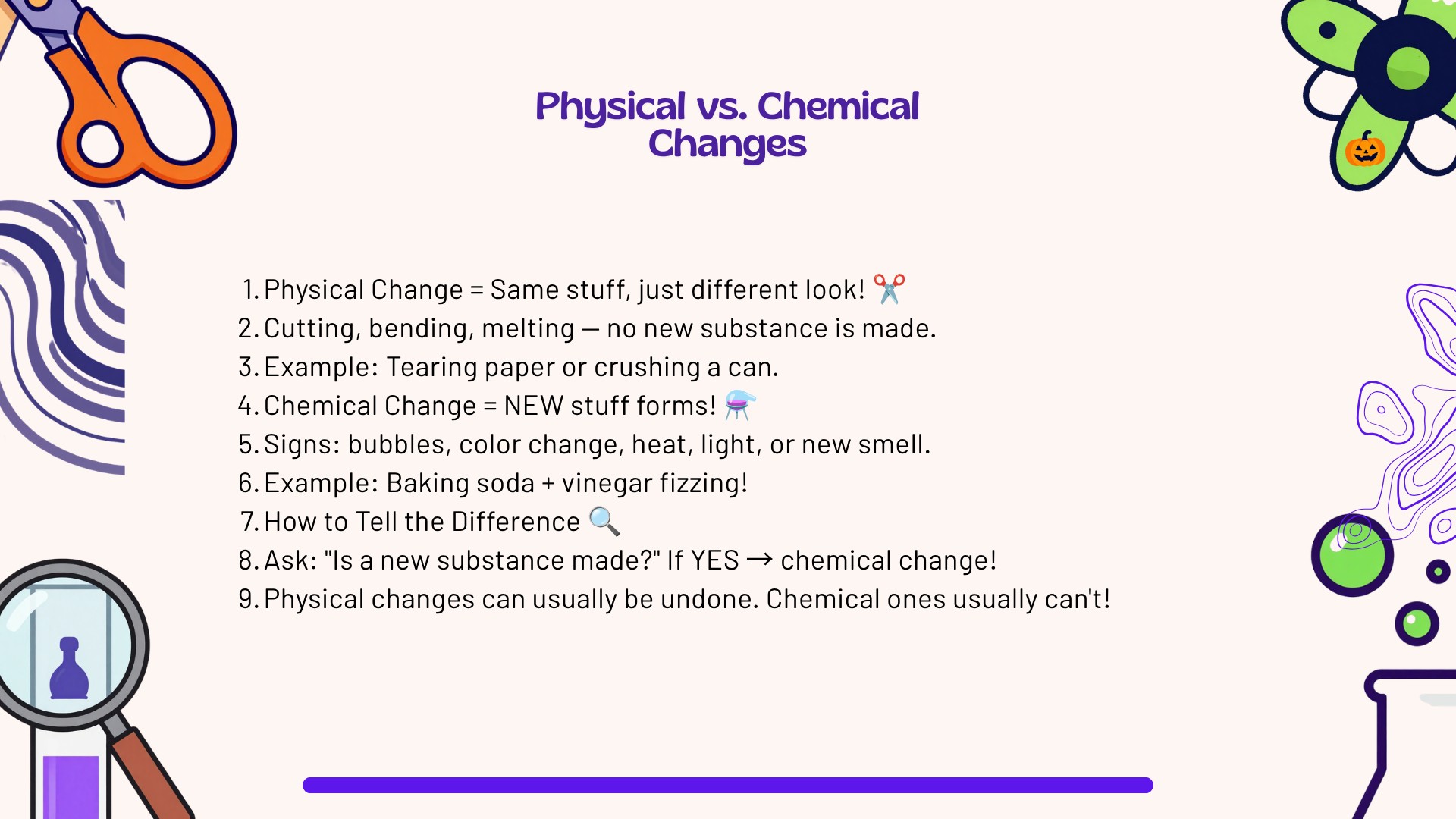
- Educator lecture notes introducing properties of materials, physical changes, chemical reactions, carbon-dioxide gas production, surface area, and reaction rate
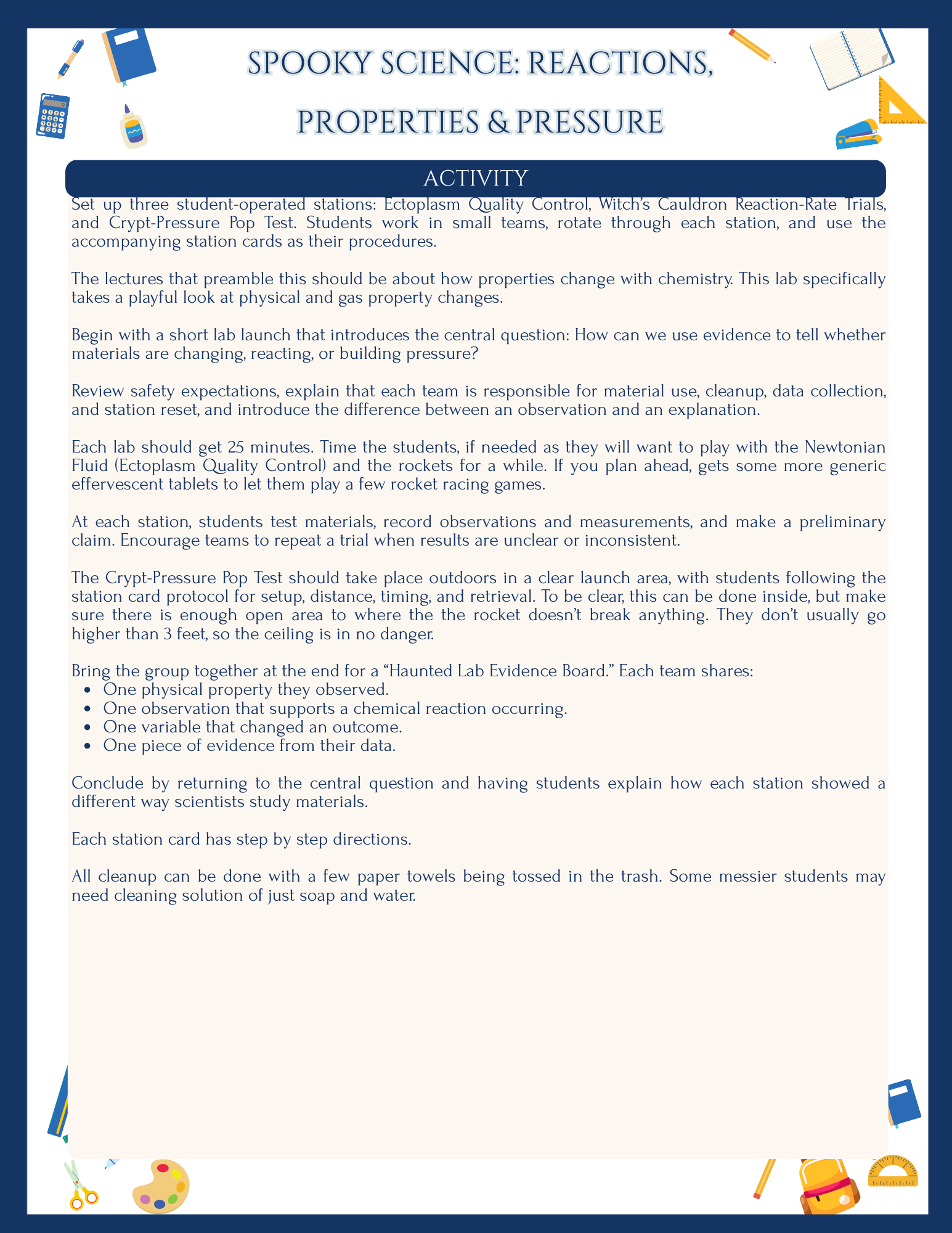
- Three student-operated investigation stations
- Printable station cards with step-by-step student procedures
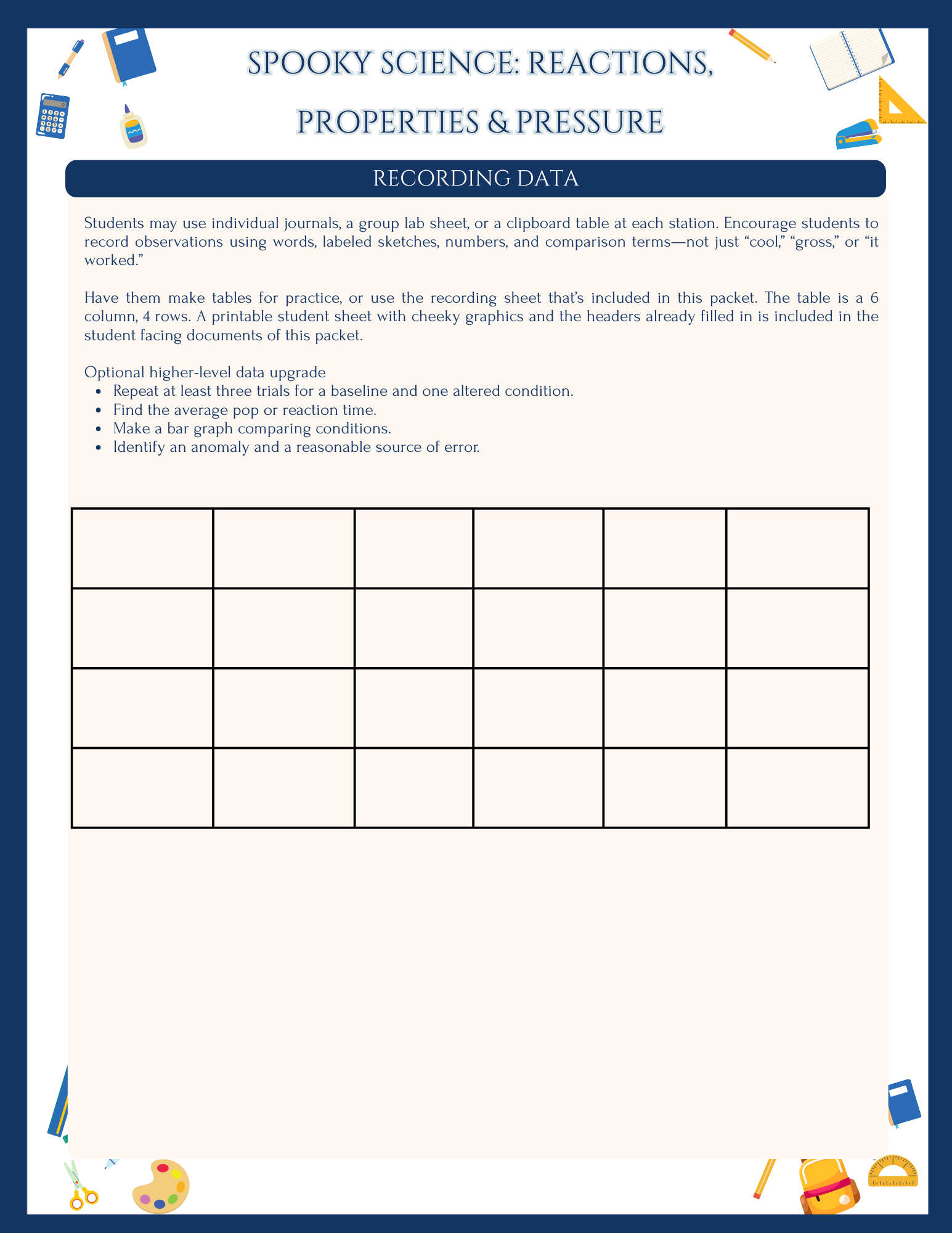
- Student data-recording sheet
- Student journal prompts and optional higher-level data analysis
- Assessment ideas, closing prompts, and two quick exit-ticket options
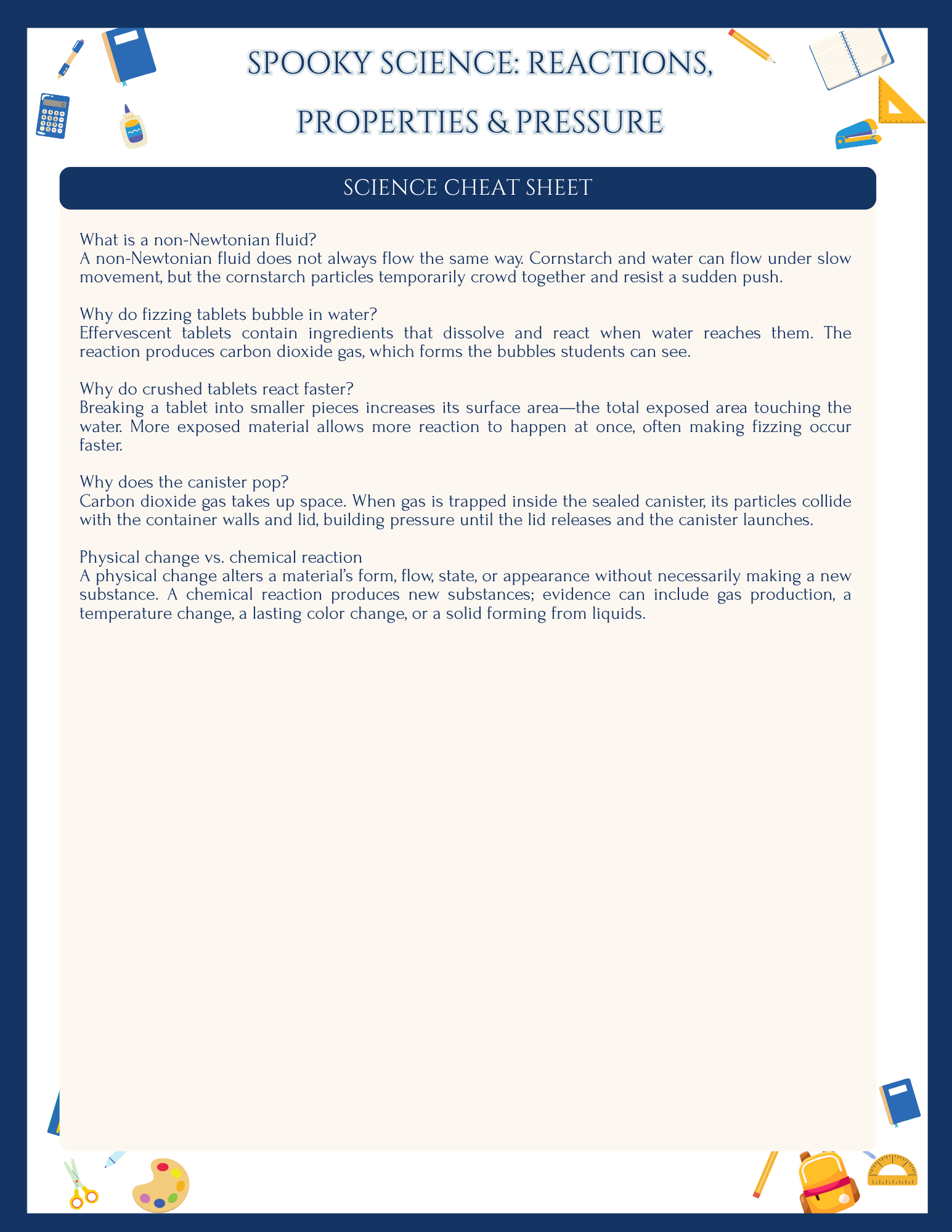
- A student-friendly science cheat sheet explaining the core concepts
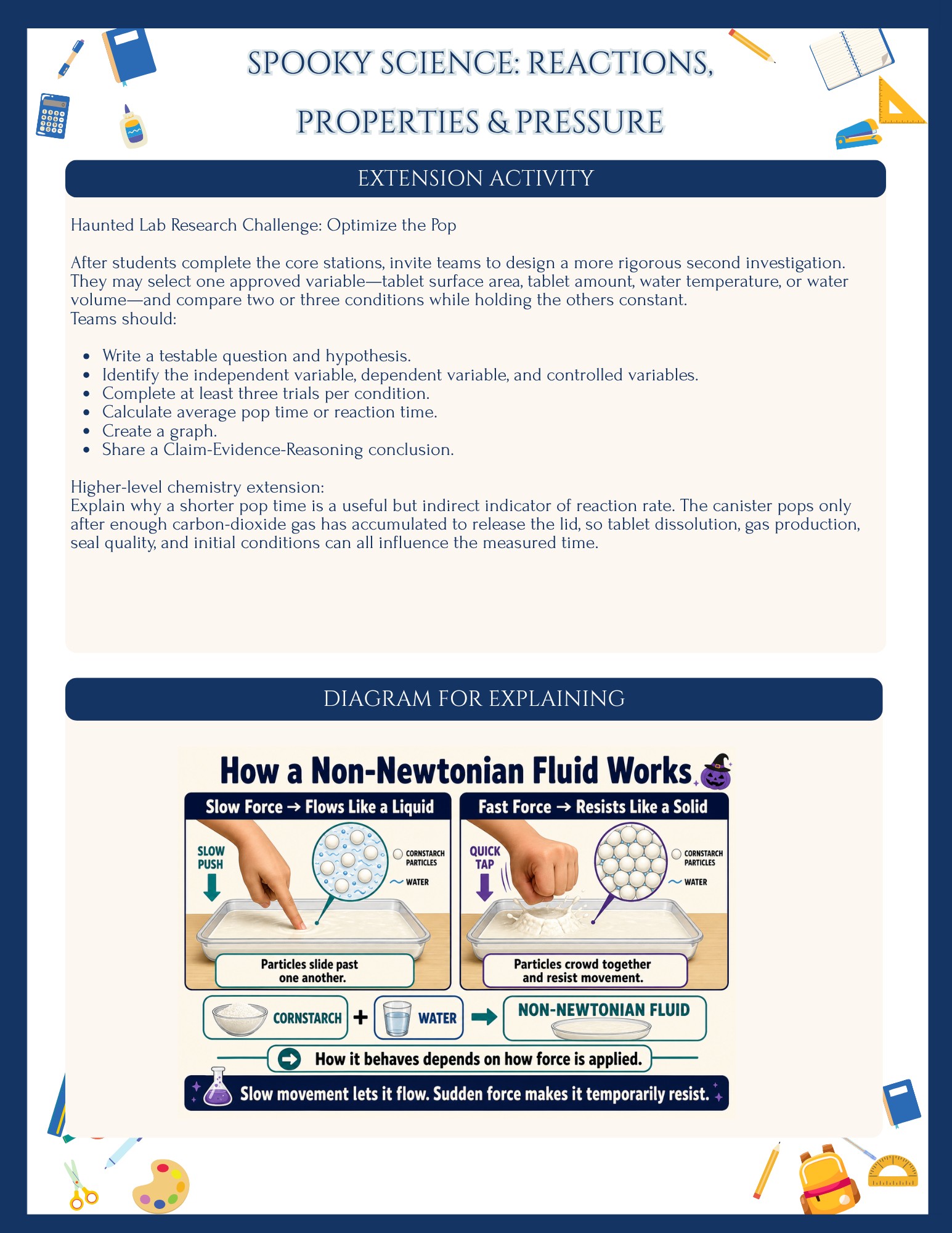
- An extension investigation: Haunted Lab Research Challenge: Optimize the Pop
The three science stations
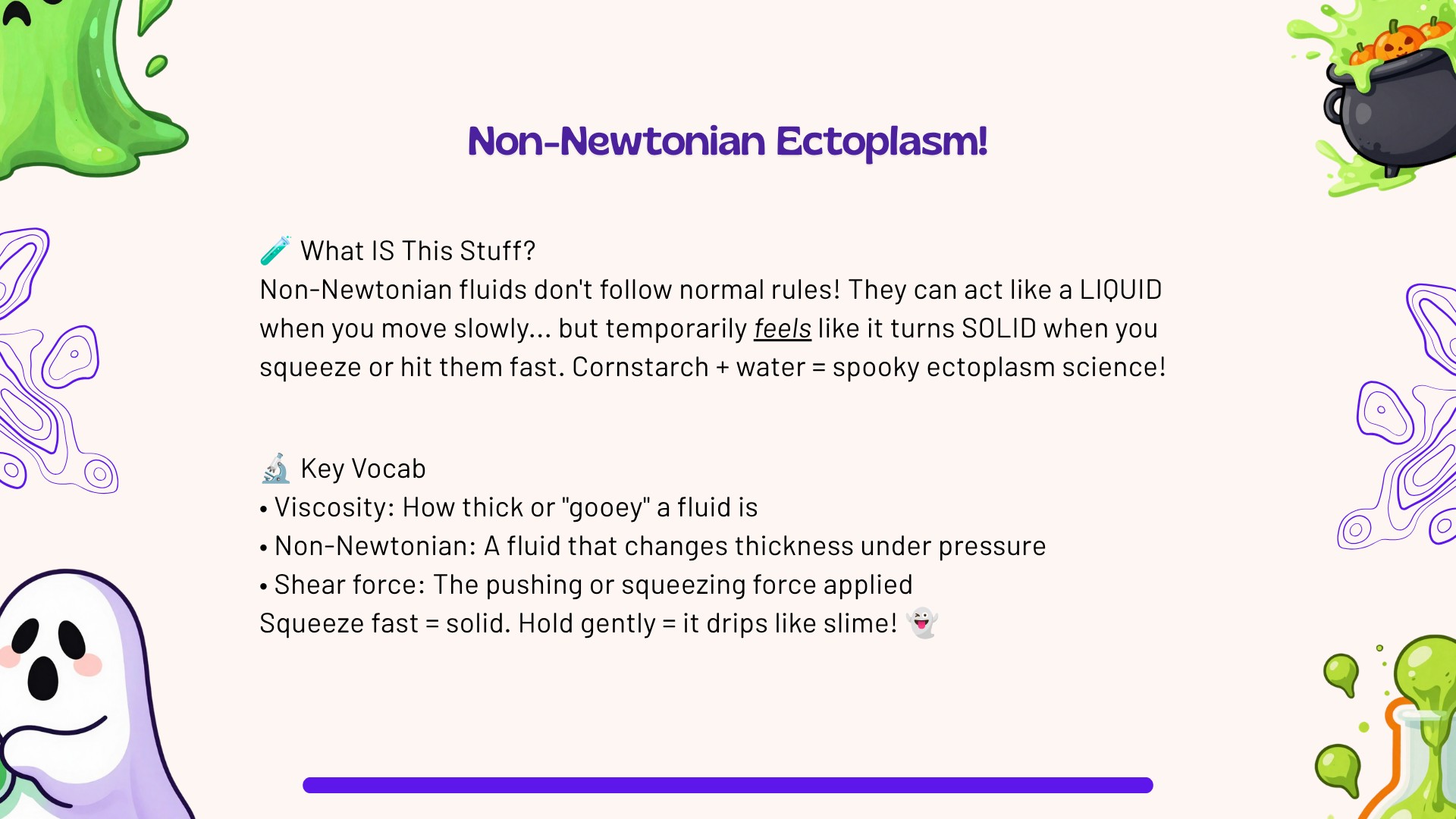
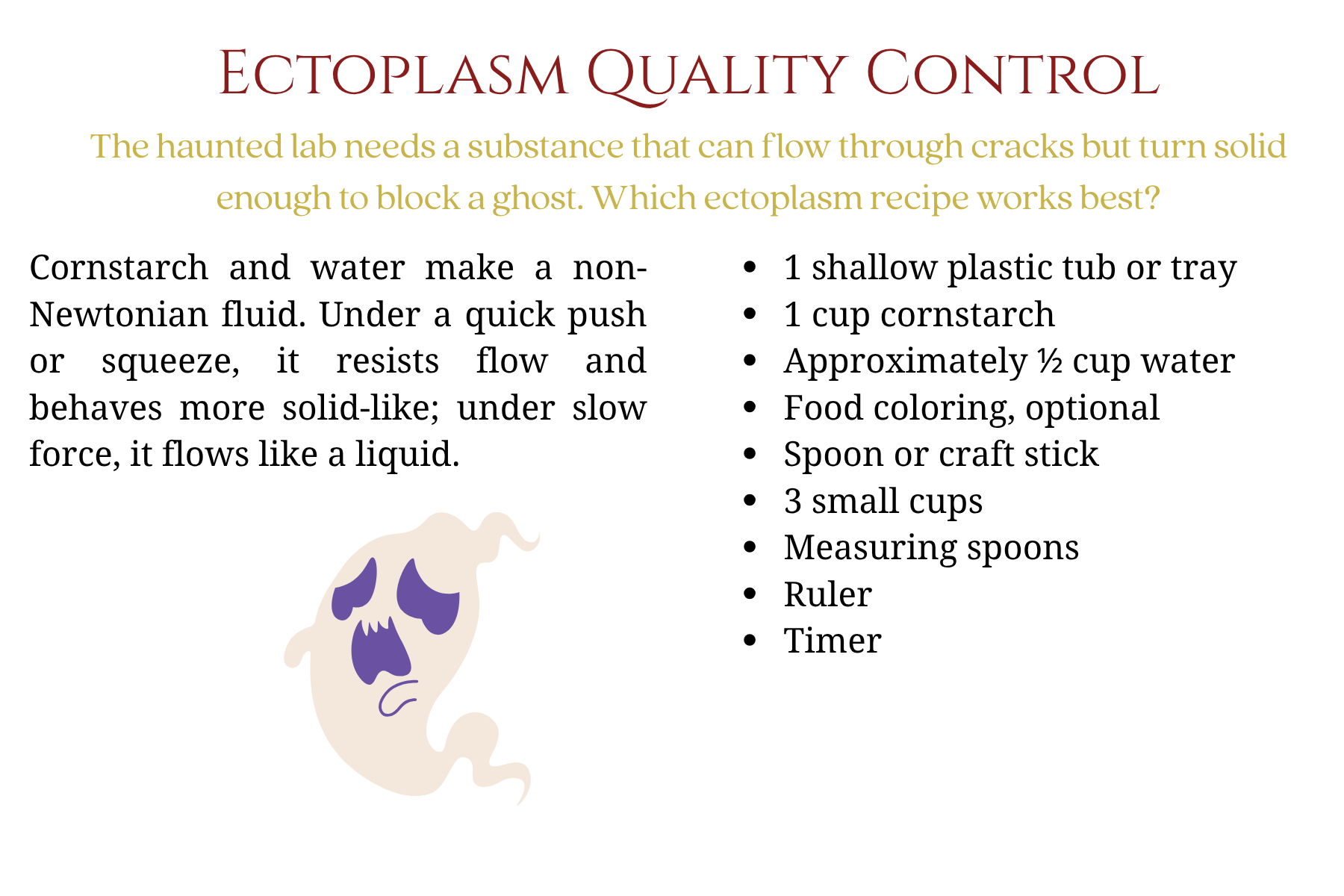
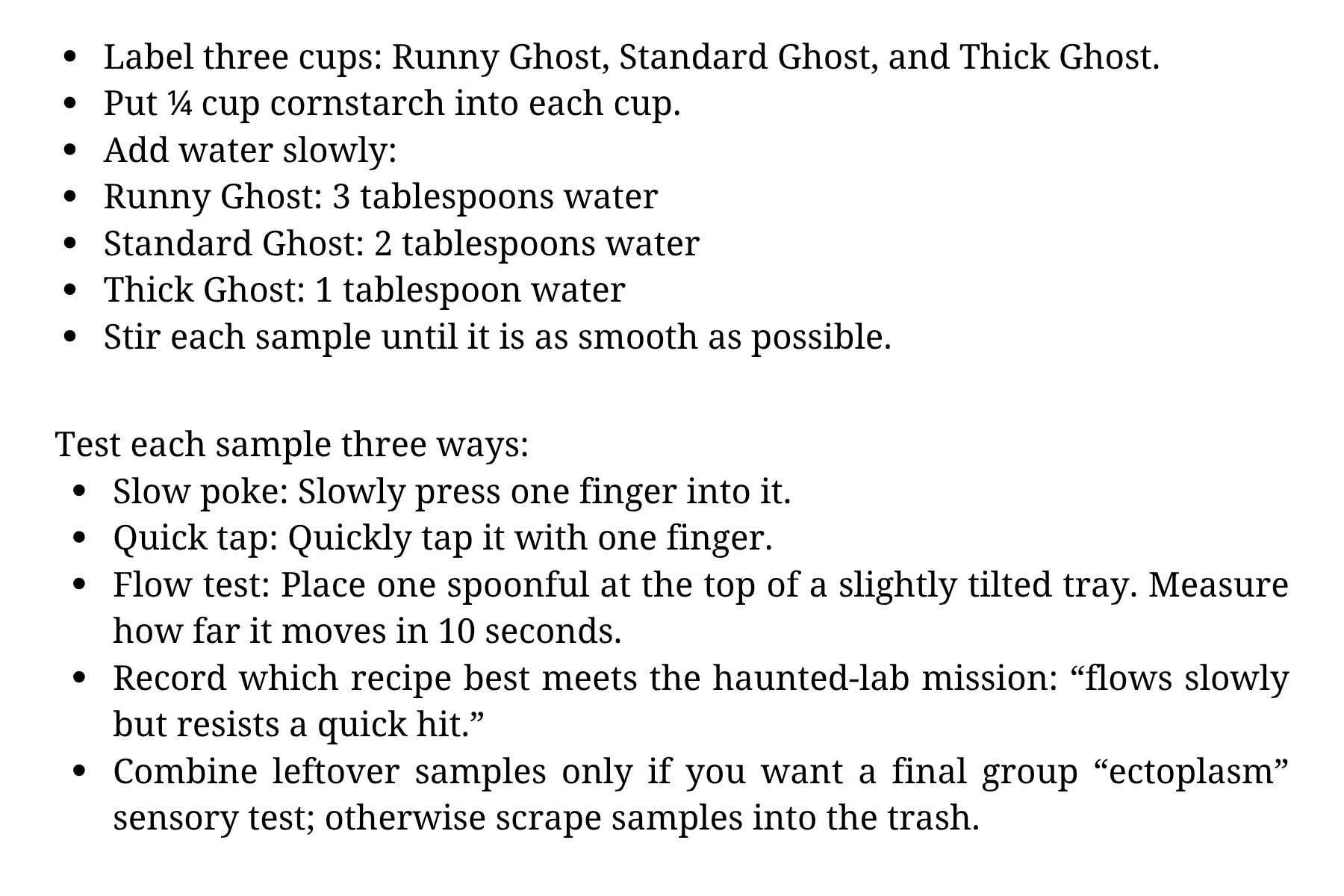
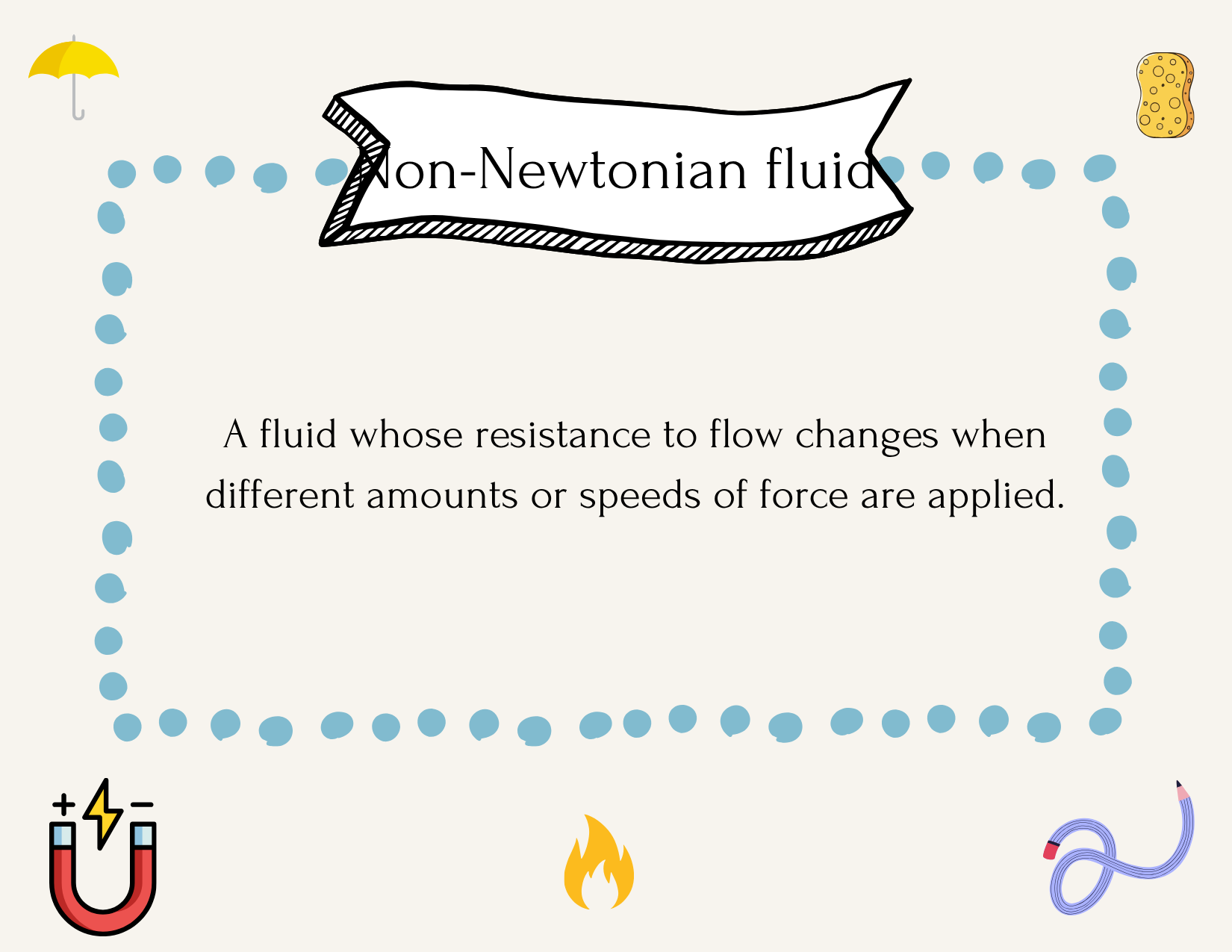
At the Ectoplasm Quality Control station, students make and test a cornstarch-and-water mixture. They observe how the material flows slowly under gentle movement but resists a sudden force, then describe its physical properties using more precise language than “slimy” or “weird.” This provides a concrete entry point into non-Newtonian behavior and the difference between a change in material behavior and the creation of a new substance.
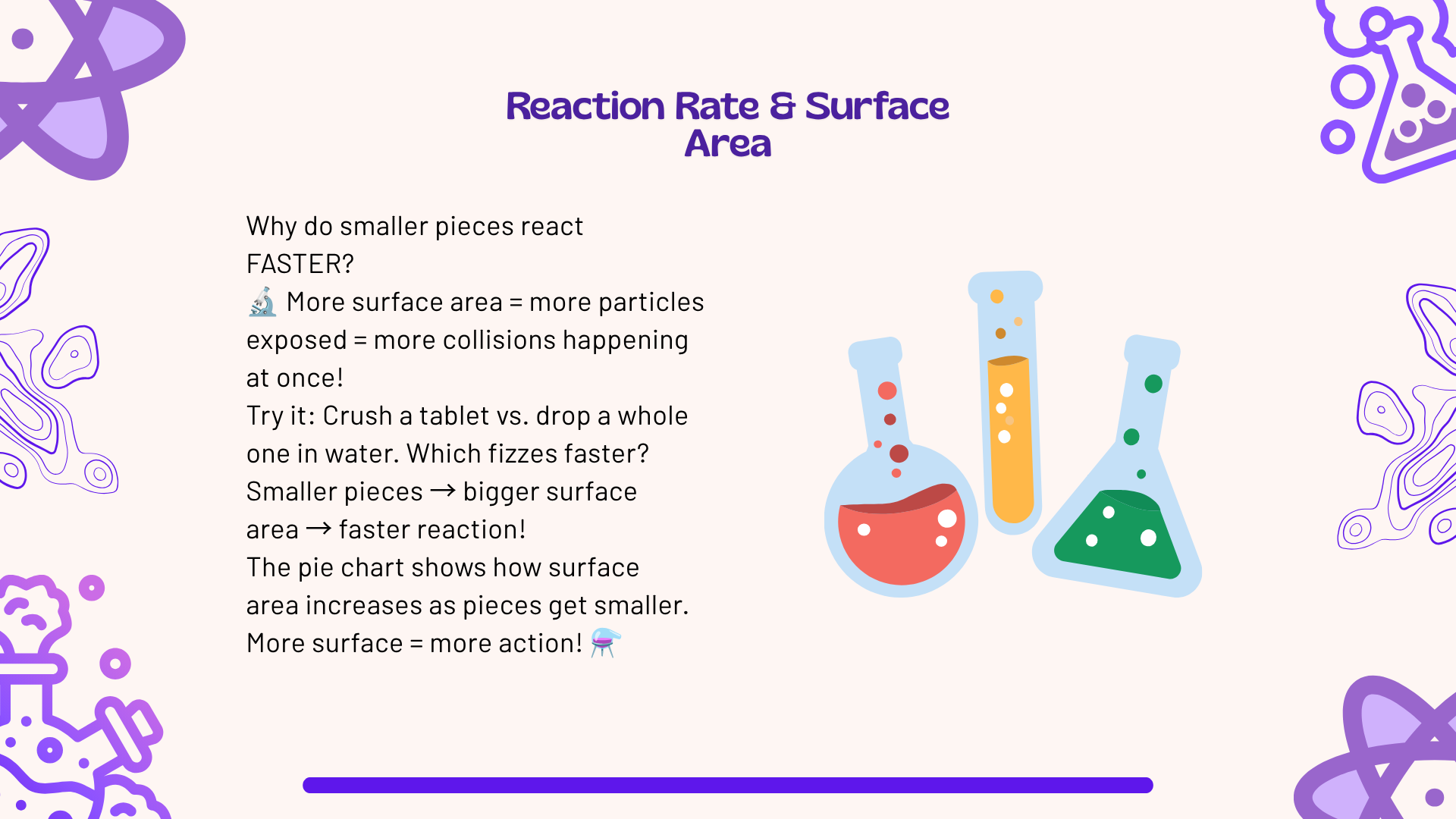
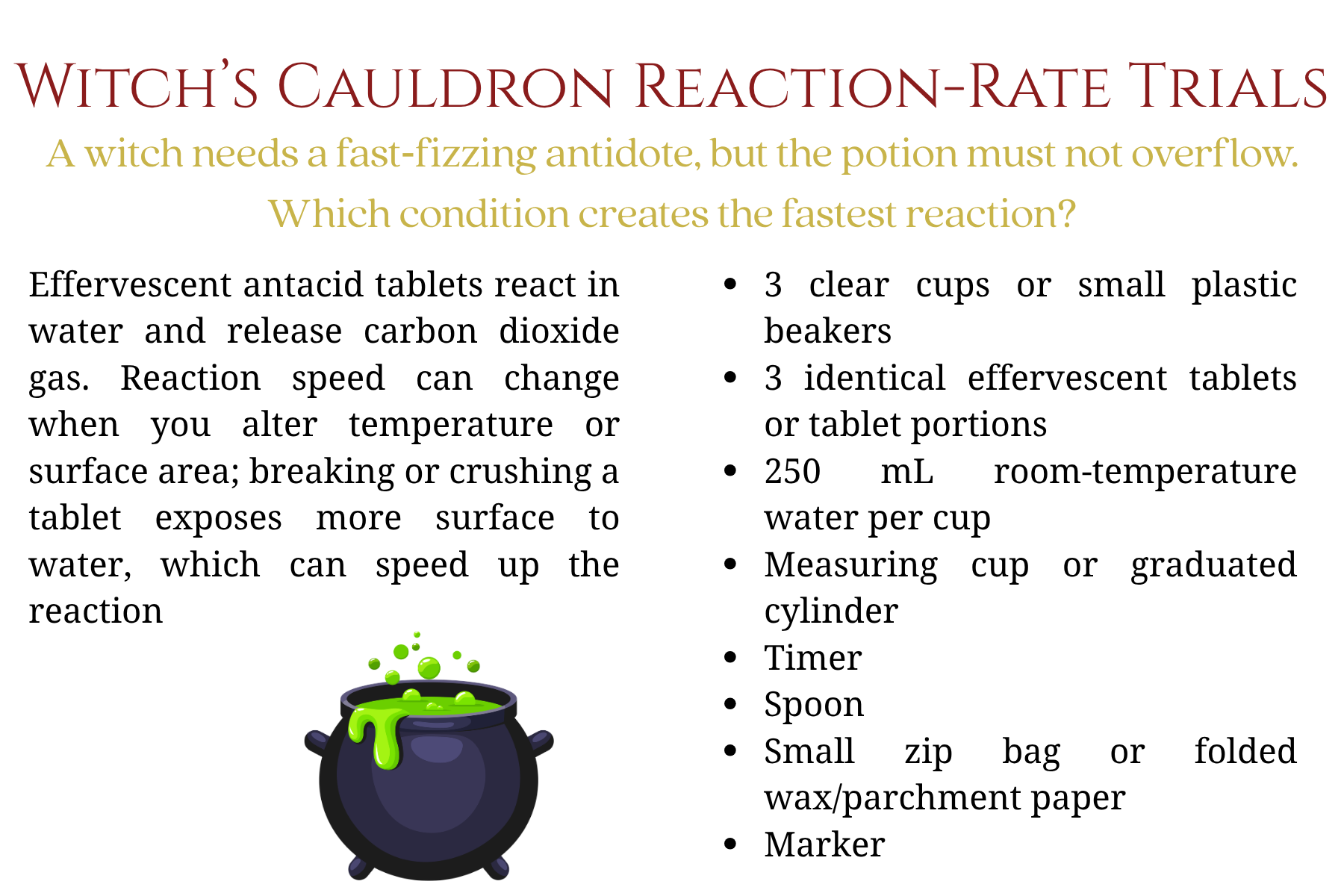
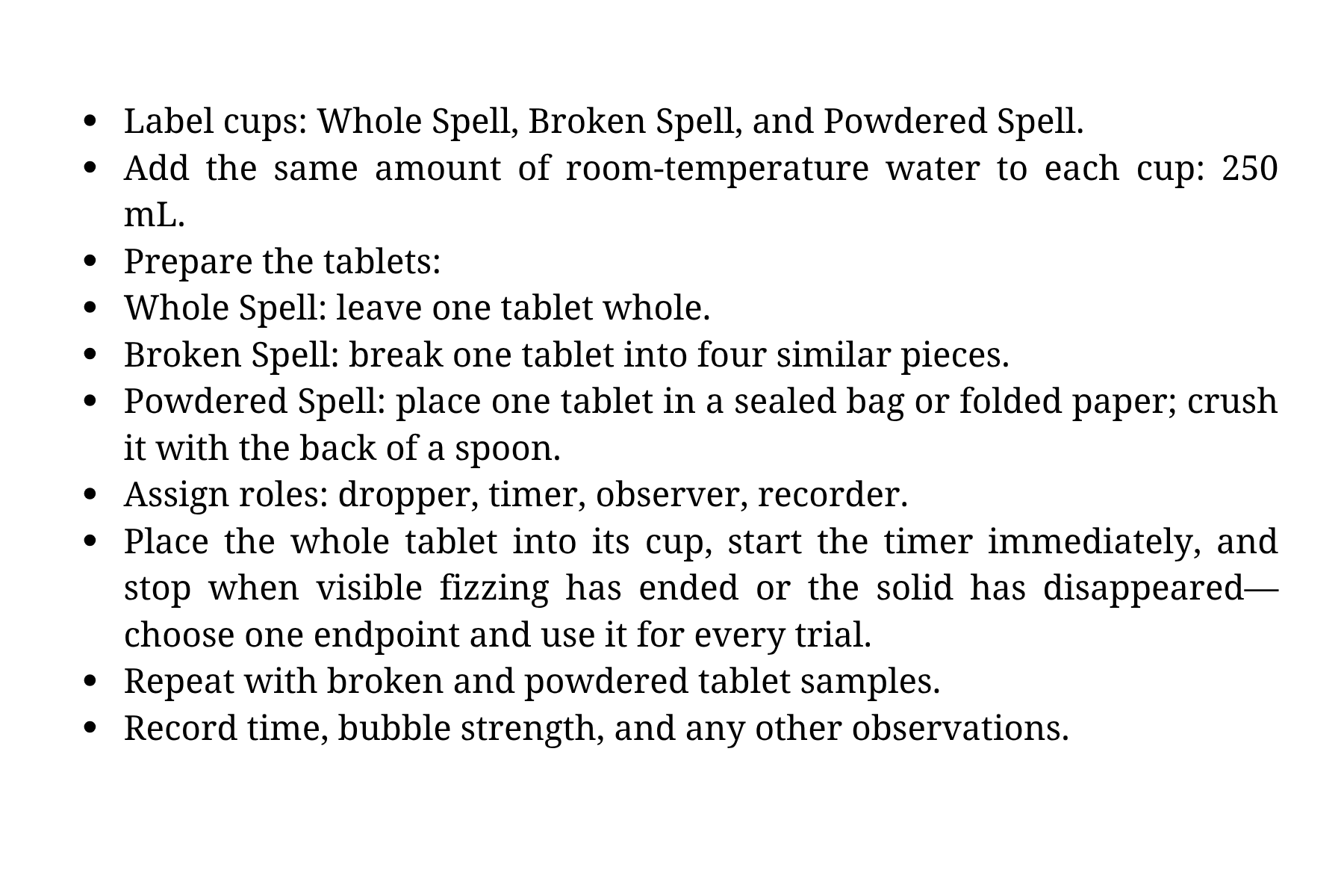
At the Witch’s Cauldron Reaction-Rate Trials station, learners use effervescent tablets and water to observe fizzing carbon-dioxide production. They can compare whole, broken, and crushed tablets or test another controlled condition, then discuss why increased surface area can expose more material to water and often speed up the visible reaction.
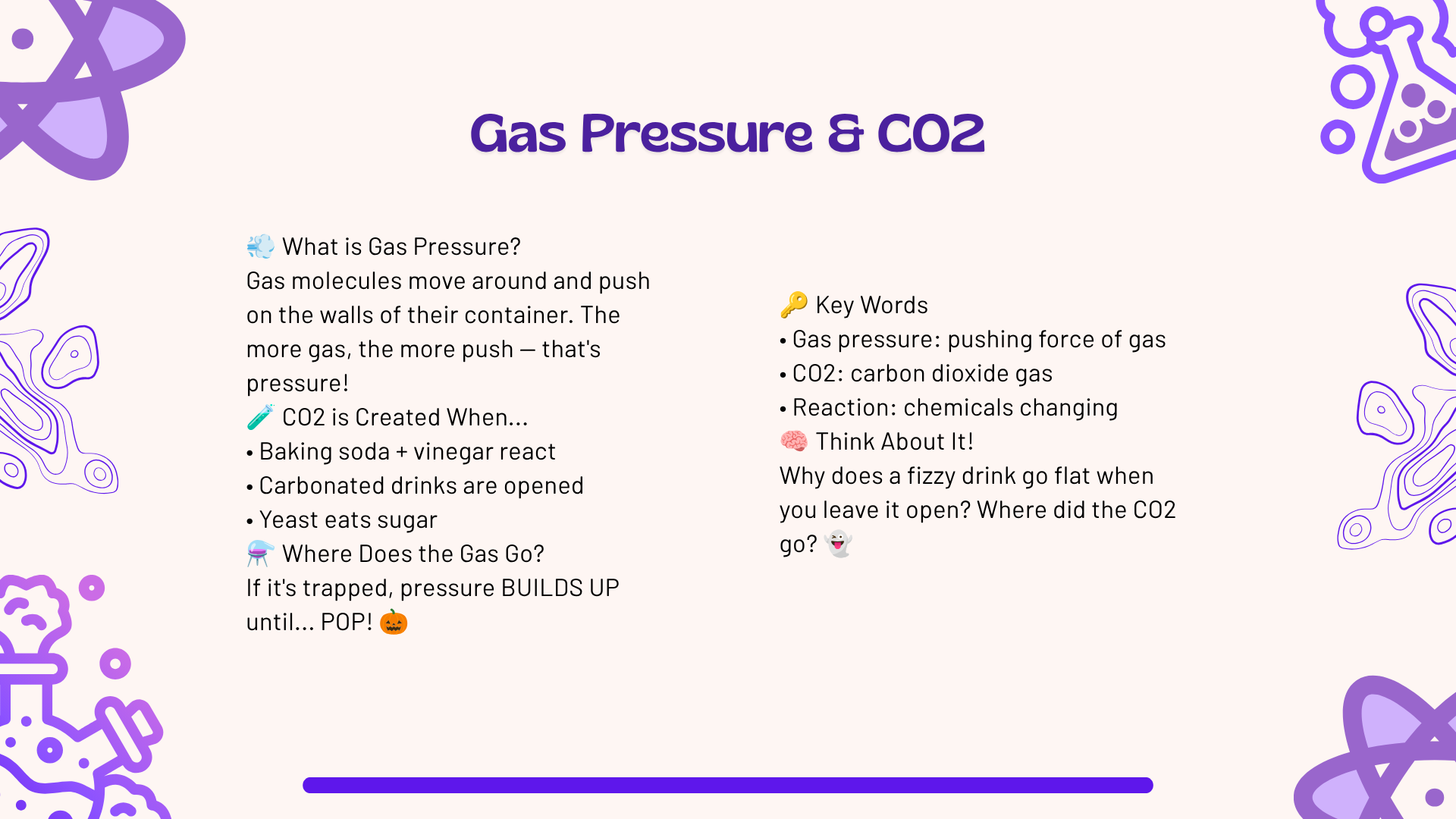
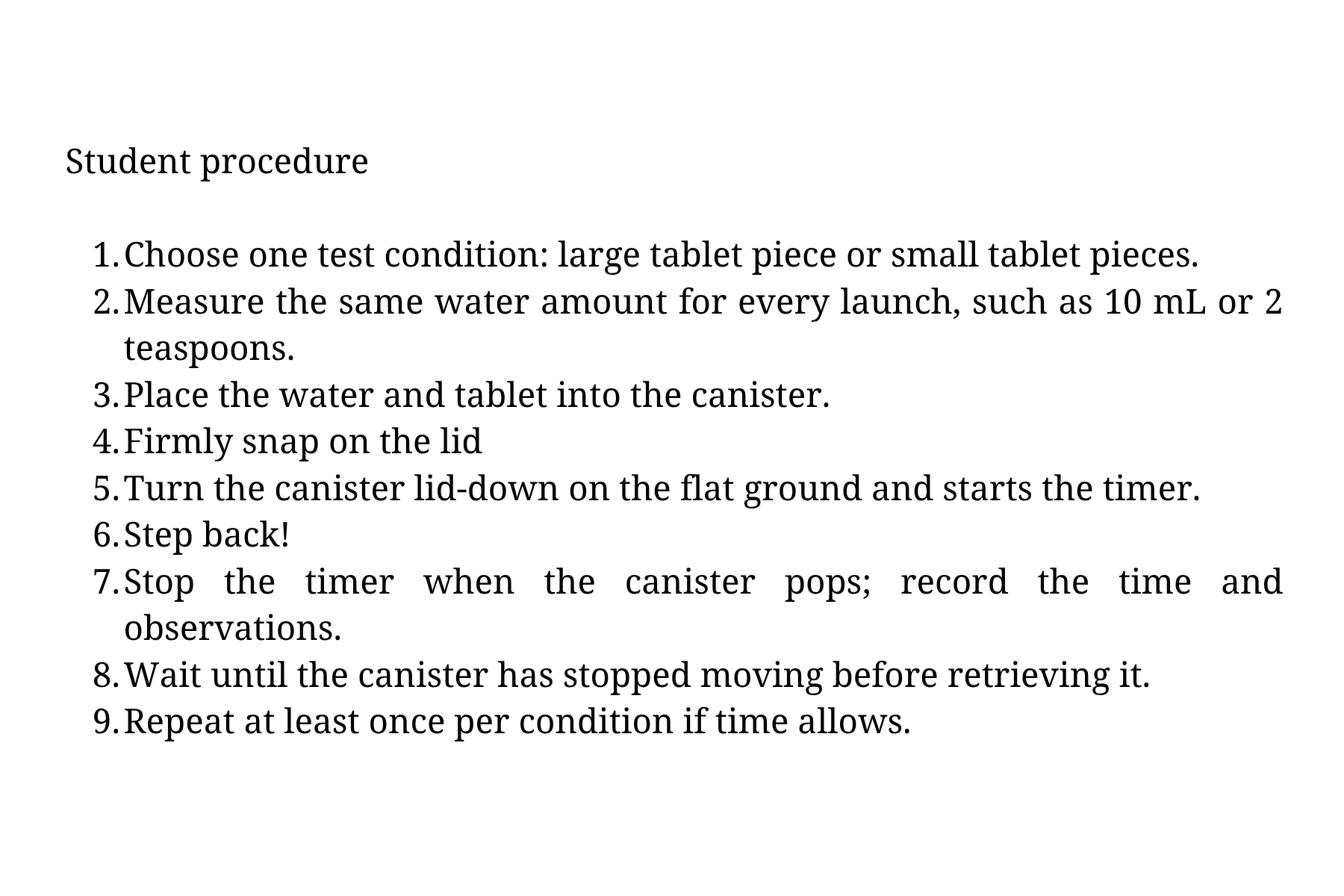
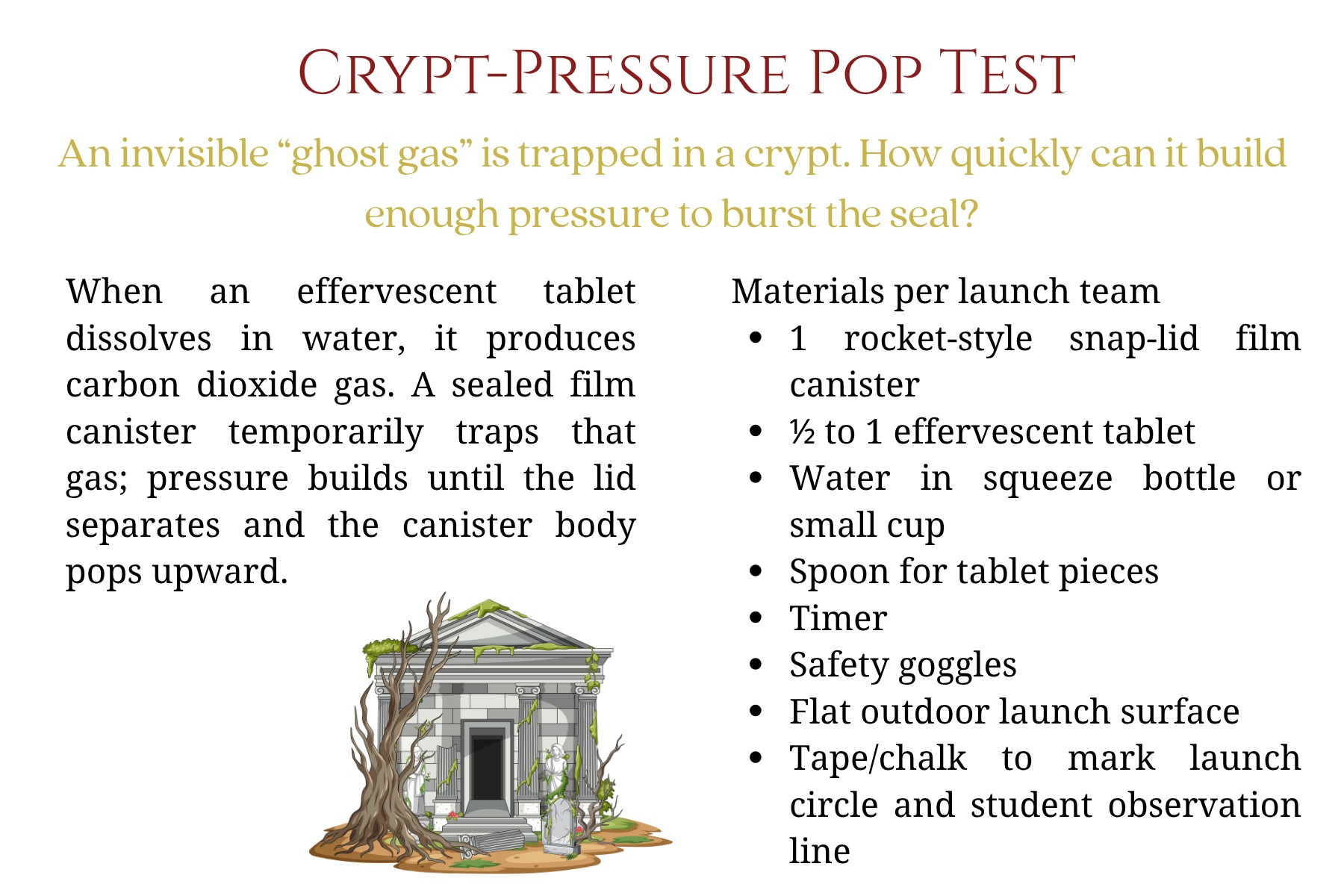
At the Crypt-Pressure Pop Test, learners explore how trapped carbon-dioxide gas takes up space and pushes against the walls and lid of a rocket-style film canister. They measure pop time, examine variables that influence results, and connect gas production to increasing pressure. The activity is especially effective in a clear outdoor launch area, though it can also be run indoors in a larger room with high ceilings and an appropriately open, retrieval-friendly space.
More than a seasonal activity
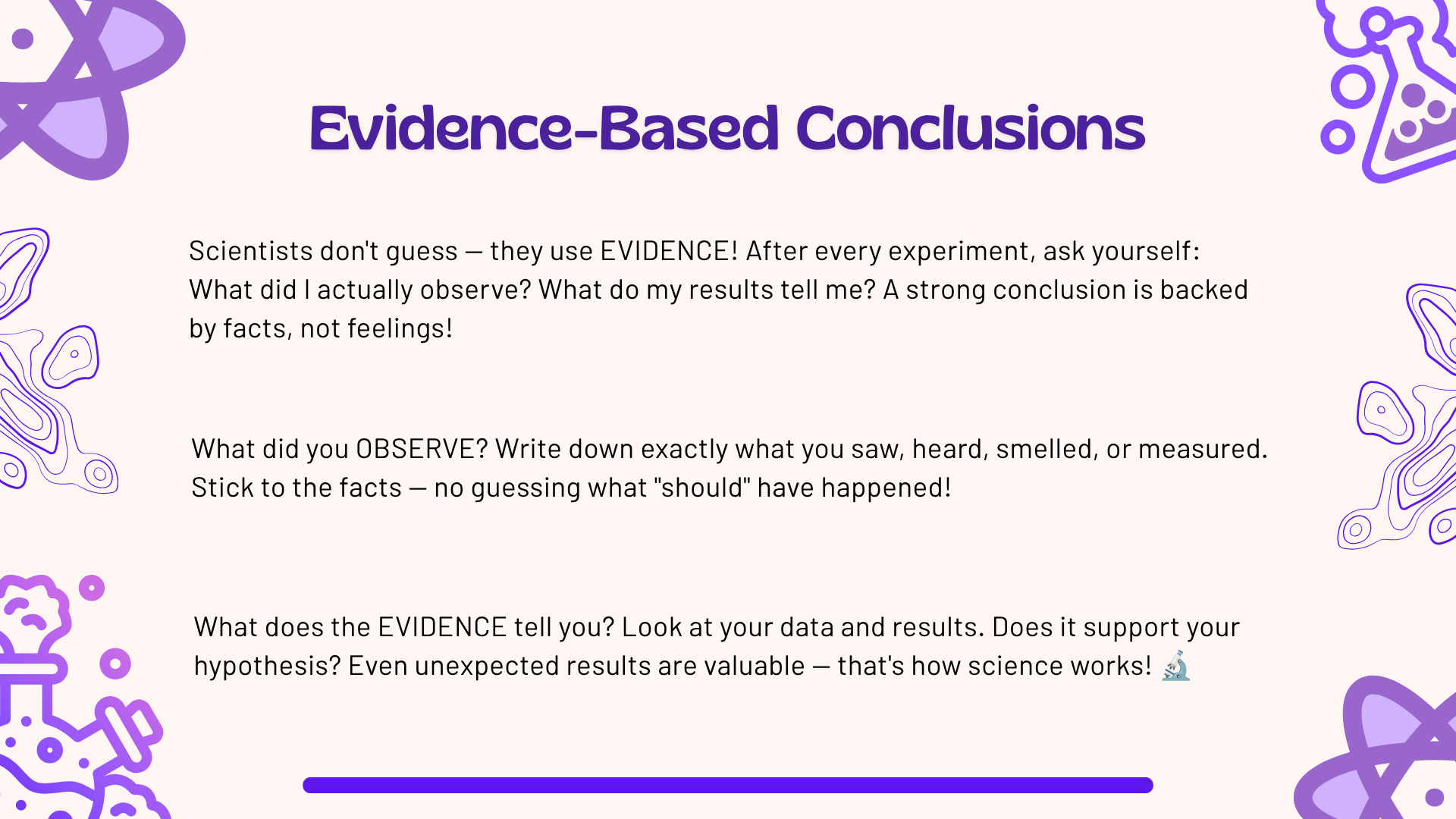
The Halloween theme makes the lesson memorable, but the scientific work remains substantial. Students practice describing observations, distinguishing observation from explanation, identifying variables, repeating trials, recording data, and supporting conclusions with evidence.
The optional research challenge pushes the lab further. Teams select one approved variable—such as tablet surface area, tablet amount, water temperature, or water volume—then develop a question and hypothesis, identify independent and dependent variables, complete repeated trials, calculate averages, graph results, and share a Claim-Evidence-Reasoning conclusion.
It also invites an important discussion about data quality: time until a canister pops is an informative but indirect measure of reaction rate. Gas production, tablet dissolution, lid seal, water conditions, and preparation time can all affect the measured result. That gives students a useful, age-appropriate introduction to indirect measurement, anomalies, and sources of error.
Instruction and assessment support
The Think & Tinker version is designed to reduce planning friction for classroom educators. Use the included lecture notes to establish the core ideas before students begin. During the stations, students work in small teams with their own procedure cards and record sheets. Afterward, guide a whole-class “Haunted Lab Evidence Board” discussion where groups share one observable physical property, one sign of a chemical reaction, one variable that changed an outcome, and one piece of evidence from their data.
The included closing prompts and exit tickets help you see whether students can move from “it fizzed” or “it popped” to a defensible scientific explanation. The student science cheat sheet offers a concise reference for non-Newtonian fluids, effervescent reactions, surface area, carbon-dioxide gas, gas pressure, and physical versus chemical changes.
Which version is right?
Choose the Think & Tinker Classroom Lab if you want a classroom-oriented resource with formal instructional and assessment supports: NGSS connections, educator lecture notes, student science reference material, closing questions, exit tickets, and assessment guidance.
Choose the Spooky Science Homeschool Workshop Edition if you want the same core three-station investigation in a flexible educator-led format for a household, co-op, tutoring session, library program, small workshop, or science-party activity. The workshop edition includes the lab experience, station procedures, recording support, troubleshooting, and extension work, but does not include the classroom lecture notes, NGSS section, exit tickets, closing prompts, formal assessment supports, or science cheat sheet.
License and use
This classroom lab is licensed for use by one educator with their classes. Please purchase separate school or district licensing for broader use or sharing across programs.


Reviews
There are no reviews yet.