Description
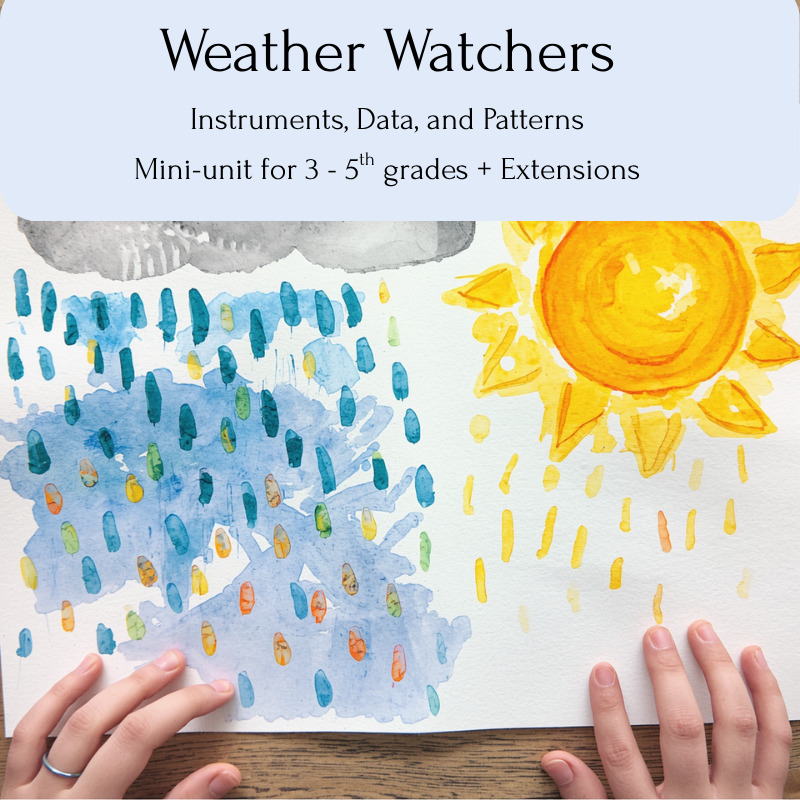
Turn your students into “junior meteorologists”
Instead of just talking about sunny, cloudy, and rainy, your learners will measure what the atmosphere is doing right outside their door. This hands‑on weather station mini‑unit guides students through building simple instruments, collecting daily data, and using graphs to find patterns in local weather and climate.
Perfect for upper elementary and middle school, this resource works for homeschool co‑ops, science clubs, and traditional classrooms that want more doing and less worksheet busywork.
What’s included
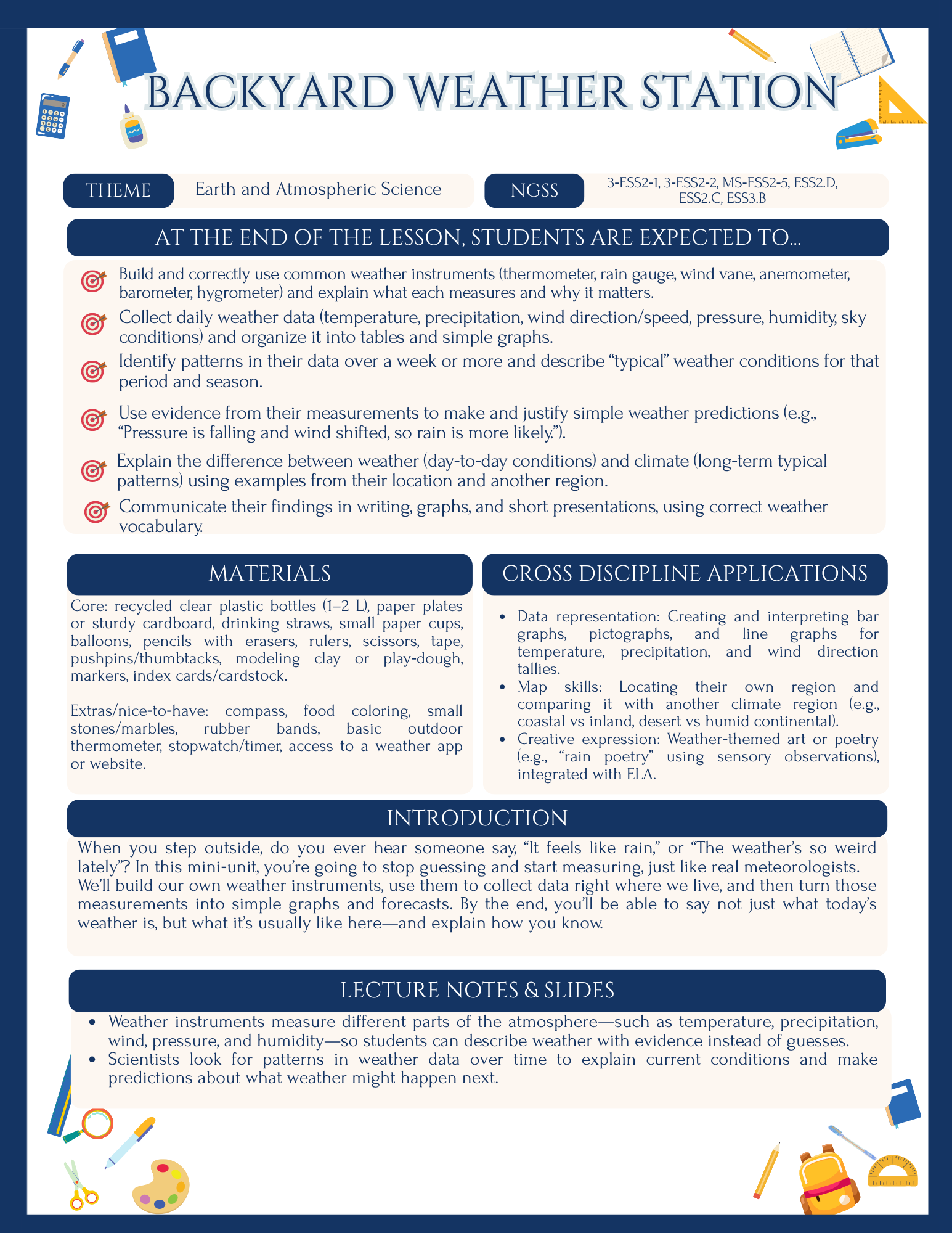
- Complete lesson plan outline for 3–5 sessions
- Clear learning targets and NGSS connections (3‑ESS2‑1, 3‑ESS2‑2, MS‑ESS2‑5)
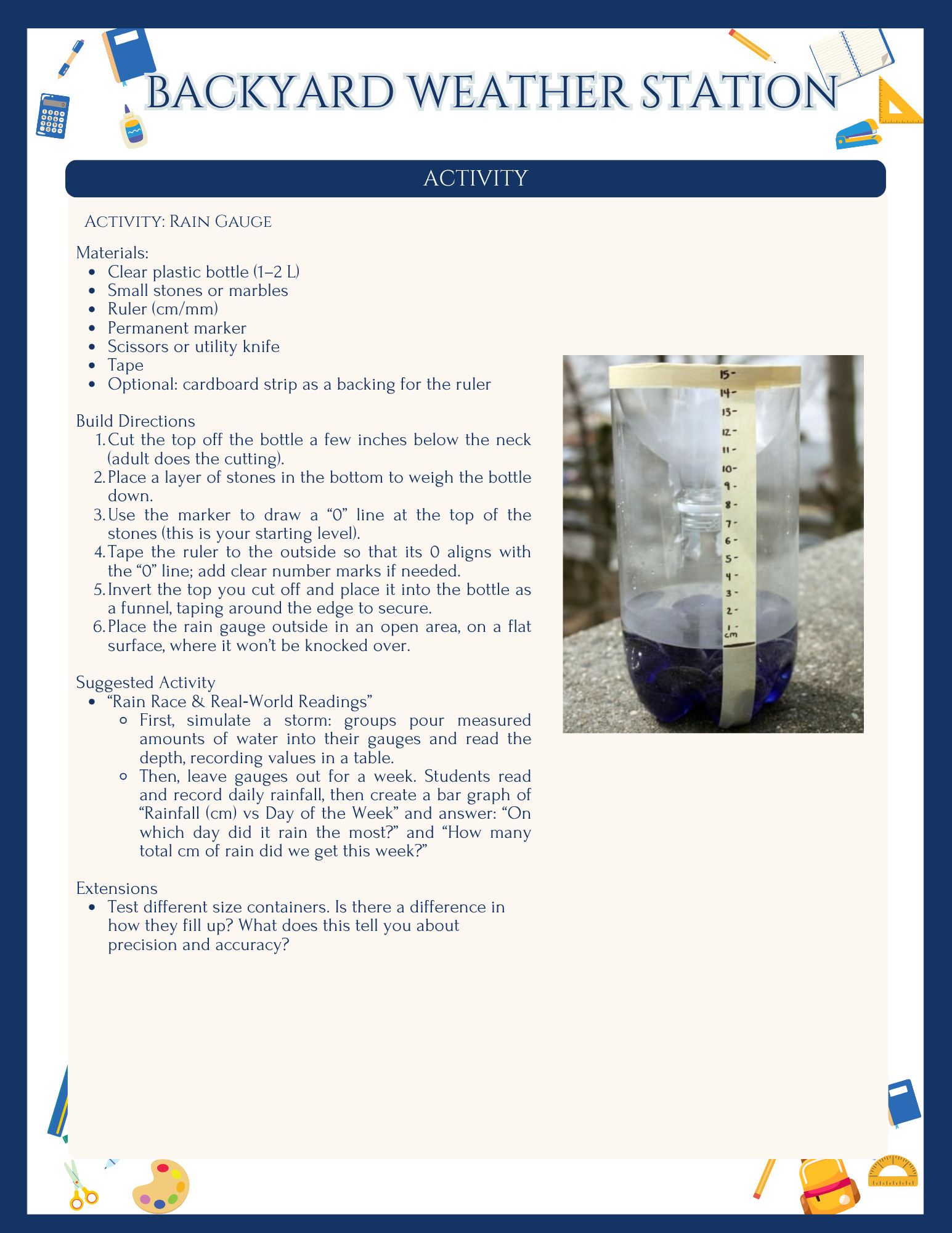
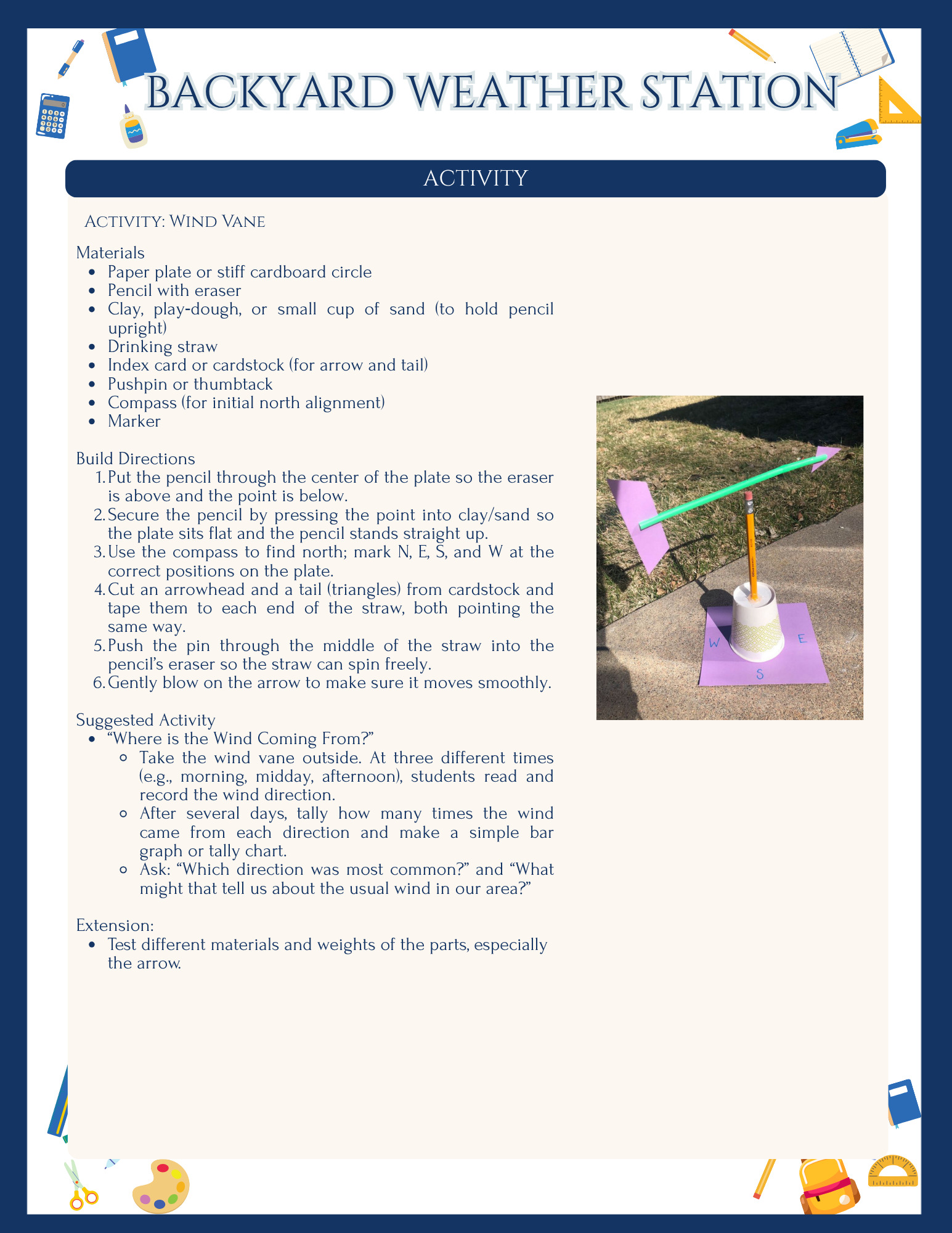
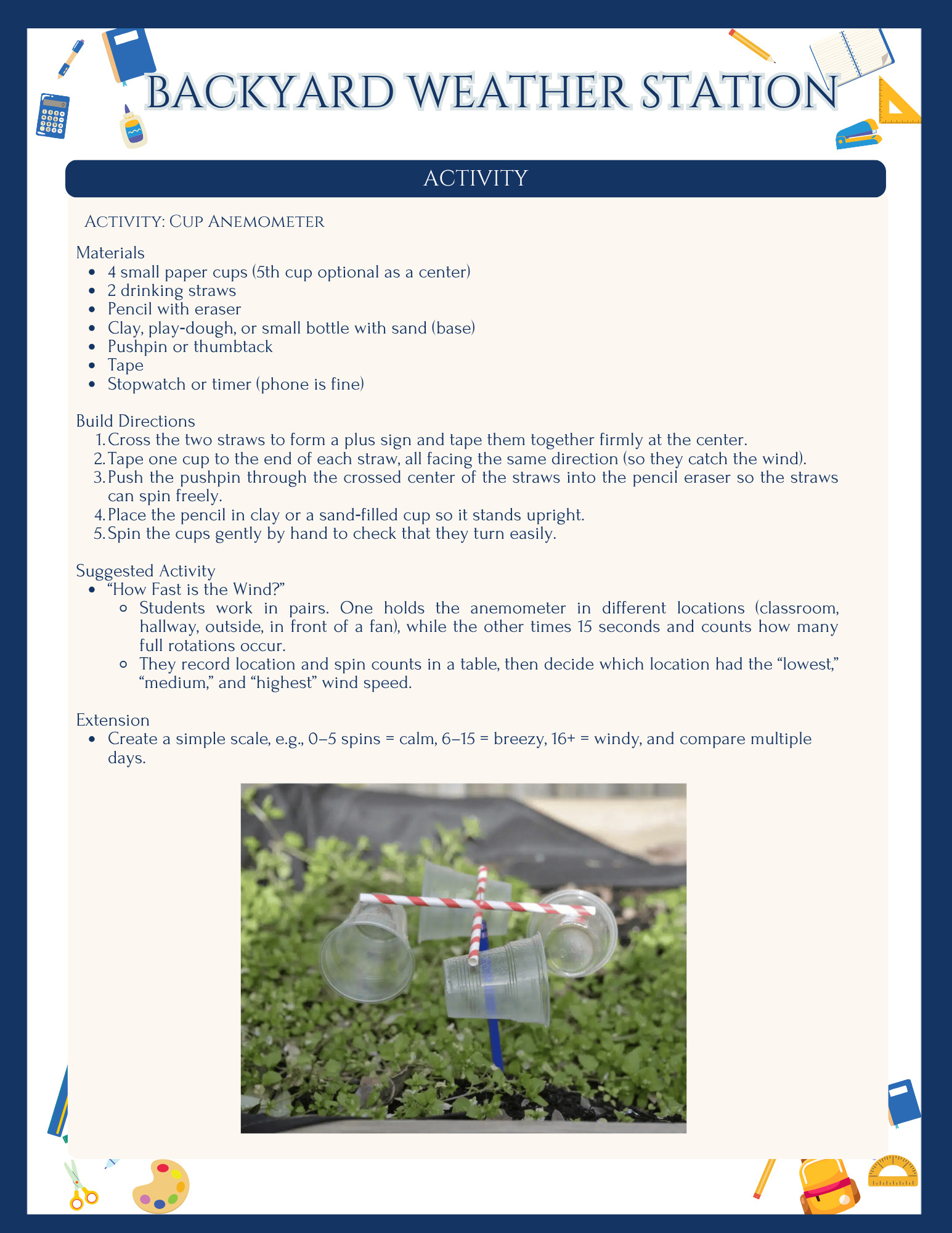
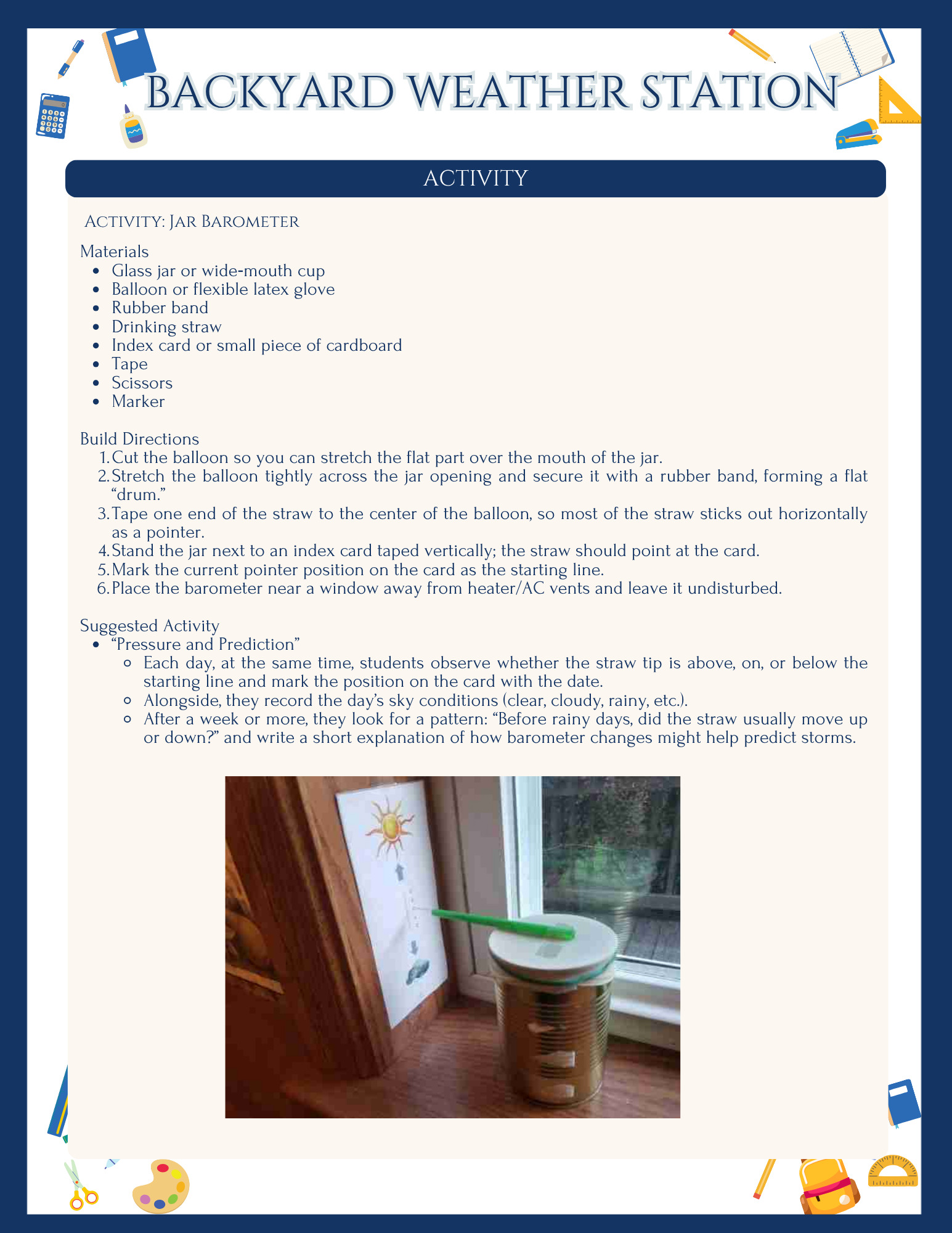
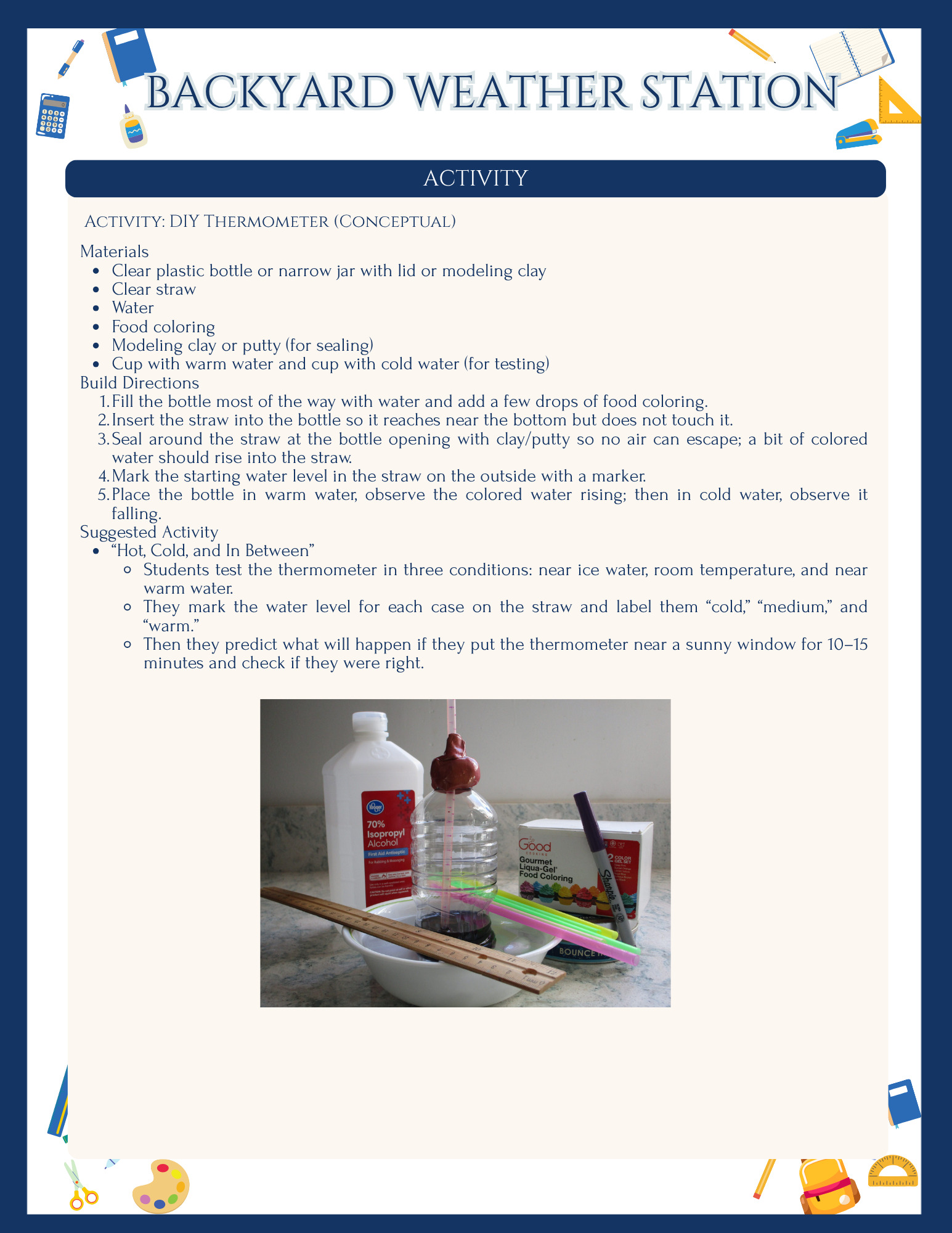
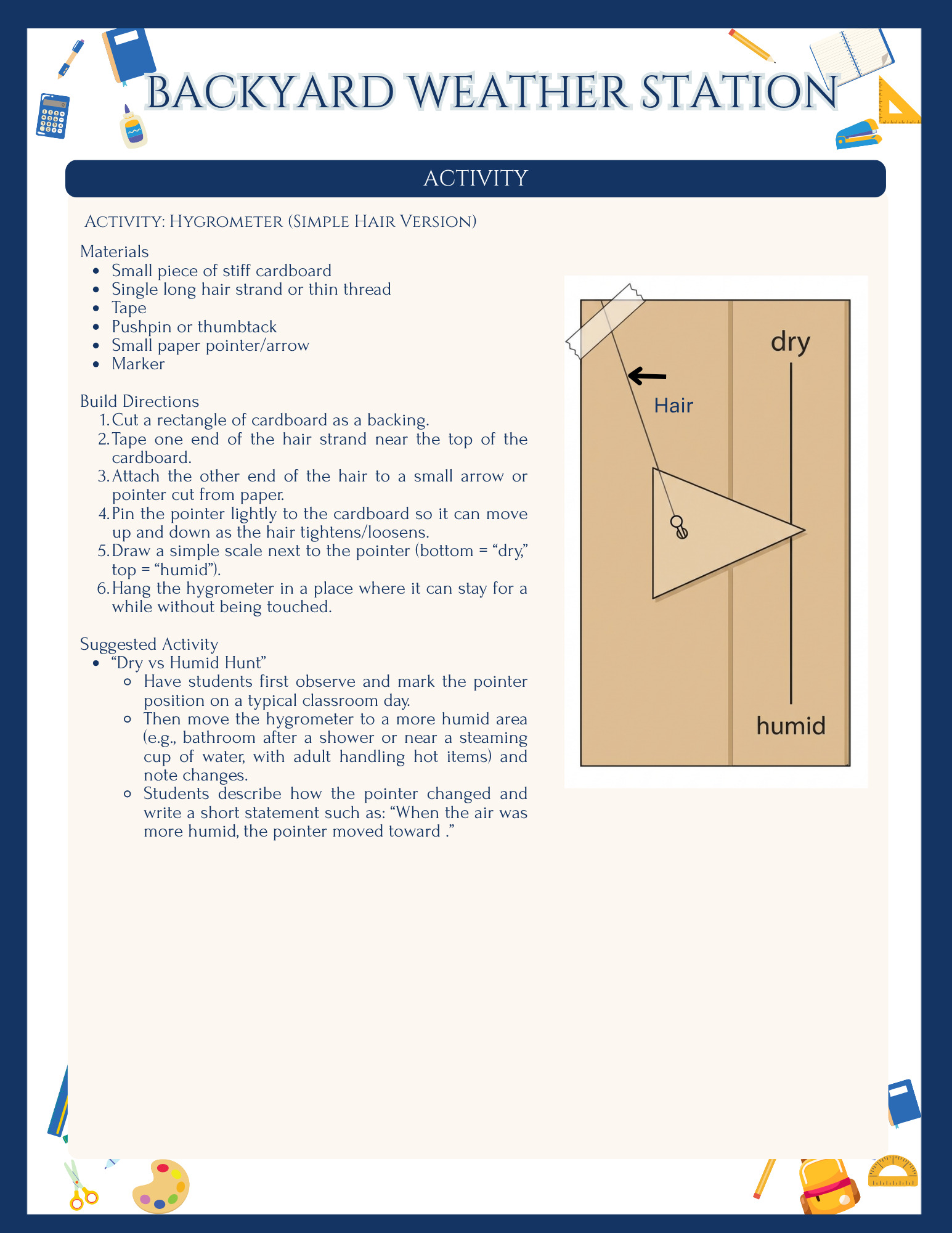
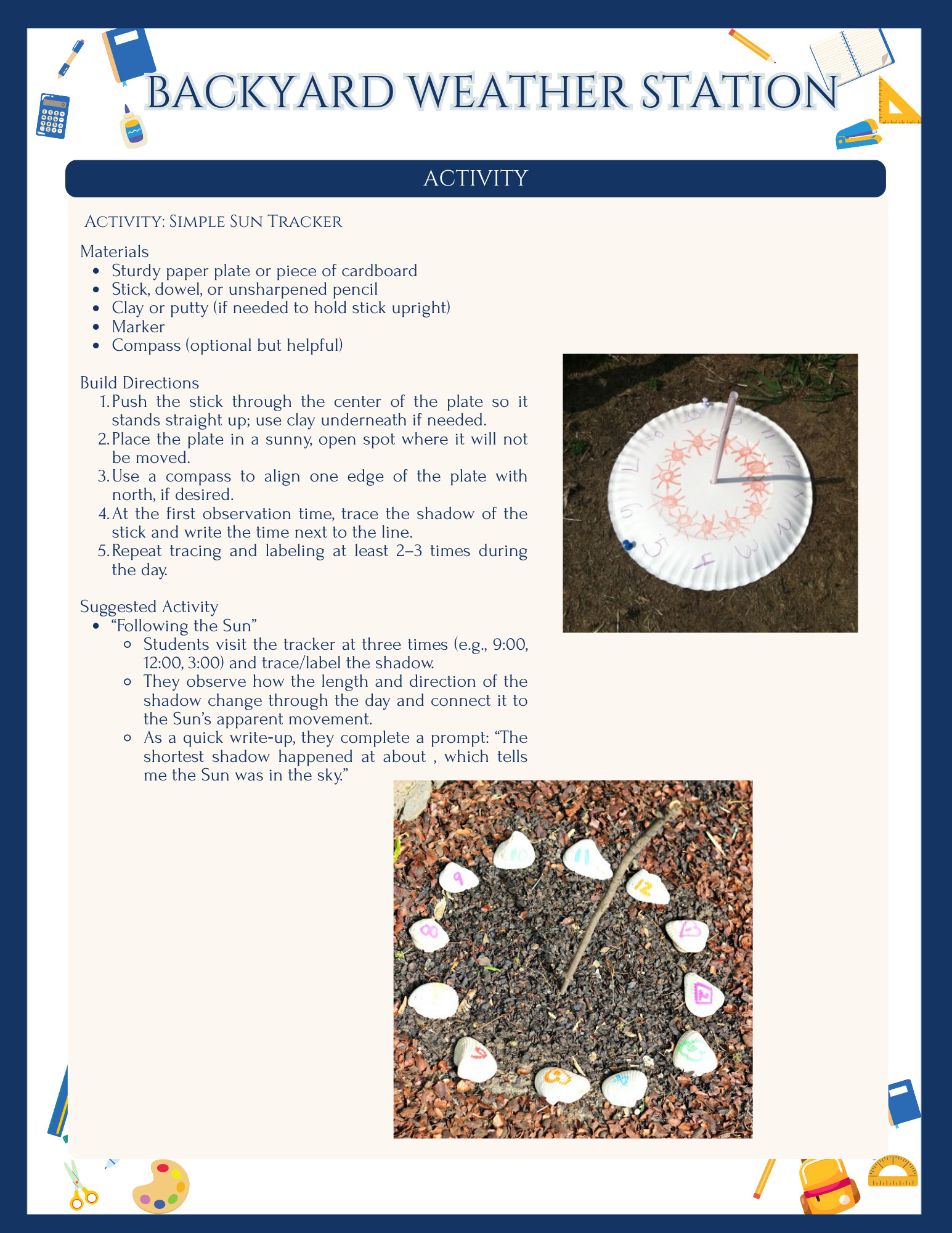
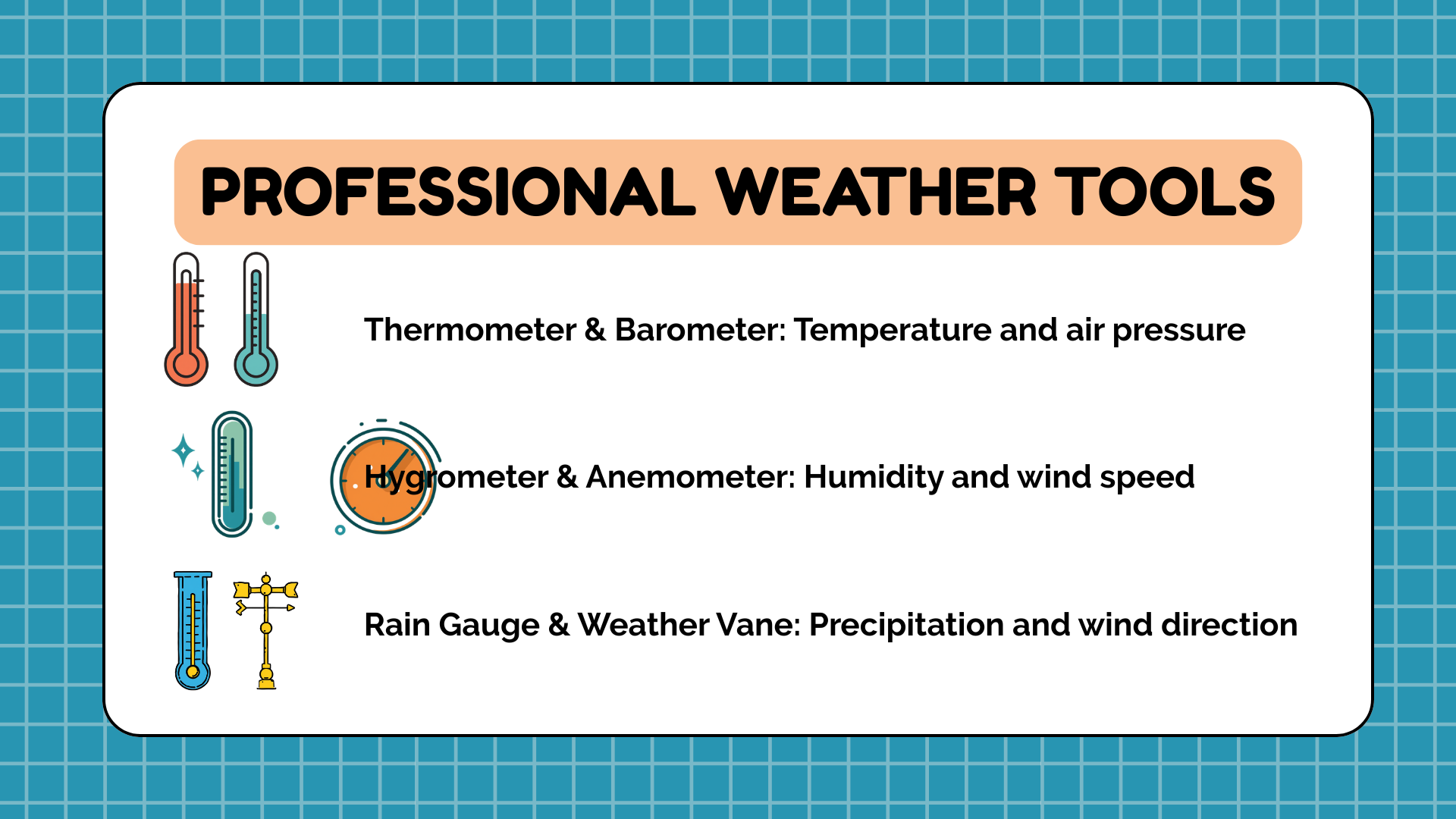
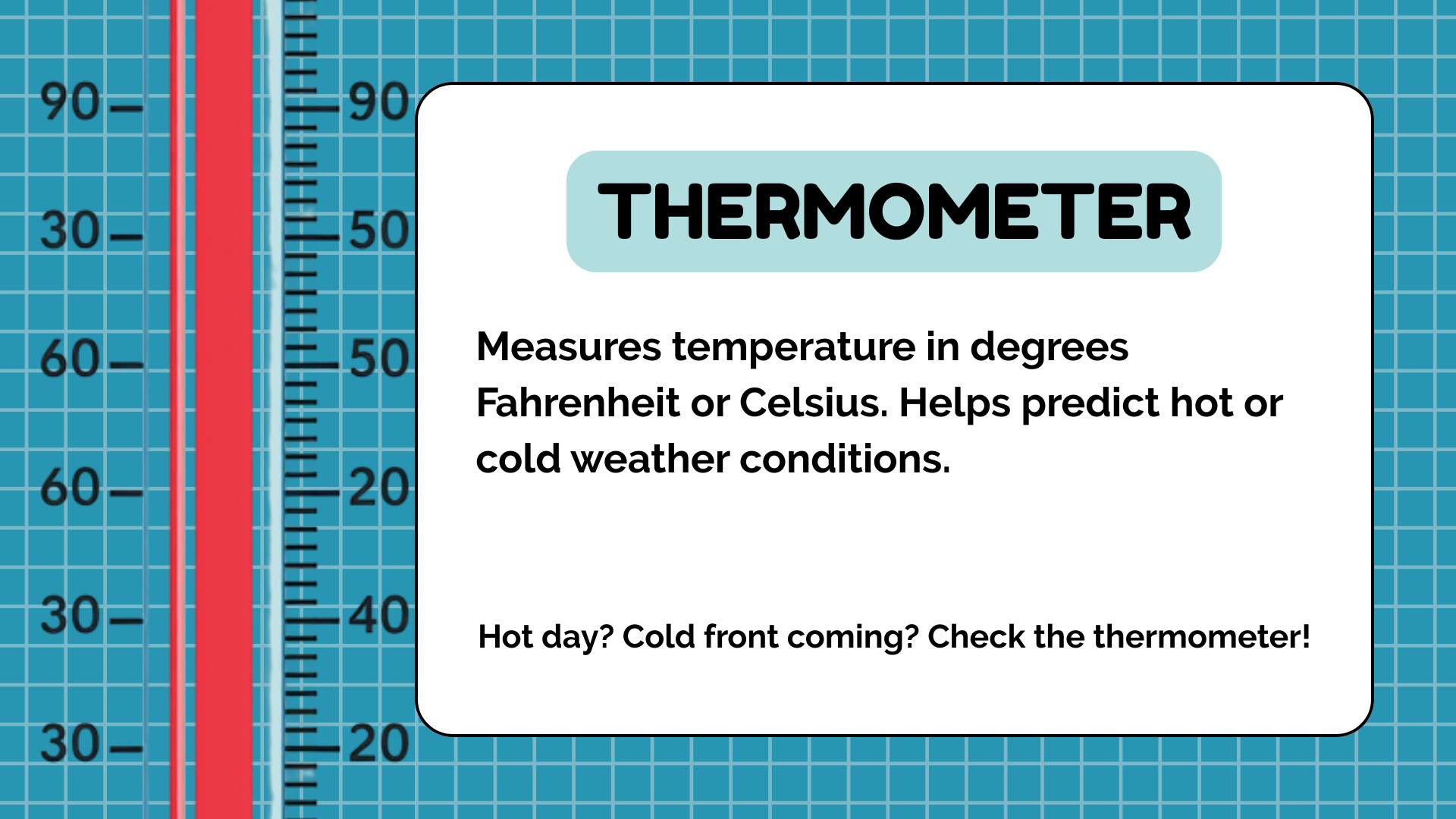
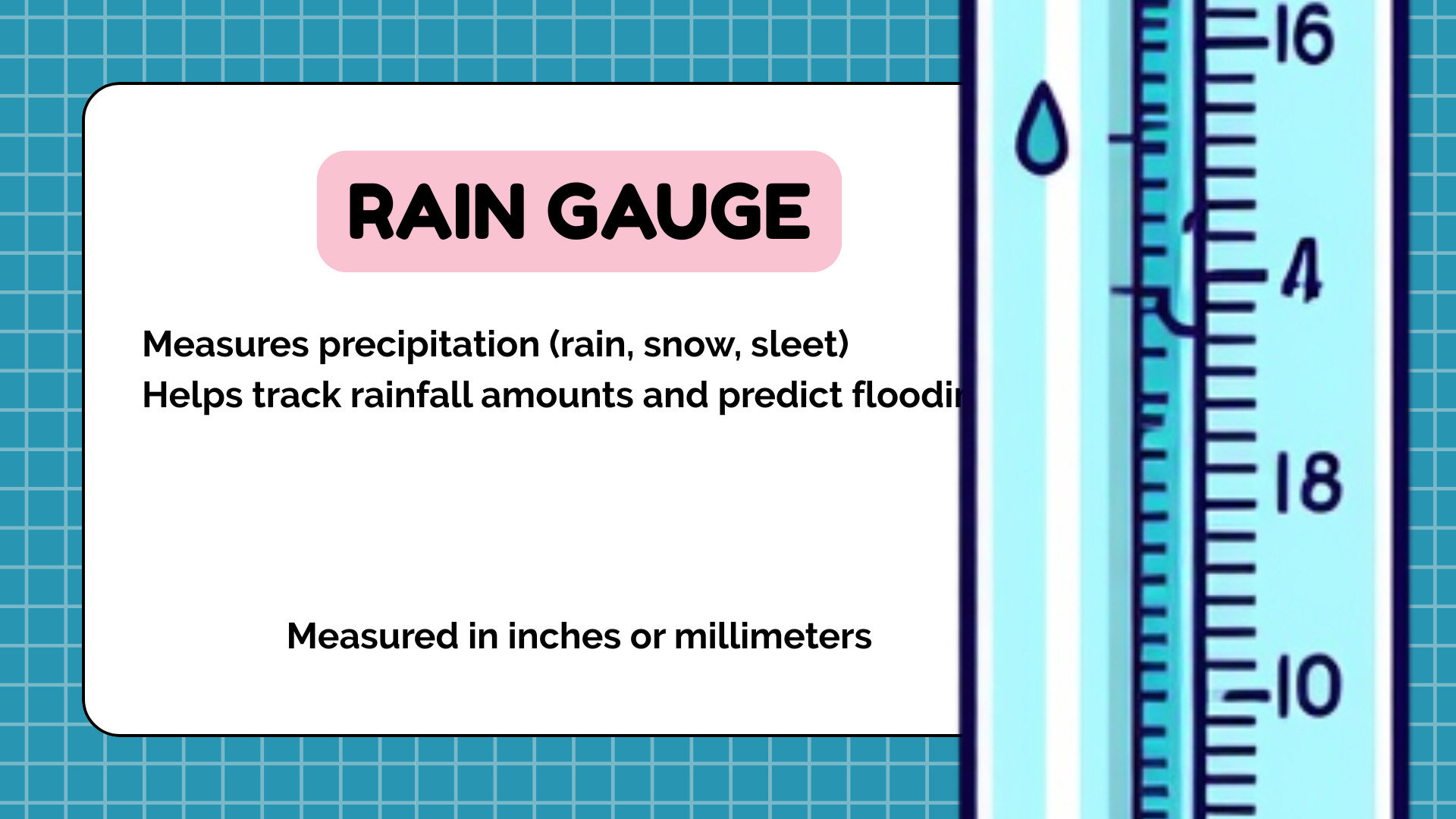
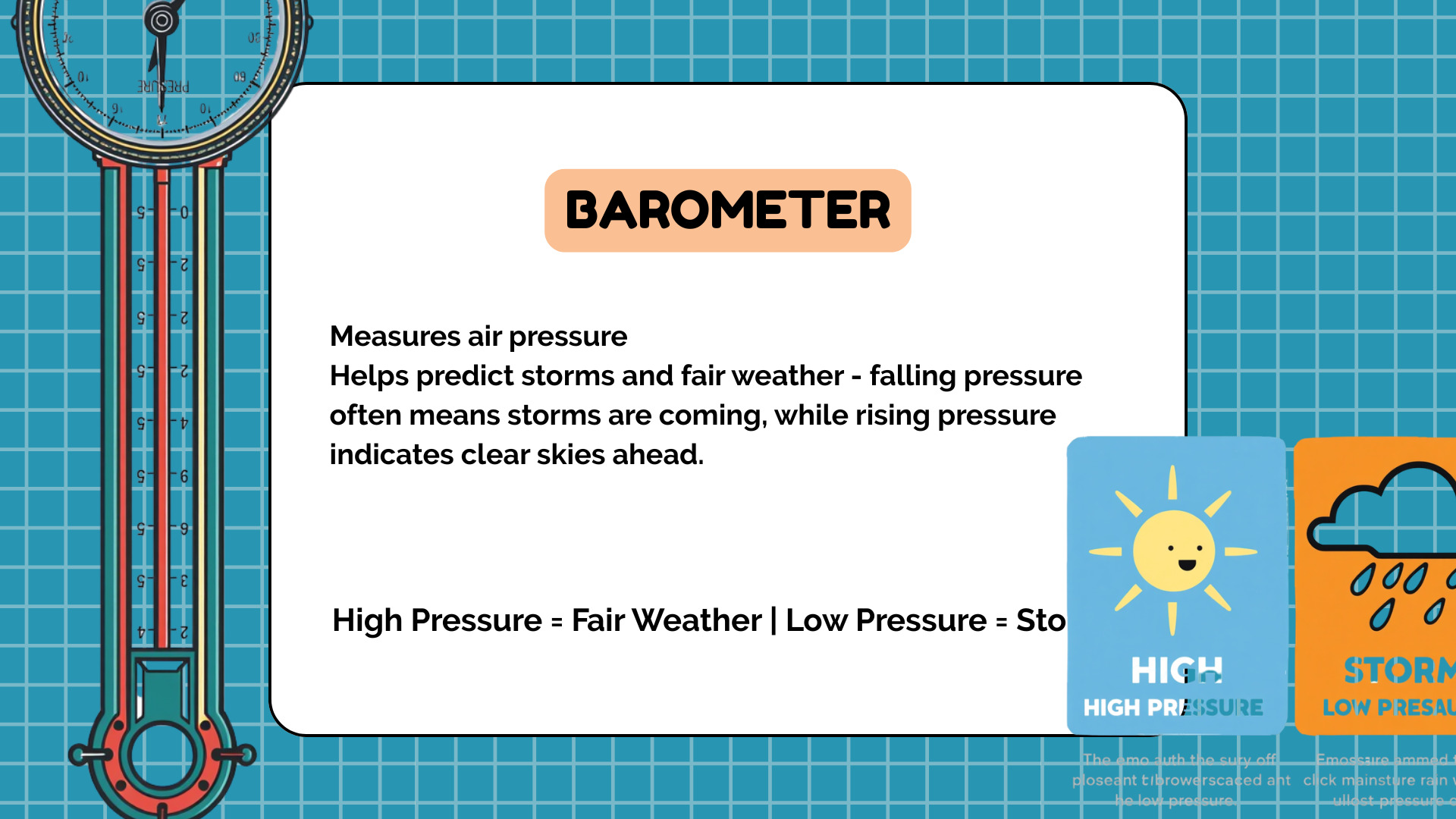
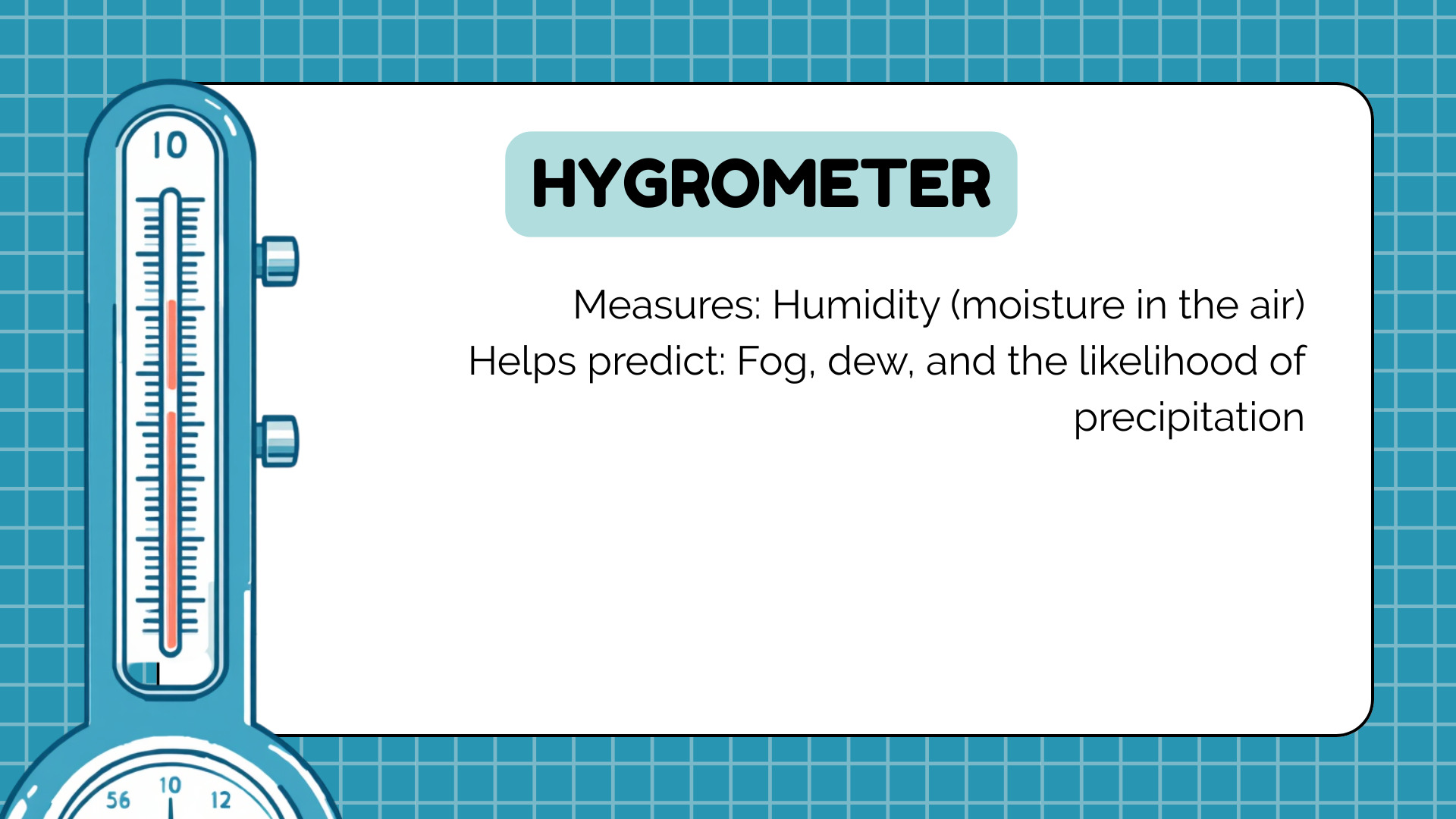
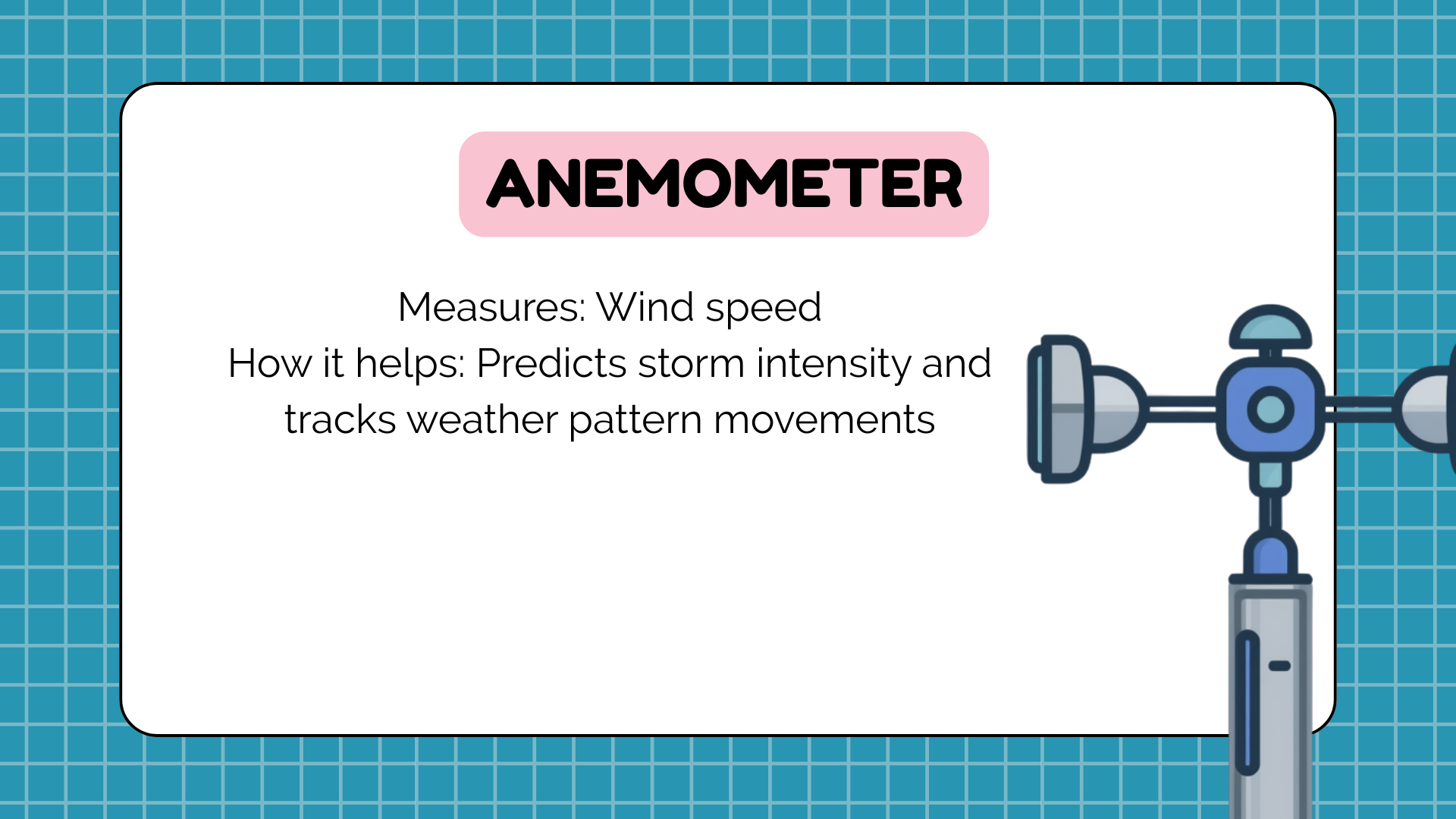
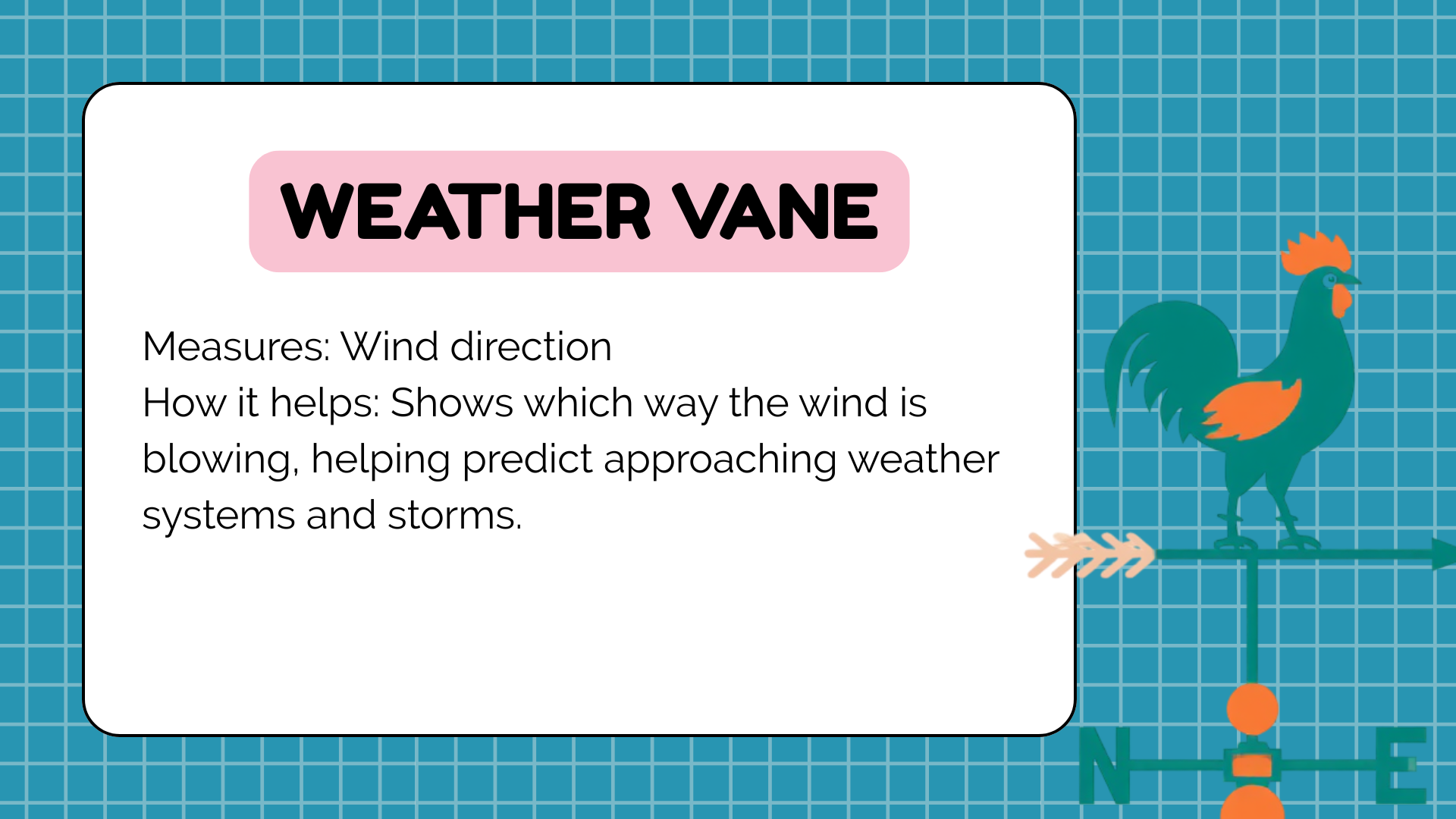
- Station build cards for: rain gauge, wind vane, anemometer, barometer, thermometer, hair hygrometer, and simple sun tracker
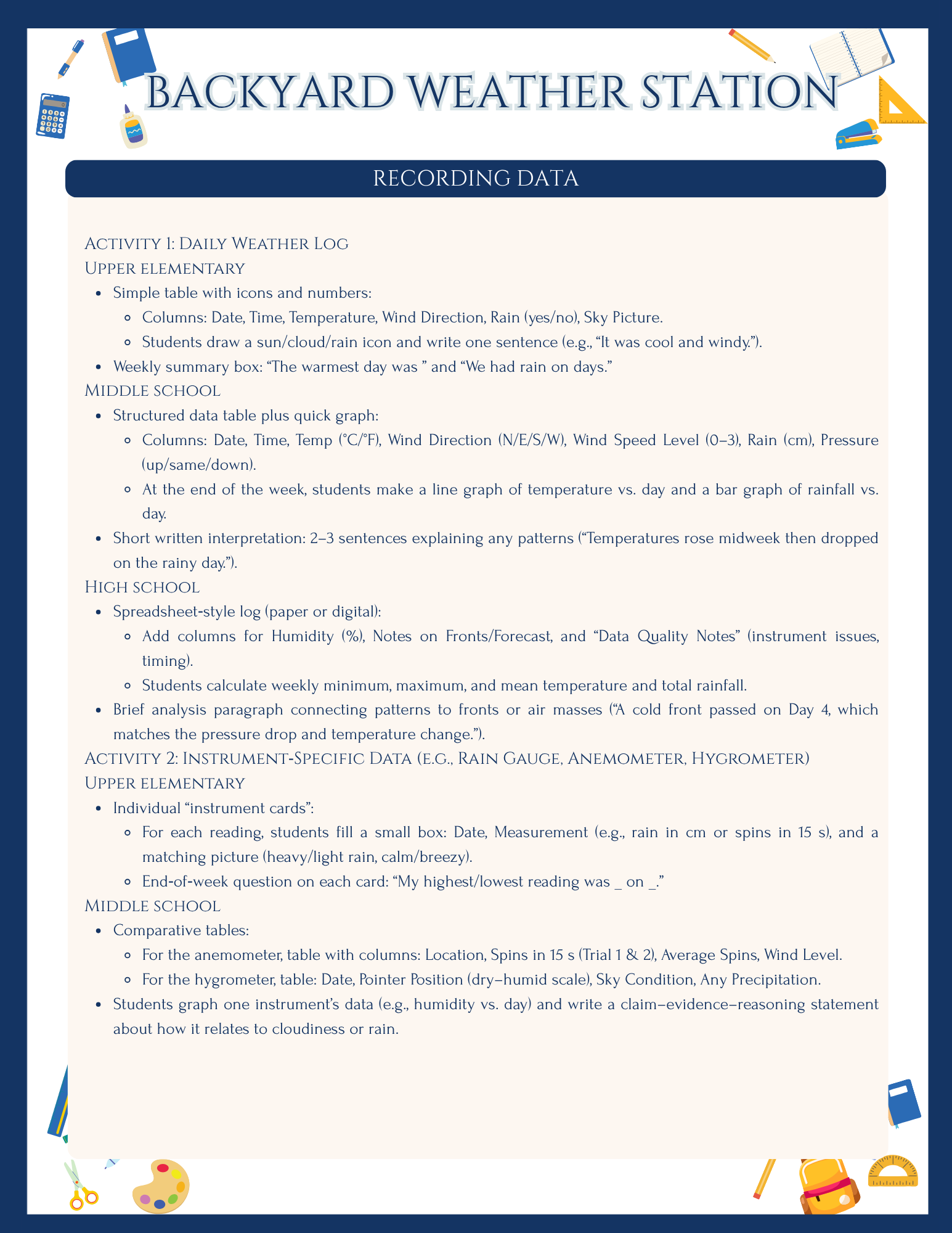
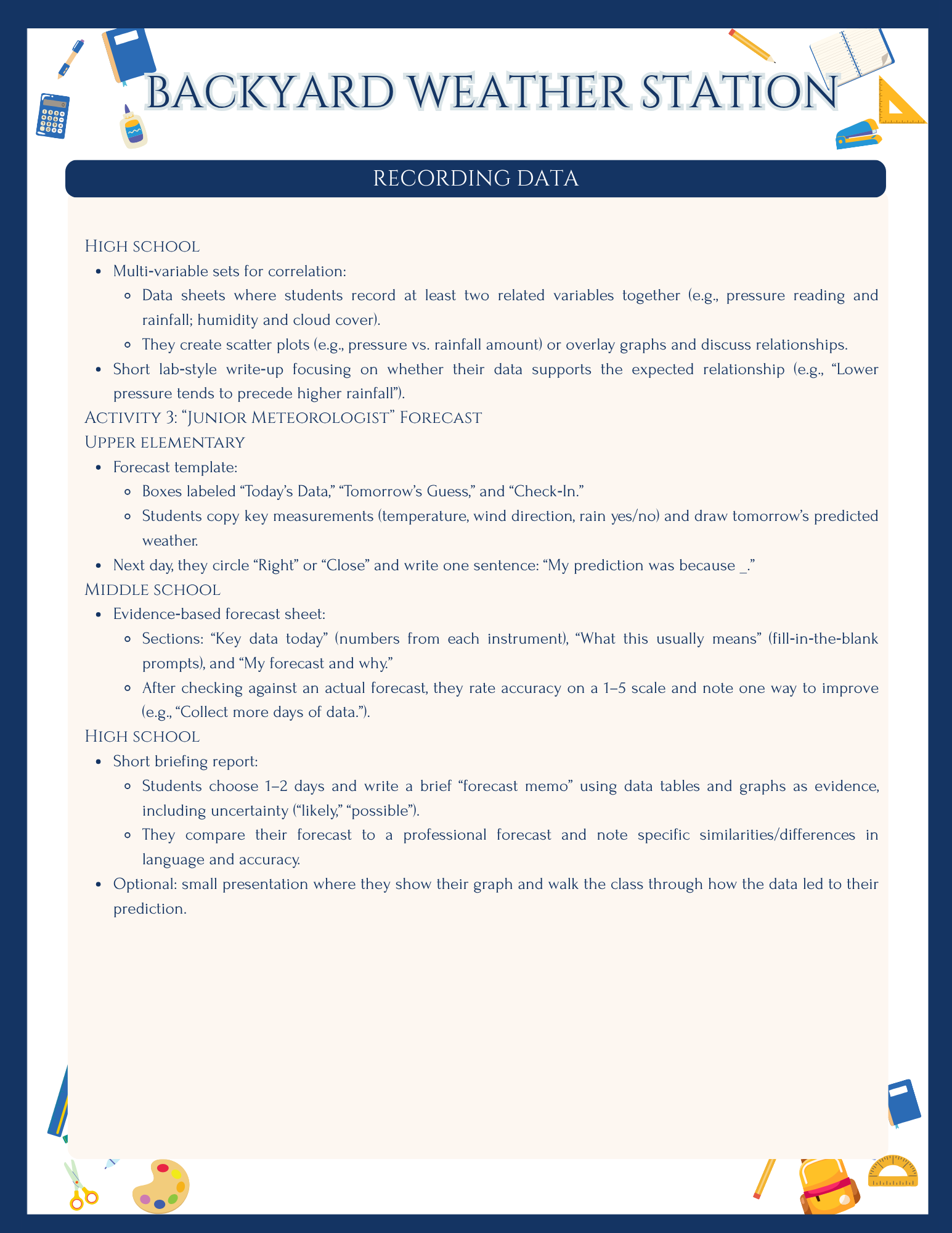
- Student data sheets and graph templates (daily logs, instrument tables, pattern graphs)
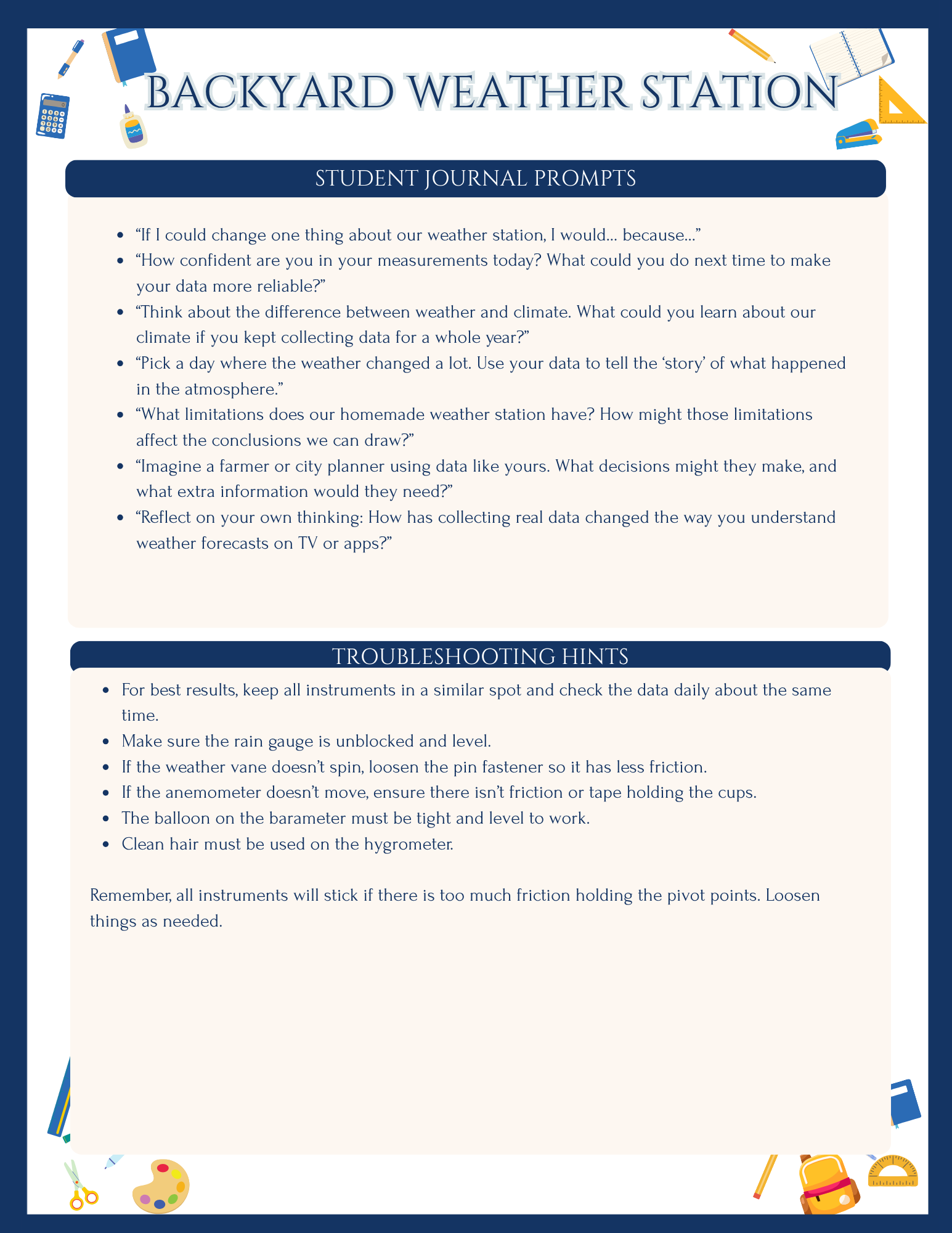
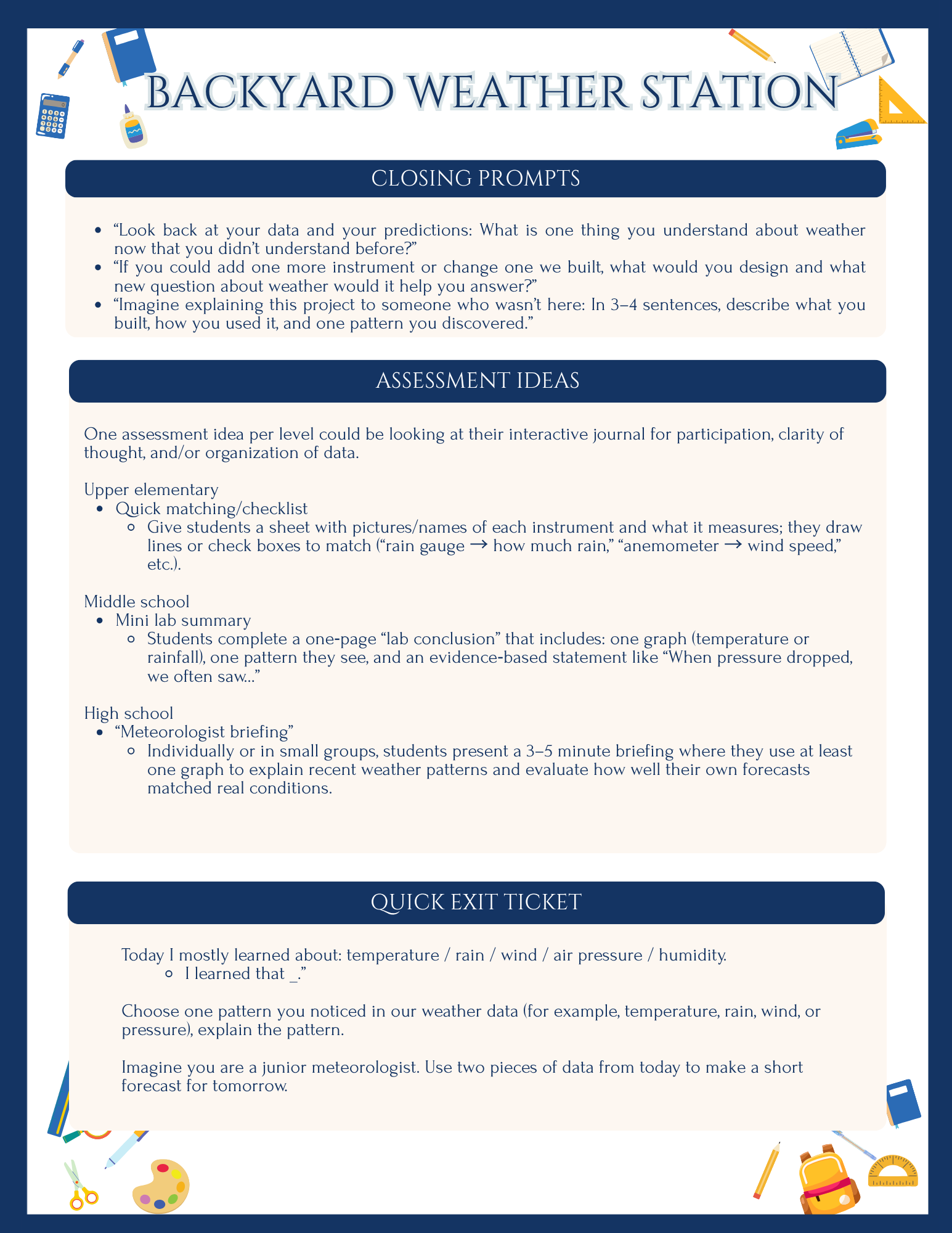
- Student journal prompts and exit tickets in multiple challenge levels
- Low‑prep assessments (quick checks, CER prompts, mini‑projects)
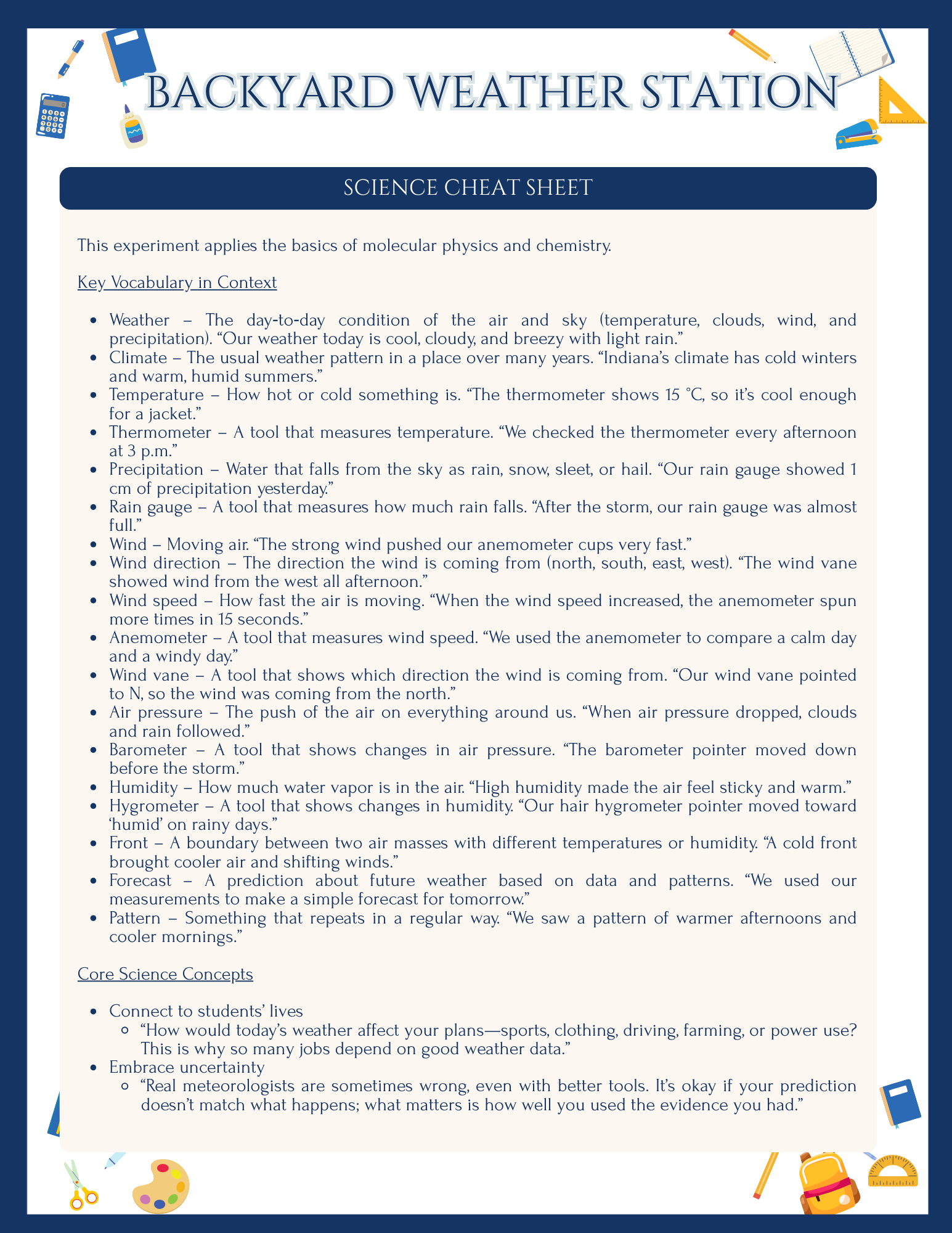
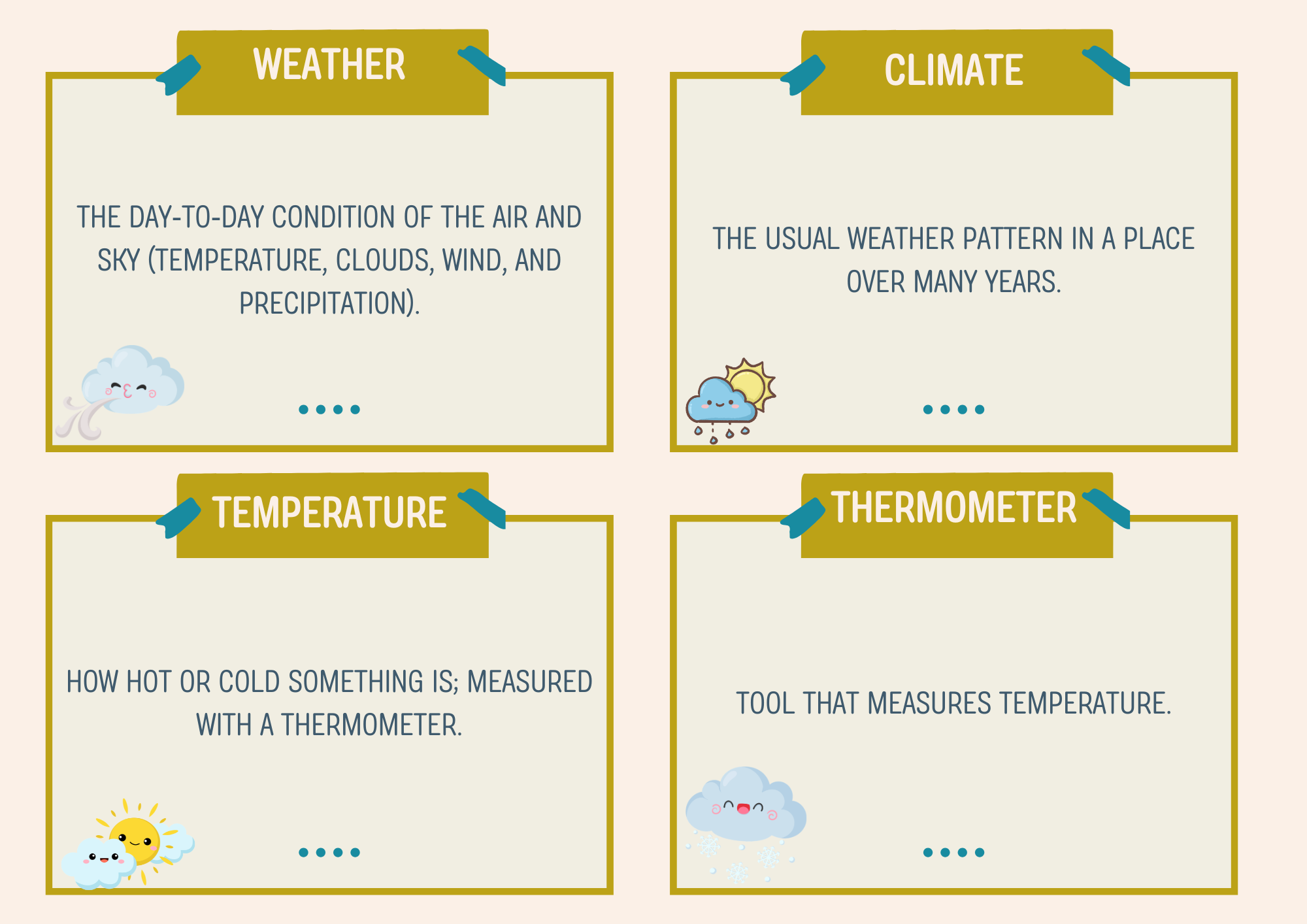
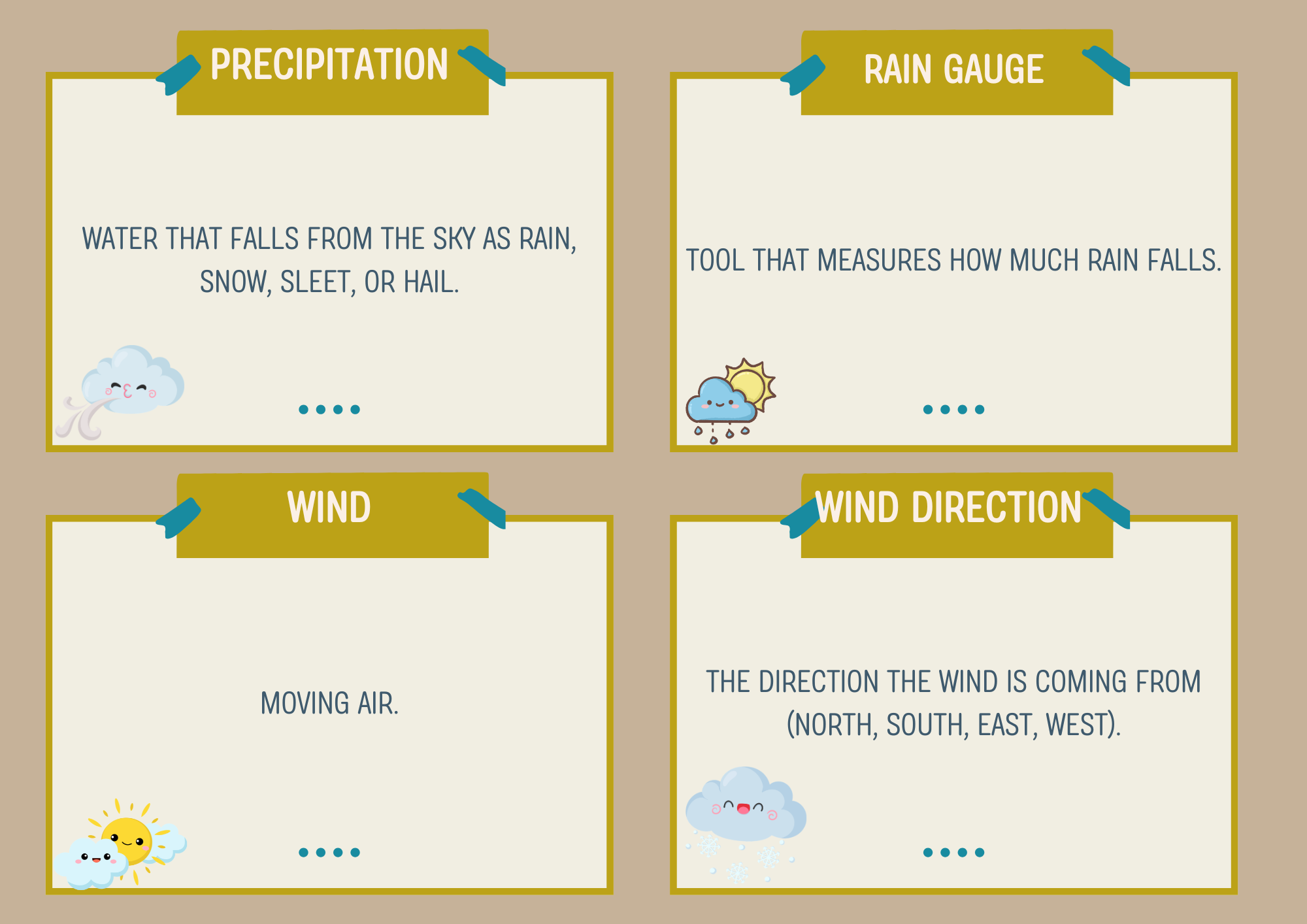
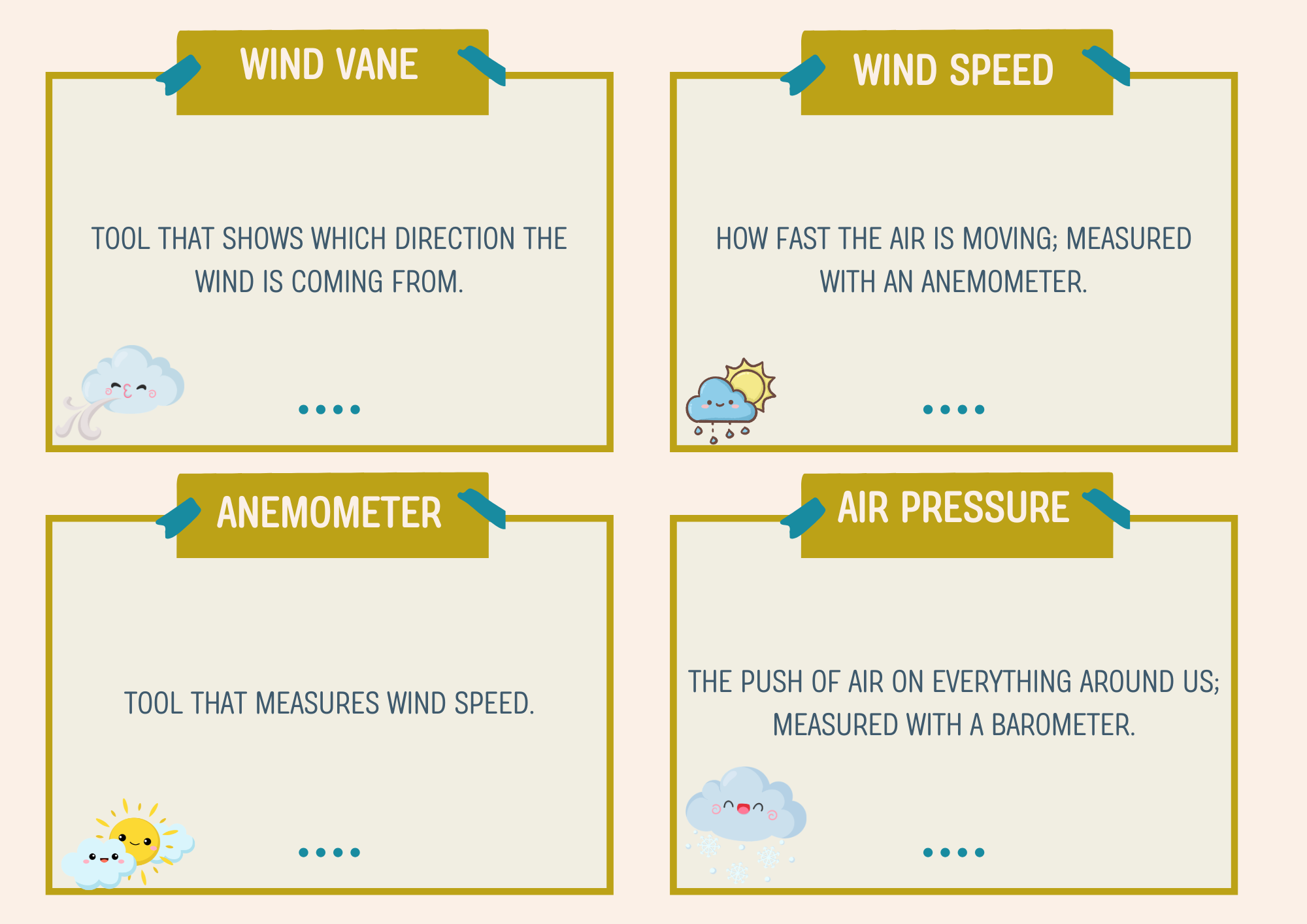
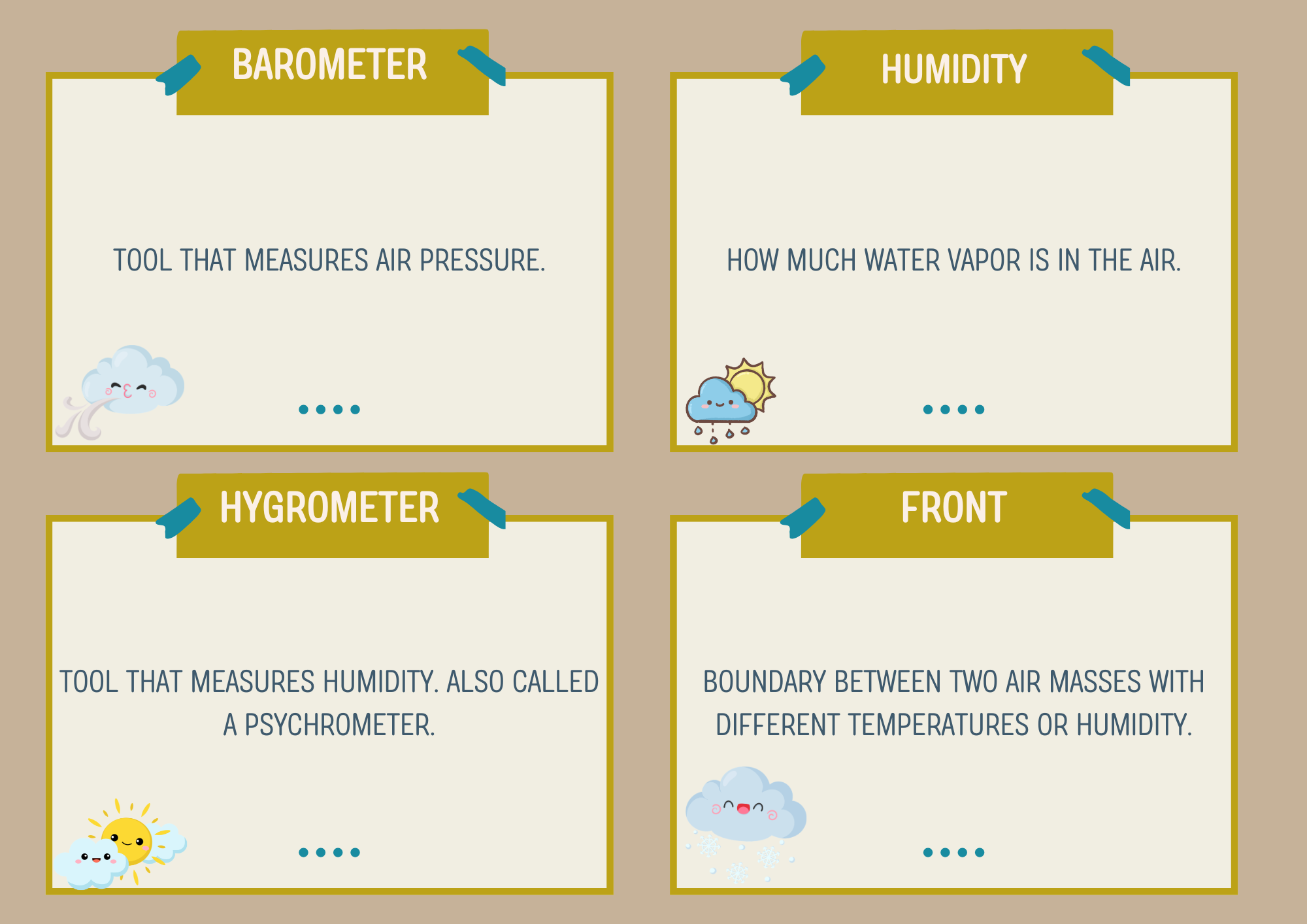
- Vocabulary list and printable vocab cards (weather vs climate, instruments, key terms)
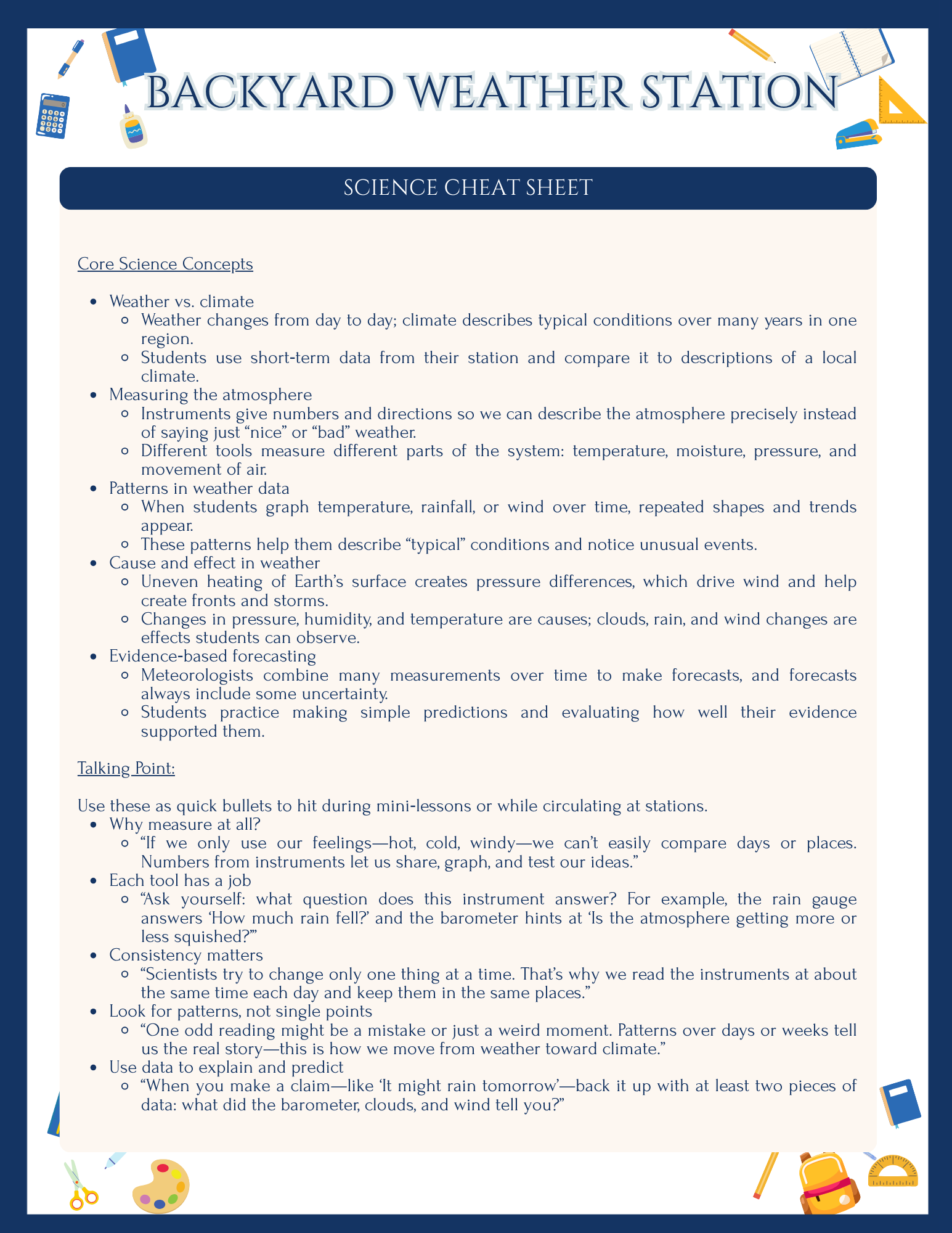
- Teacher/parent concept cheat sheets with core ideas and talking points
- Editable slide outline for direct instruction and discussion
- Atmospheric Instrumentation mini‑unit (PDF) – Complete teacher guide with learning targets, NGSS alignment, build‑station directions for 7 instruments, recording‑data options, journal prompts, troubleshooting tips, assessments, and cross‑discipline extensions.
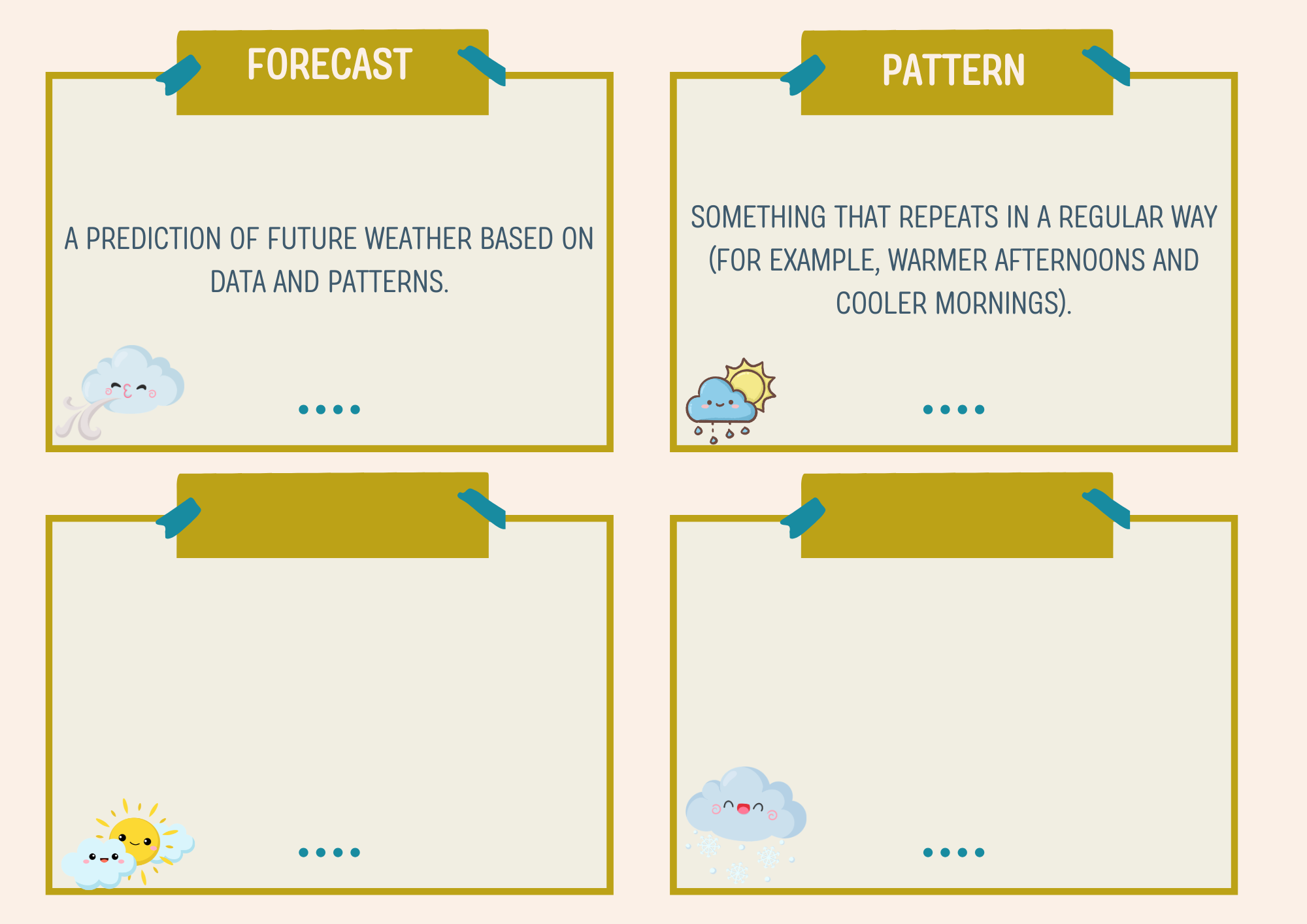
- Weather Vocabulary Cards (PDF) – Printable cards for key weather and climate terms and instruments, written in student‑friendly language for flashcards, word walls, or matching games.
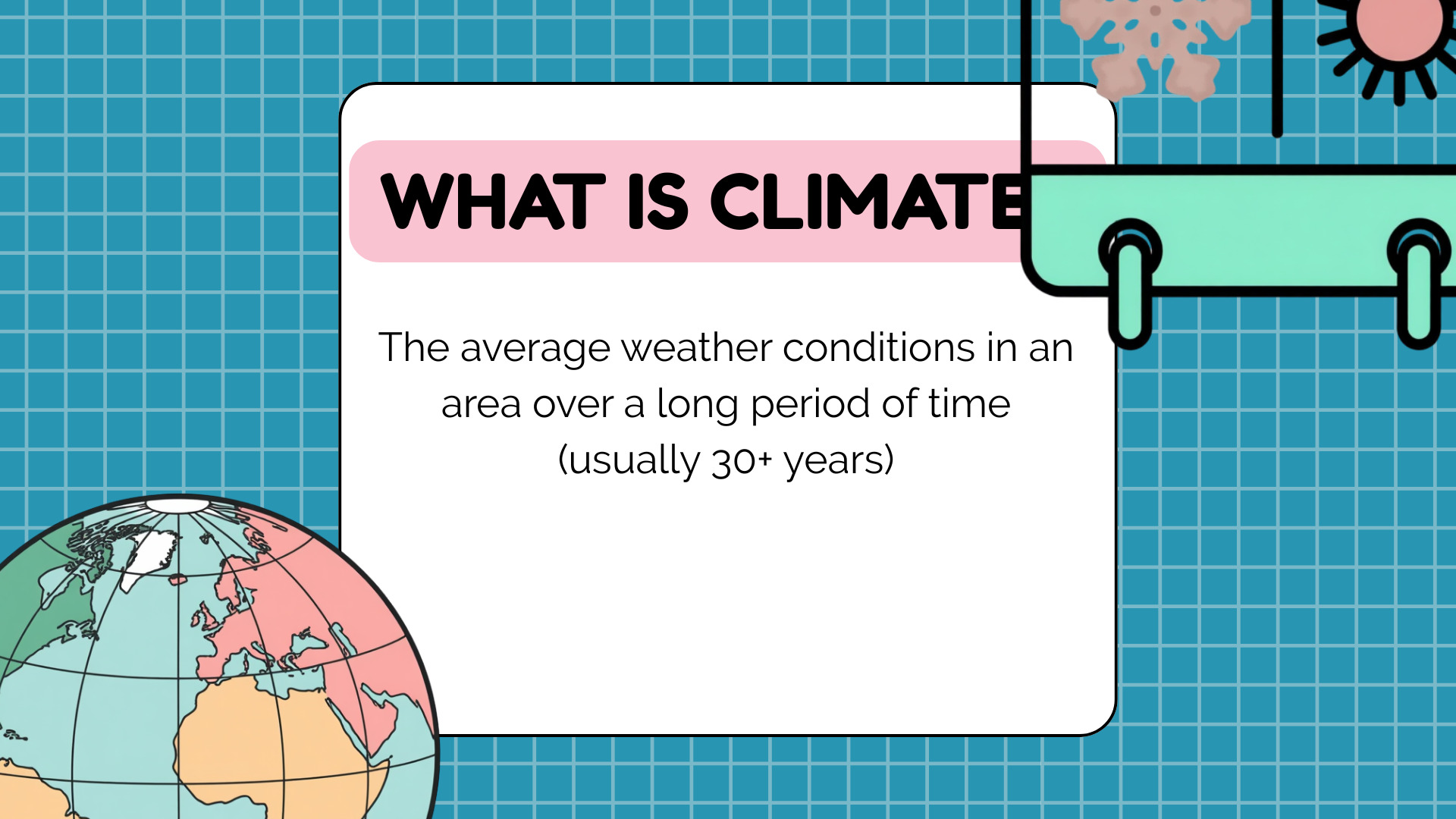
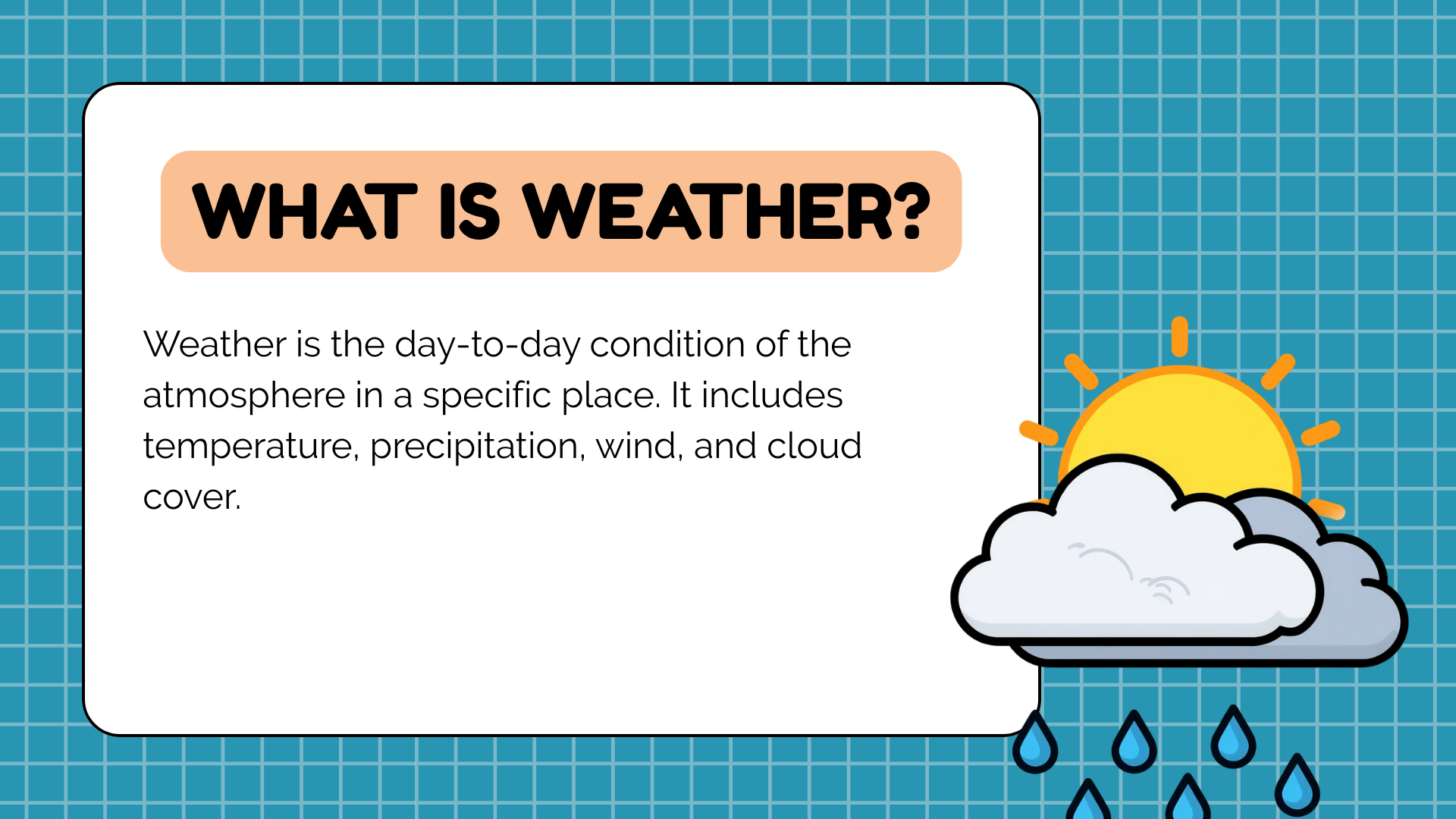
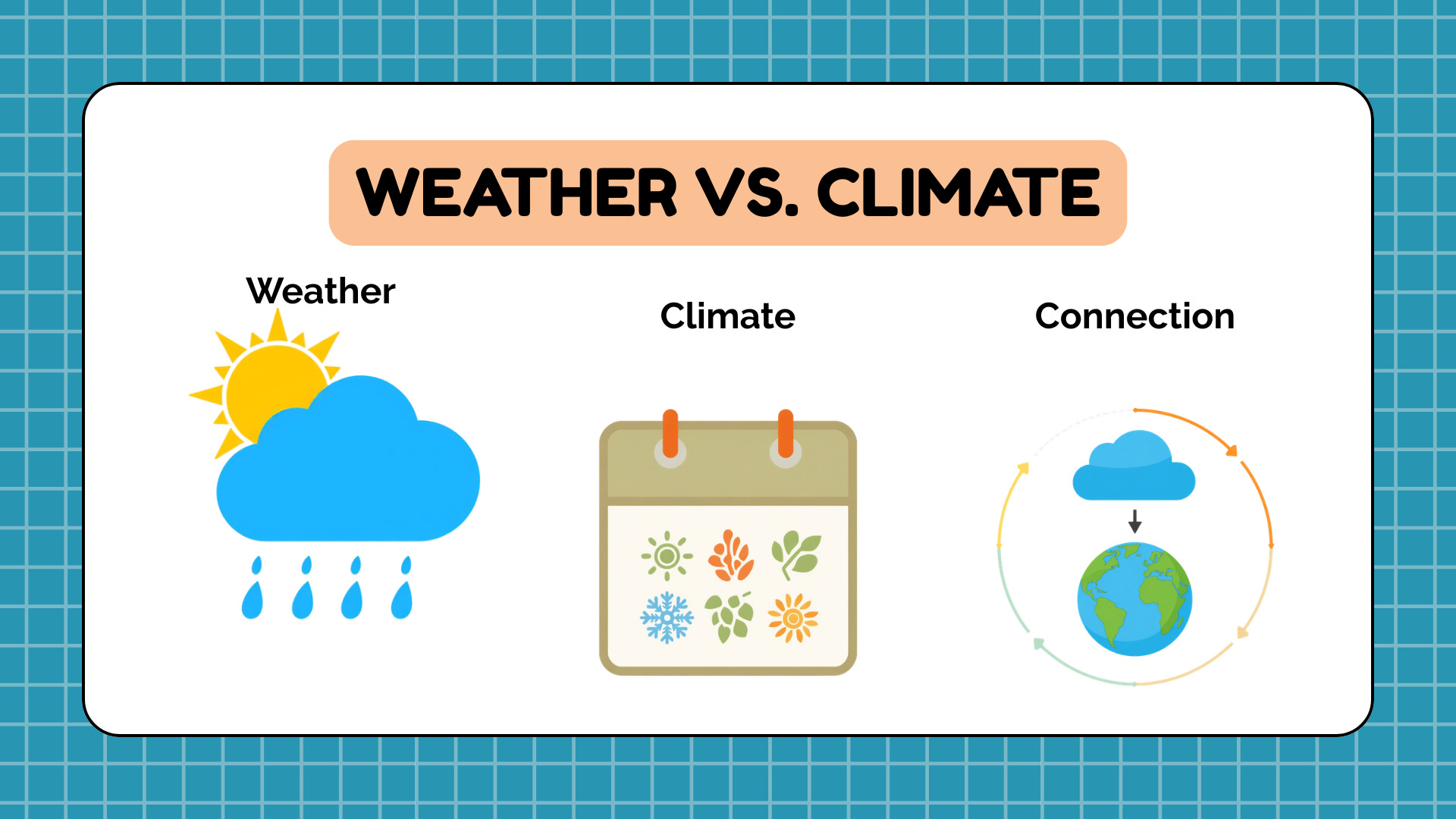
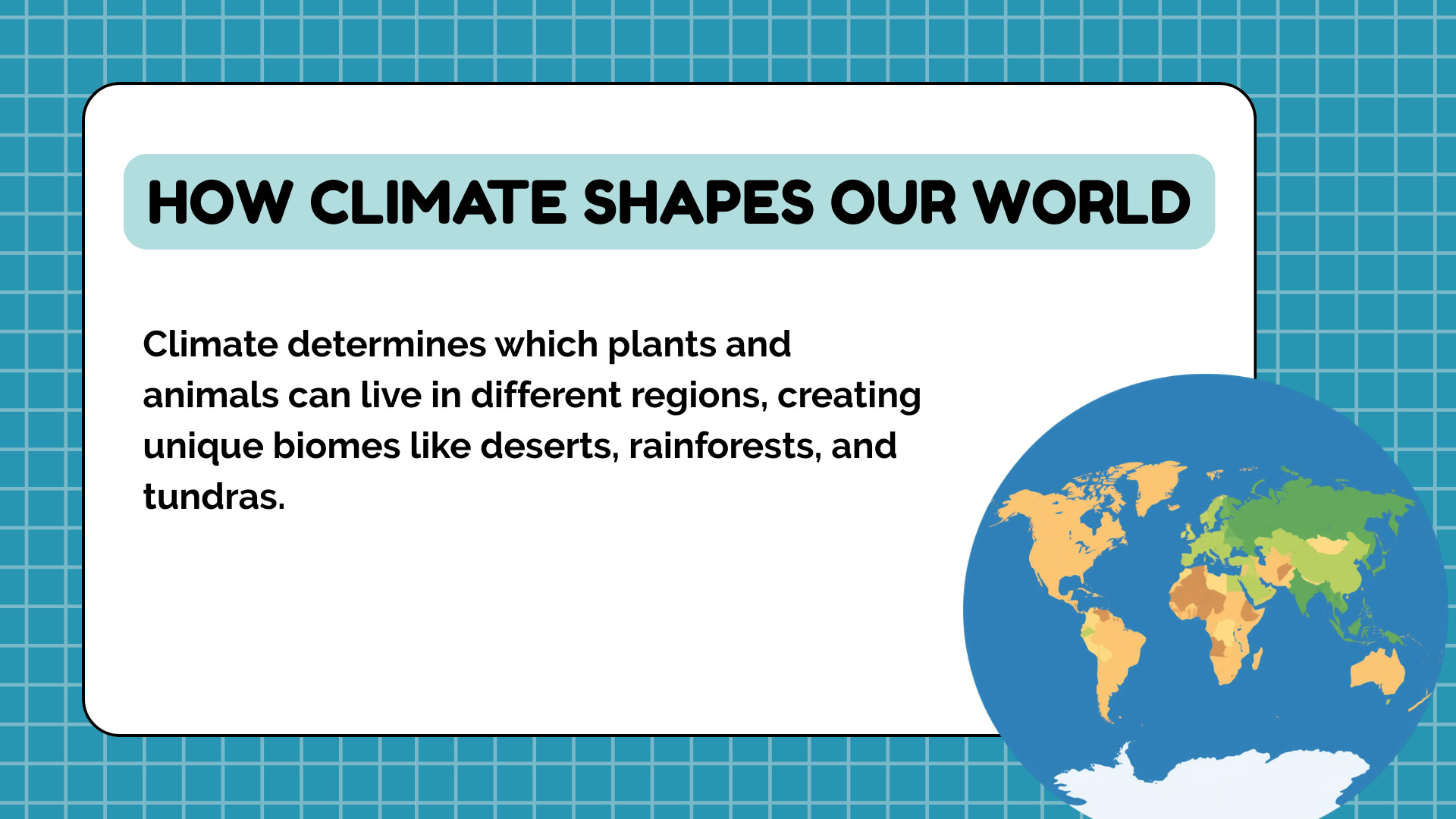
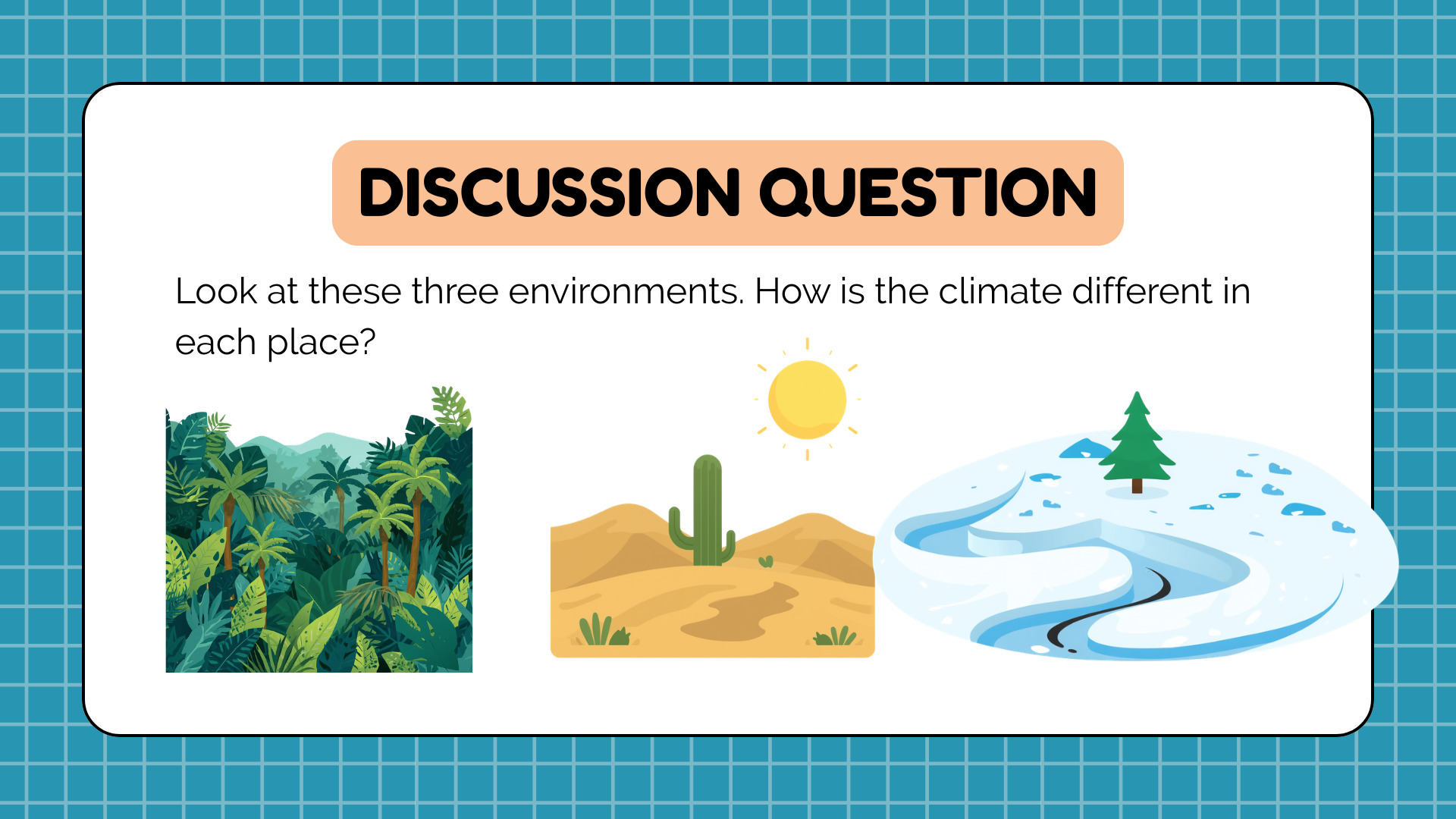
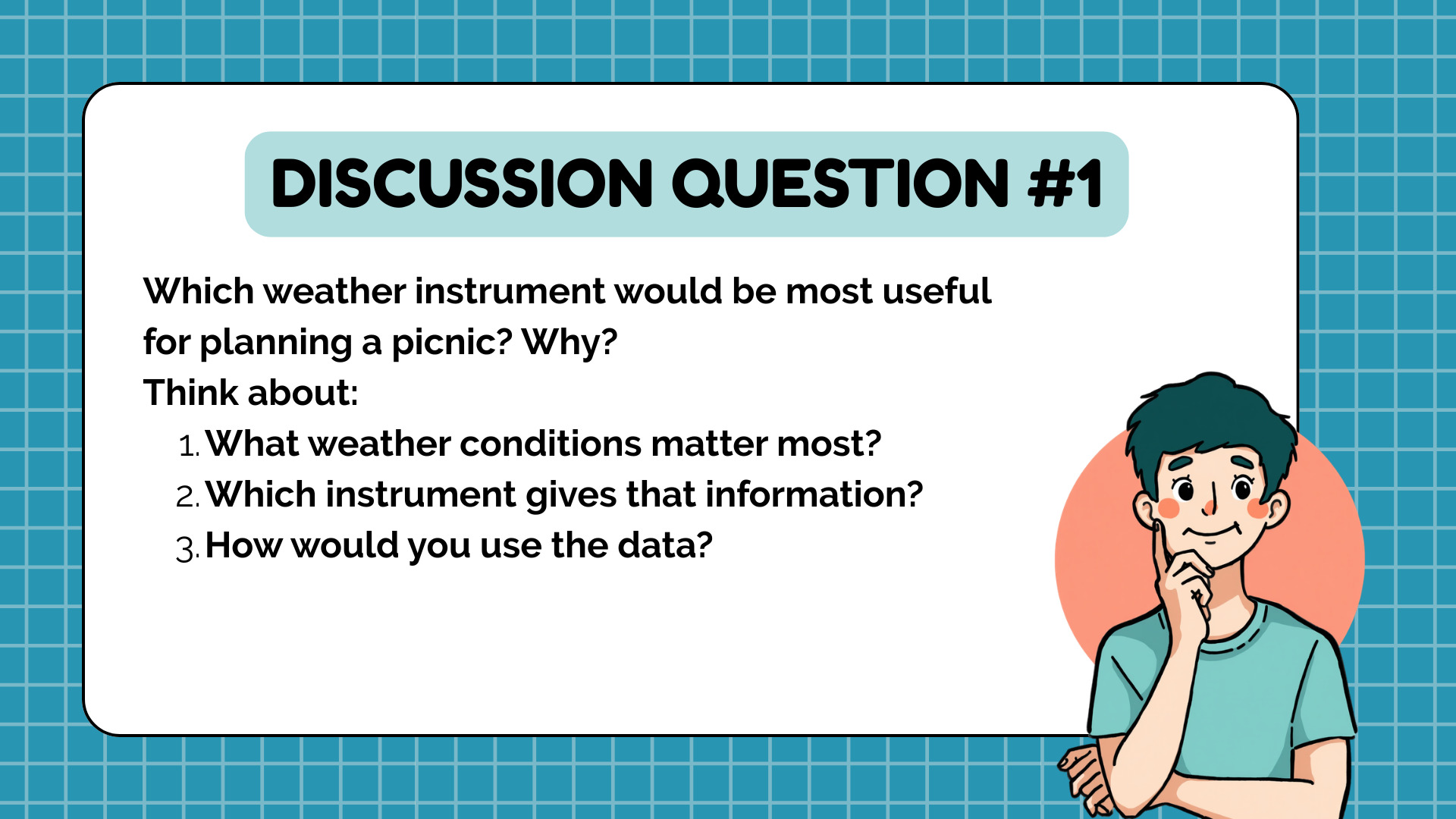
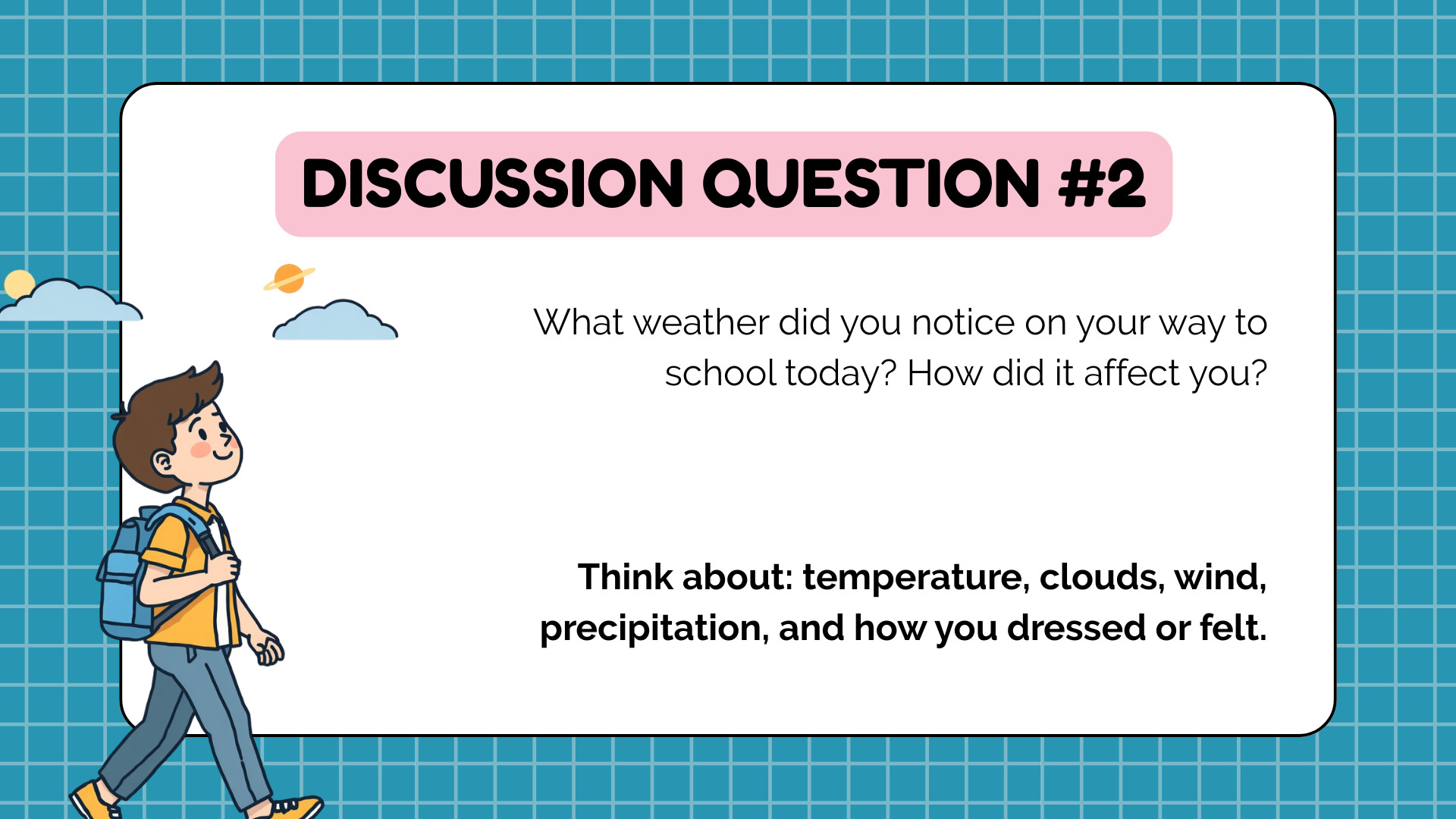
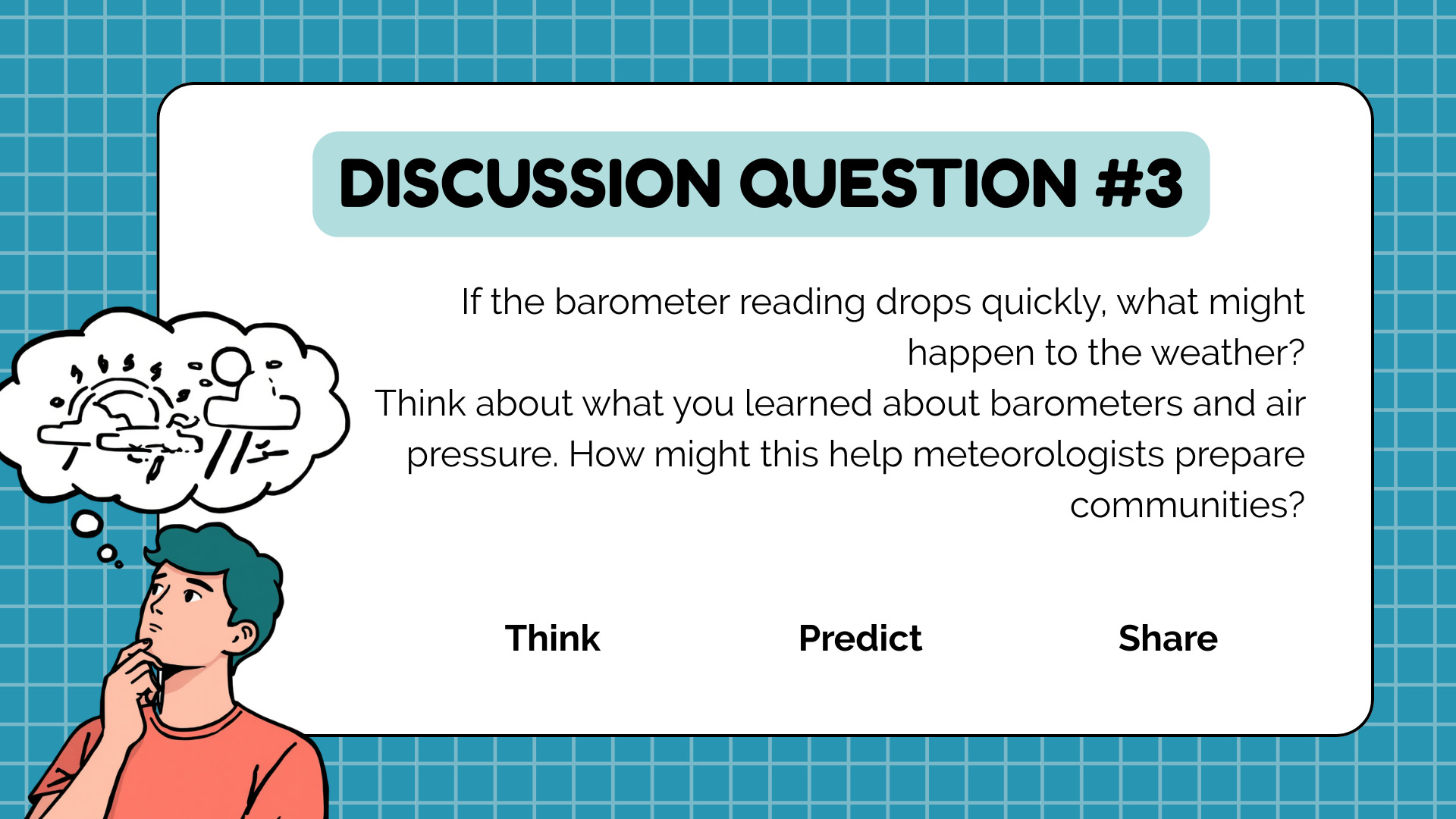
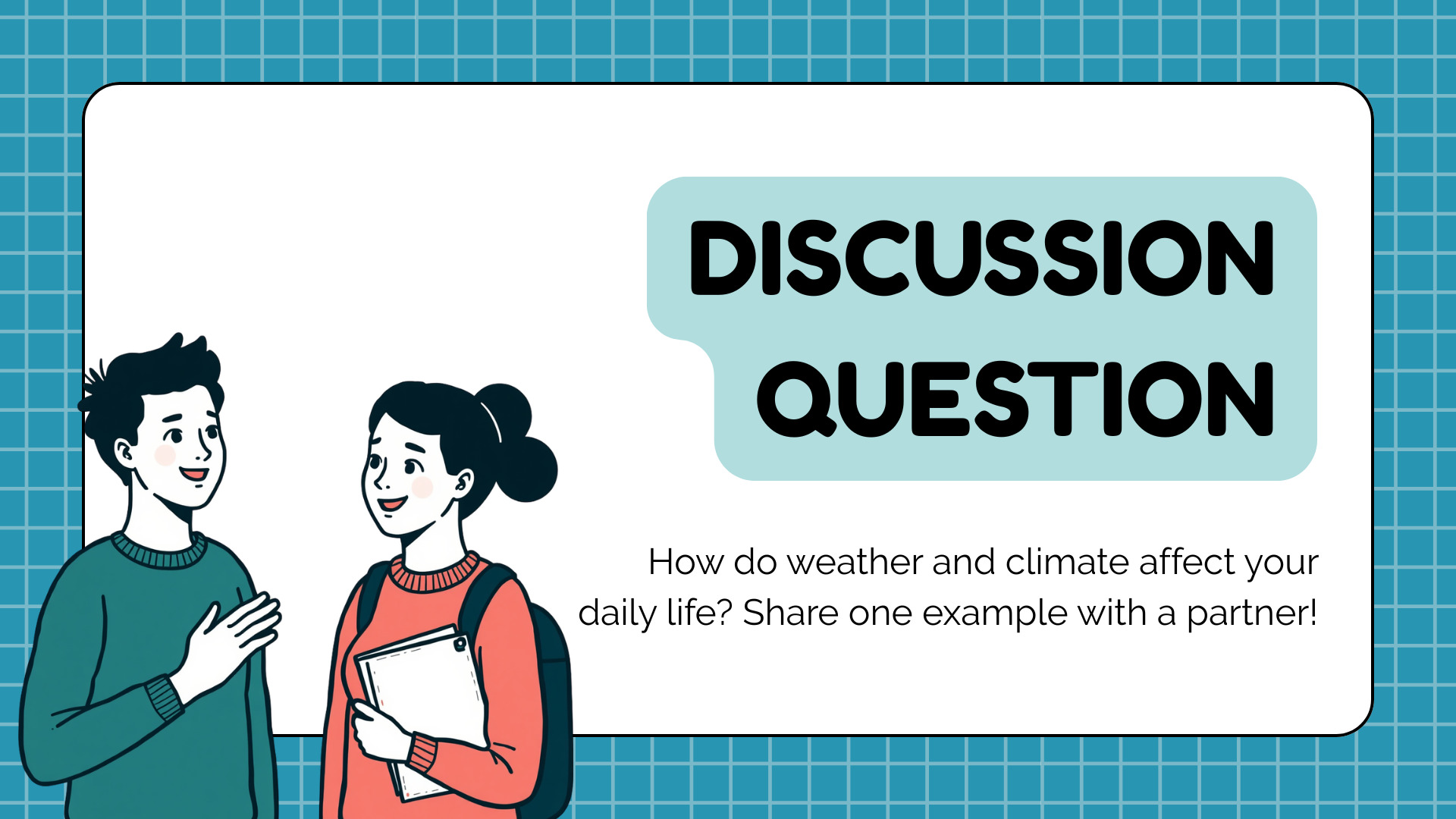
- Weather vs. Climate Slide Deck (PPTX) – 18–19 slide presentation covering weather vs climate, biomes connection, professional instruments, and discussion questions so you can introduce concepts and lead class conversations with minimal prep.
Skills and standards
This mini‑unit supports:
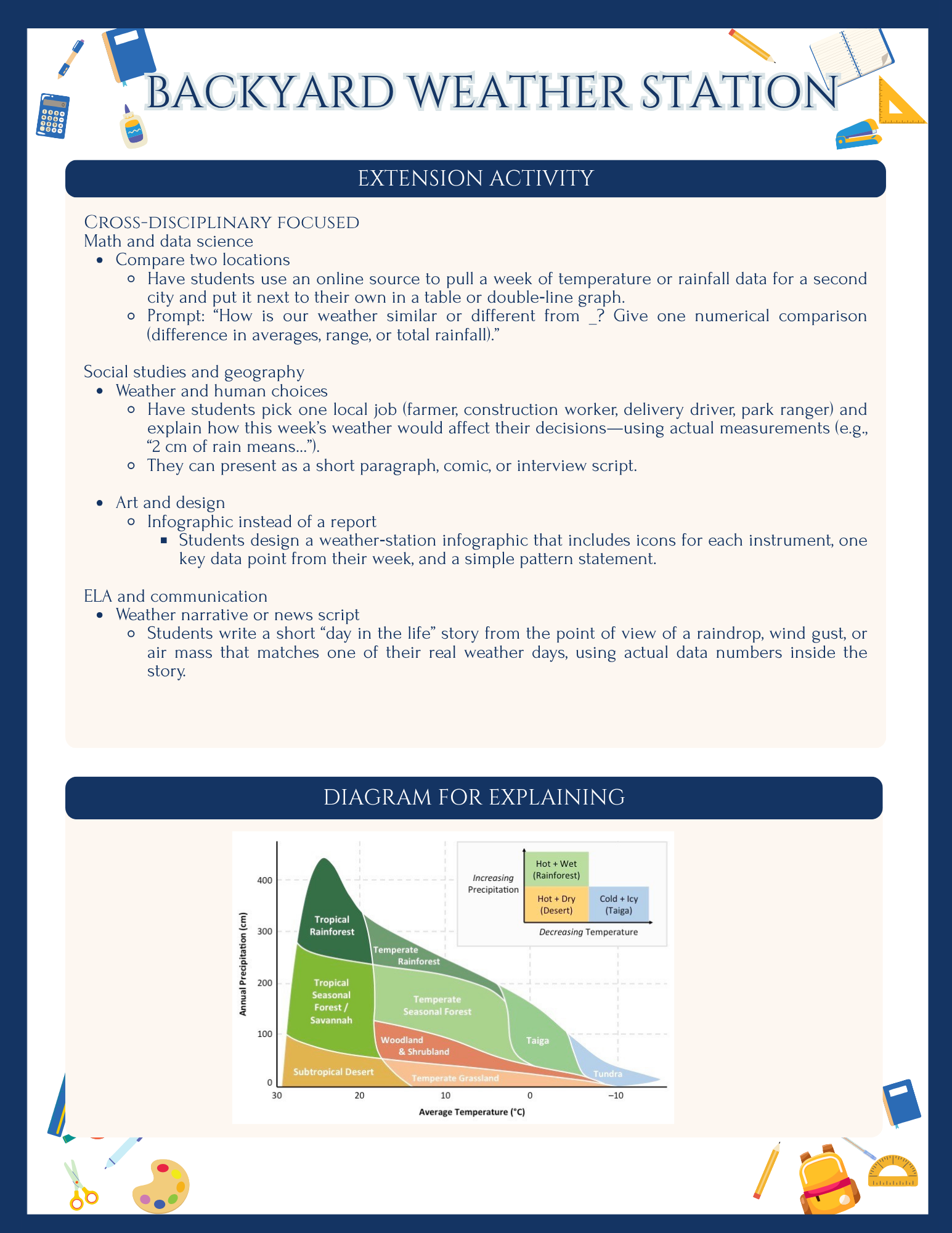
- Understanding the difference between weather and climate and describing both with evidence
- Using common weather instruments and reading them correctly
- Recording observations in tables and graphs and identifying patterns over time
- Using data to construct simple explanations and weather predictions
- Communicating findings in writing, discussion, and short presentations
Aligned with NGSS 3‑ESS2‑1, 3‑ESS2‑2, and MS‑ESS2‑5, with clear links noted in the teacher guide.
How to use this resource
You can run this as:
- A 3–5 day mini‑unit during your weather/climate unit
- A weekly science club or co‑op series
- A flexible independent study where students collect data at home and report back
Each lesson includes a short intro, 2–3 build/measurement stations, suggested data recording methods, and discussion questions so you can adapt up or down for grades 3–8 without rewriting everything.
Who this is for
- Homeschool families wanting a structured, hands‑on science study
- Co‑op leaders and club facilitators who need something that works with mixed ages
- Classroom teachers who want an inquiry‑based weather unit without spending hours planning




Reviews
There are no reviews yet.