Description
A lunar rover is hidden behind a ridge. Its light signal cannot reach the Earth Communication Beacon directly. Can your learners use mirrors to get the message through?
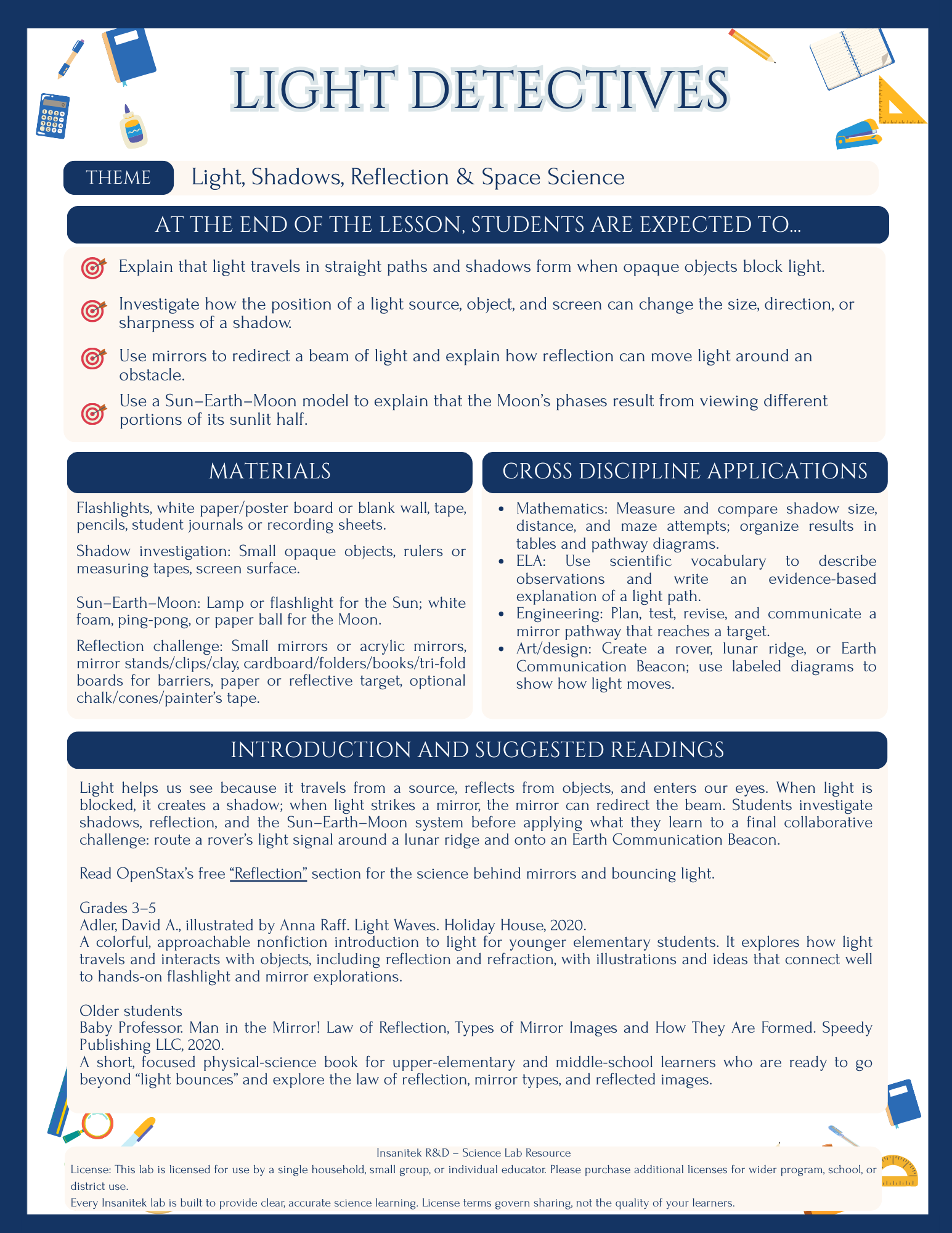
Light Detective Homeschool Workshop Lab turns that mission into a hands-on exploration of light, shadows, reflection, and Moon phases. Before attempting the final challenge, learners investigate how shadows change, model the Sun–Earth–Moon relationship, and test how mirrors redirect a flashlight beam. Then they use their observations to plan, test, and revise a reflected-light pathway around an obstacle.
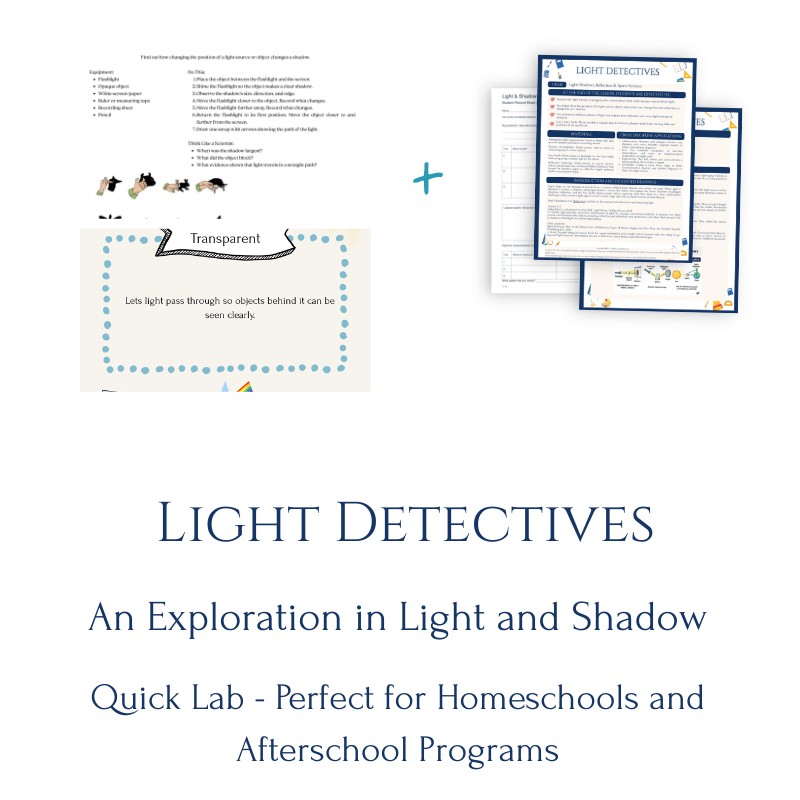
Designed for homeschool educators and small learning groups, this workshop edition combines a lesson plan, suggested readings, vocabulary cards, station cards, and a student worksheet. Suggested readings provide the background for your lesson instead of a lecture presentation, leaving room for discussion and physical investigation.
Three investigations—and a mission to complete
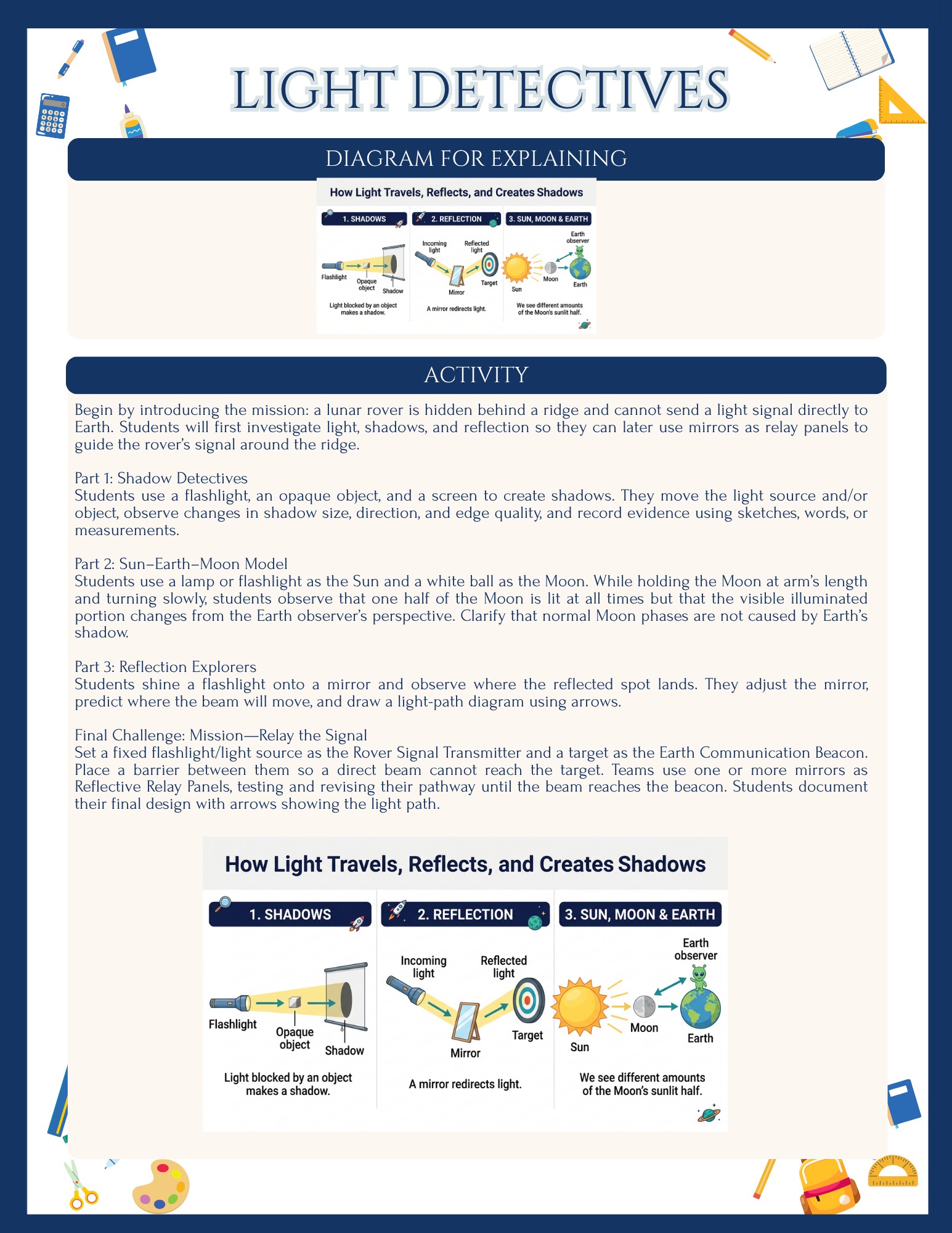
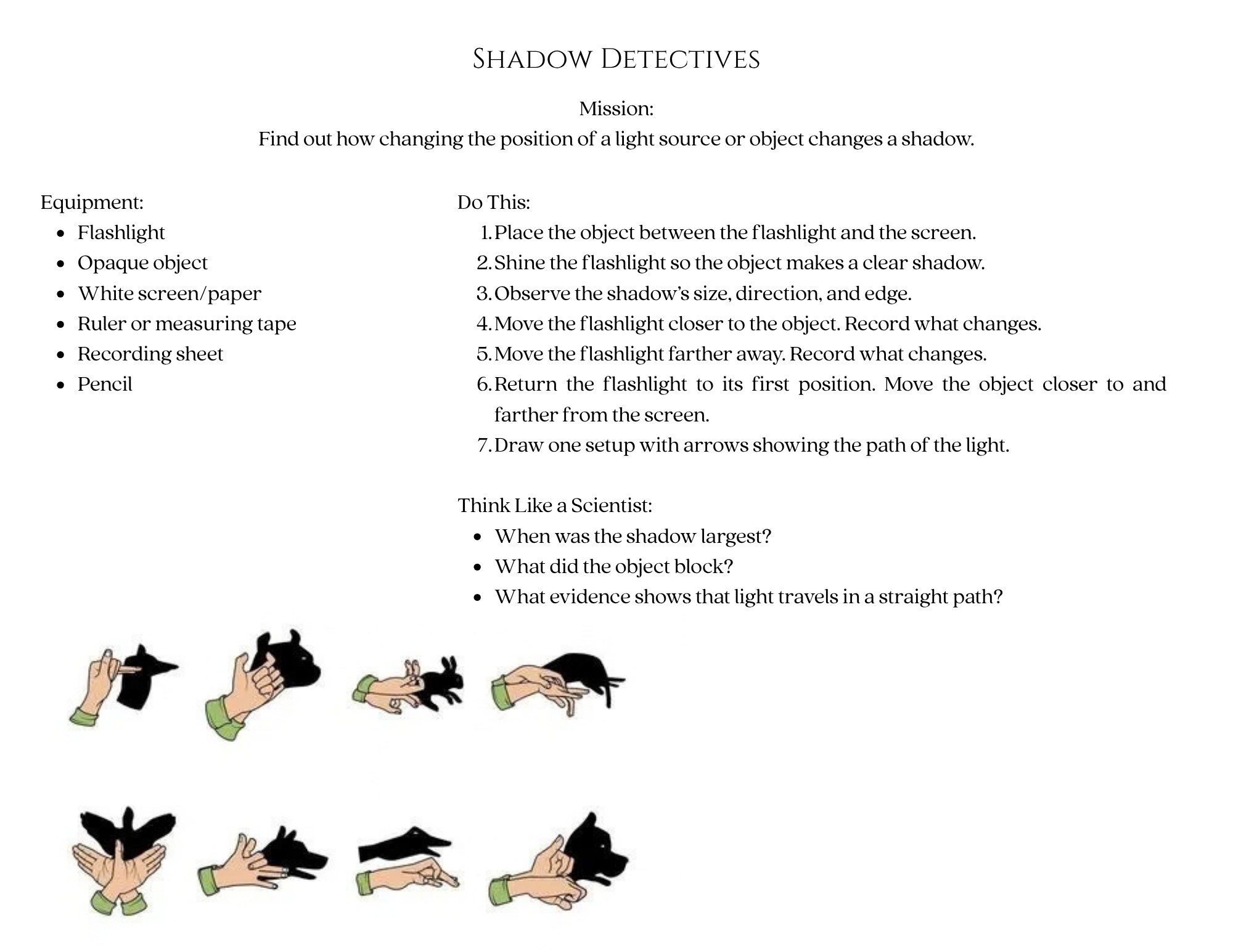
In Shadow Detectives, learners use a flashlight, an opaque object, and a screen to investigate shadow size, direction, and edge sharpness. Moving the light source or object gives them something concrete to compare and record: what changed, what stayed the same, and what their observations suggest about the light’s path.
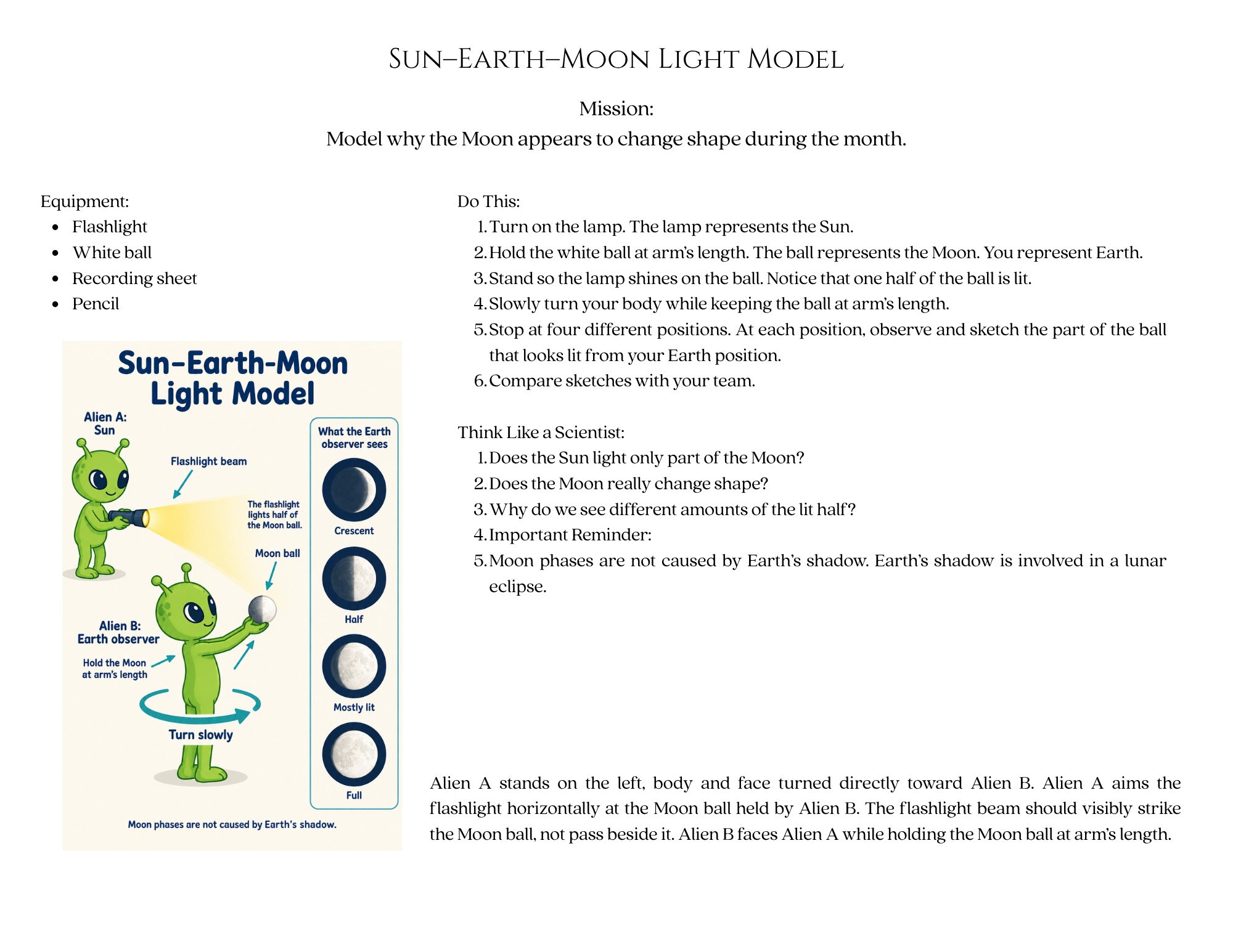
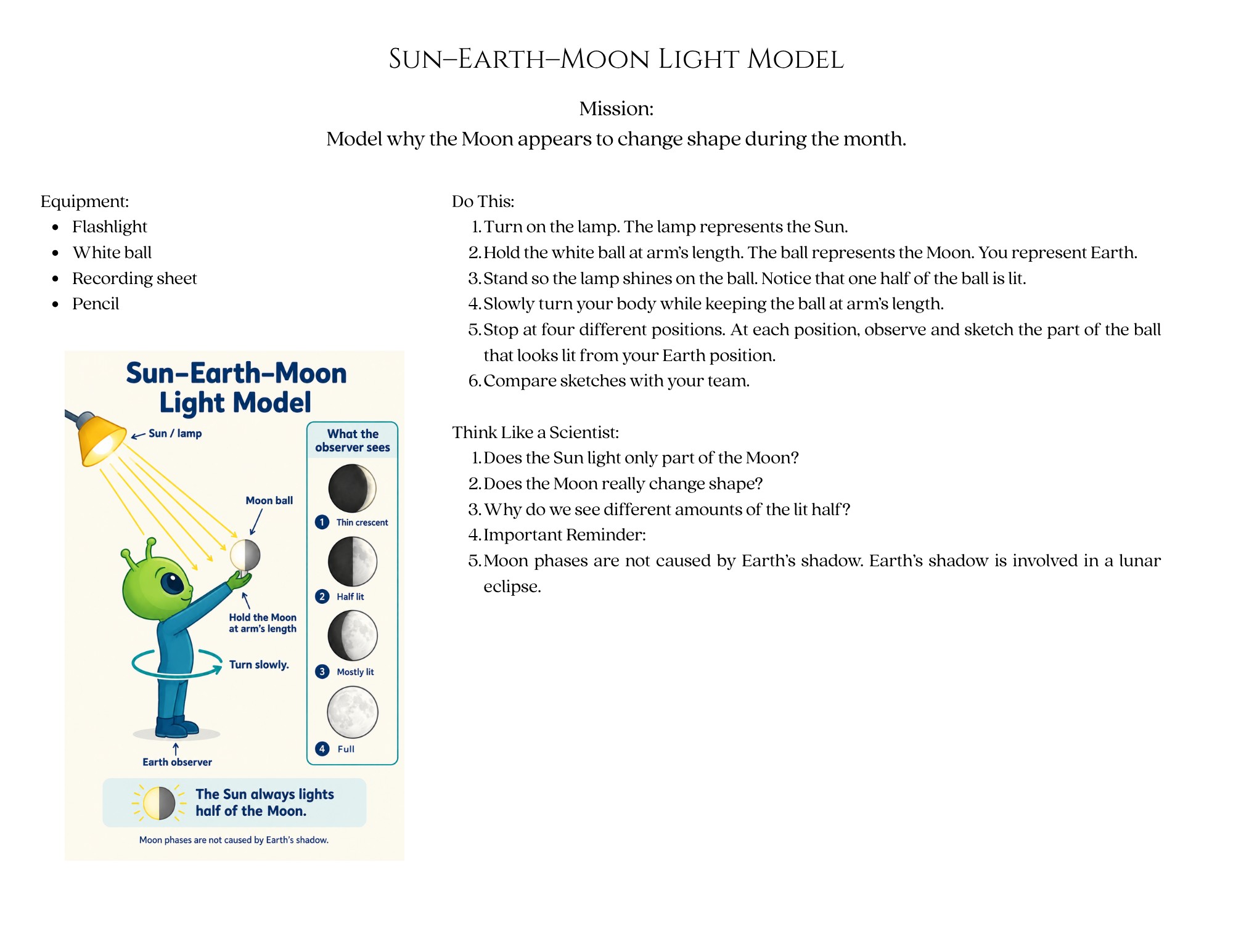
The Sun–Earth–Moon Model uses a light source and a white ball to explore why the Moon appears to change shape. Learners compare the illuminated portion visible from different positions and use their model to distinguish ordinary Moon phases from Earth’s shadow during an eclipse.
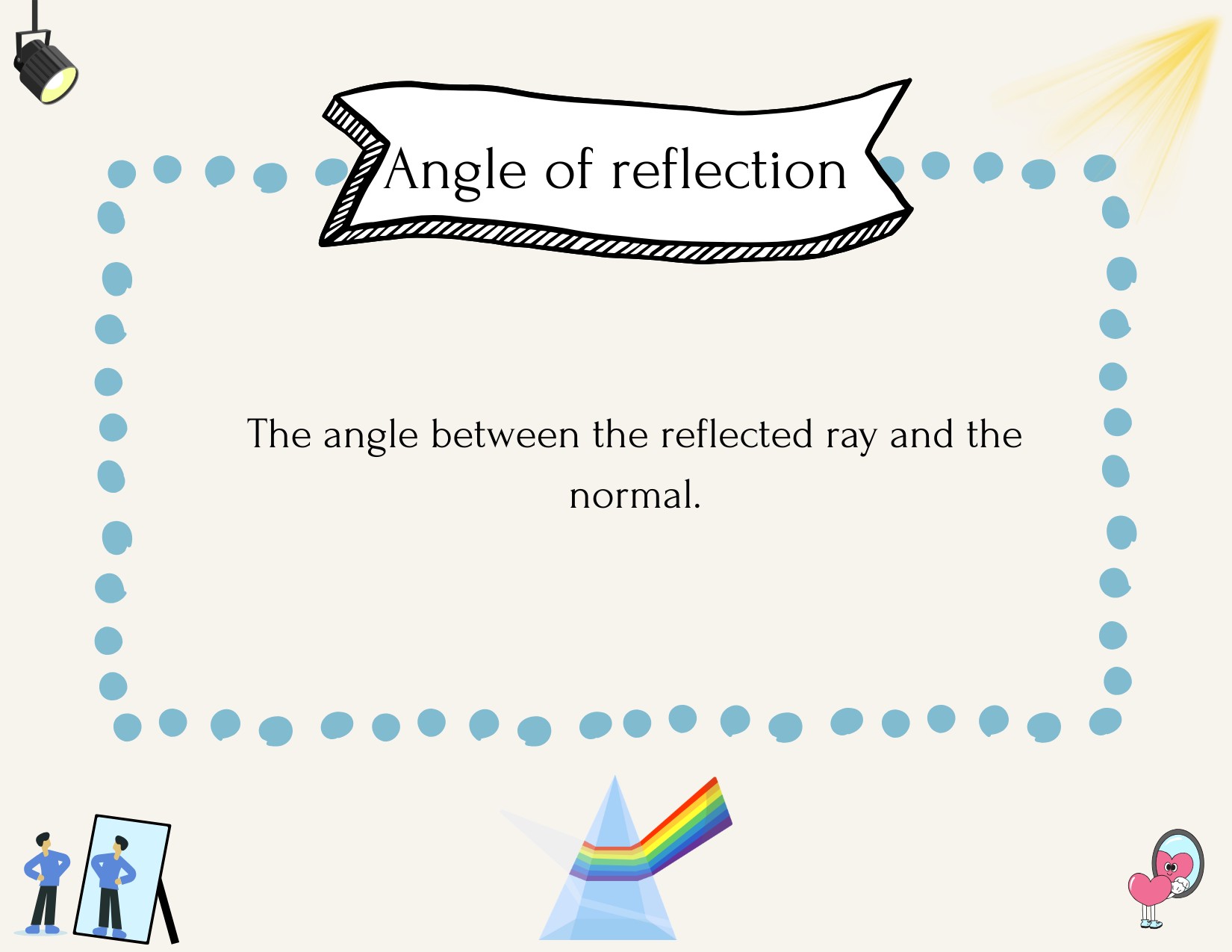
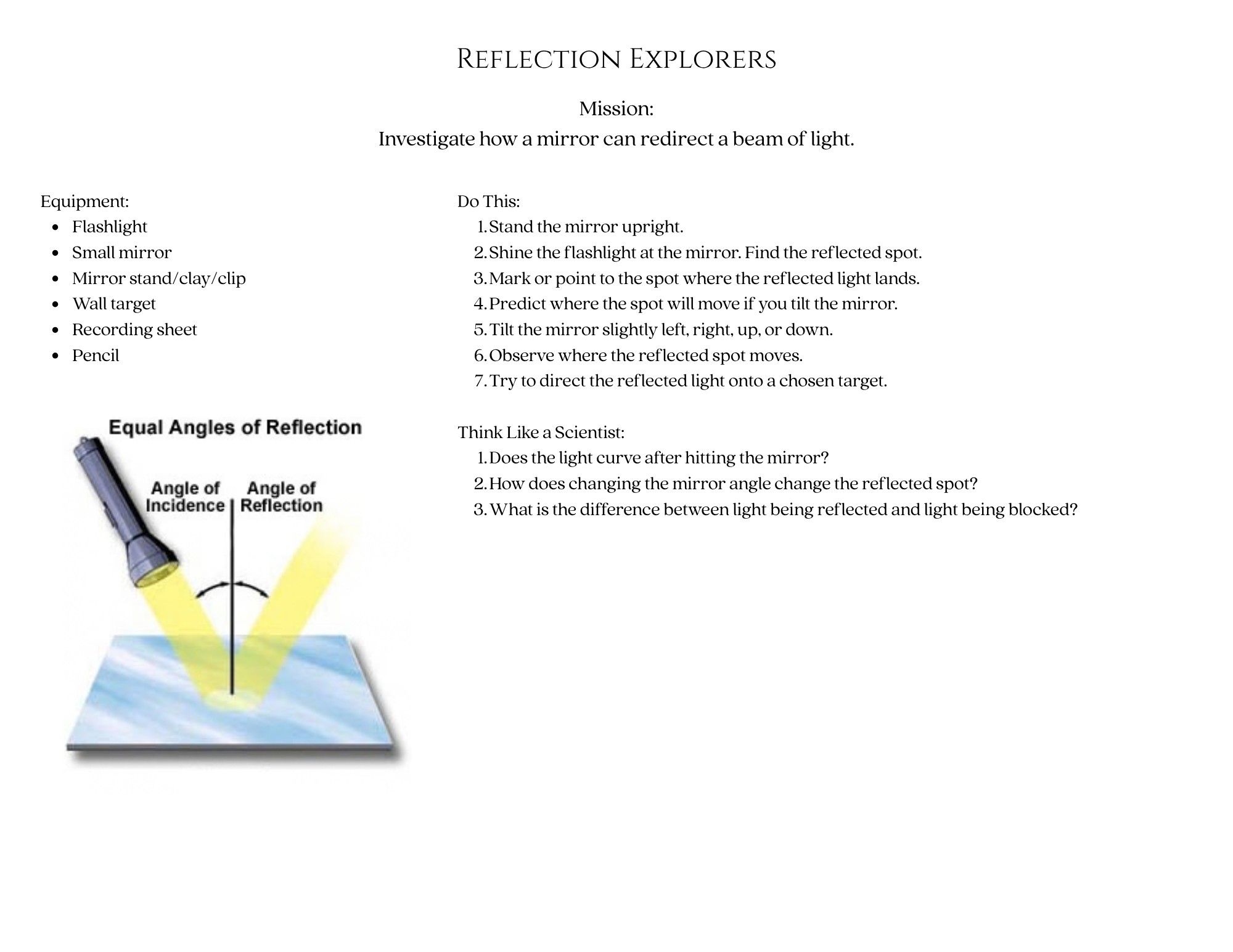
In Reflection Explorers, learners direct a flashlight toward a mirror, predict where the reflected spot will land, and adjust the mirror to test their predictions. Arrow diagrams help them connect what they observe with the path the light follows.
The final challenge, Mission—Relay the Signal, brings those investigations together. With the light source, barrier, and target fixed in place, learners position mirrors as reflective relay panels. Their task is to route the beam around the “lunar ridge” and onto the beacon, then document the successful pathway. The space-themed mission is a tabletop engineering model, not a simulation of a complete spacecraft communication system.
More than getting the beam to the target
A successful light maze is only part of the work. Learners also record attempts, compare predictions with results, and explain why a revised mirror position worked better.
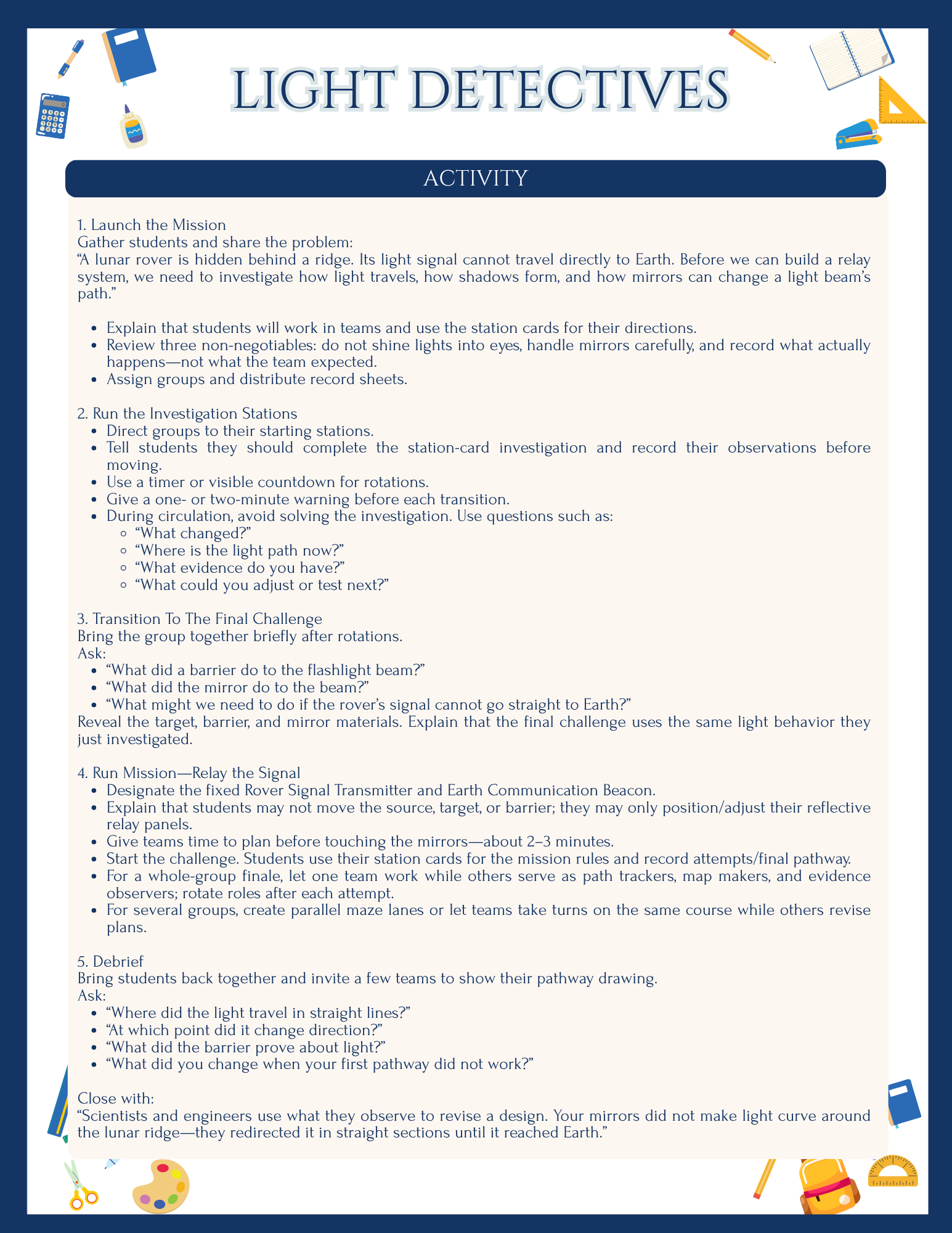
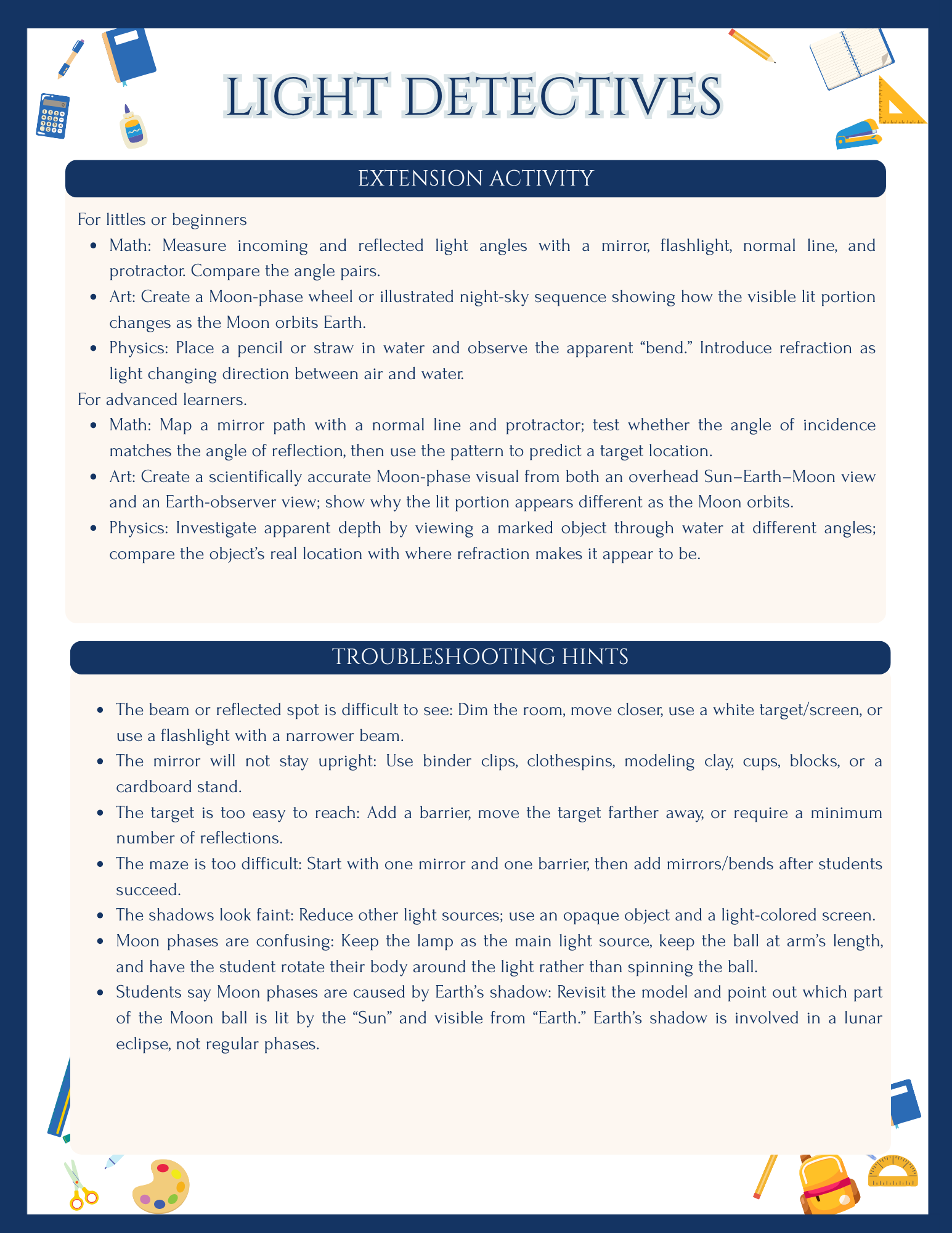
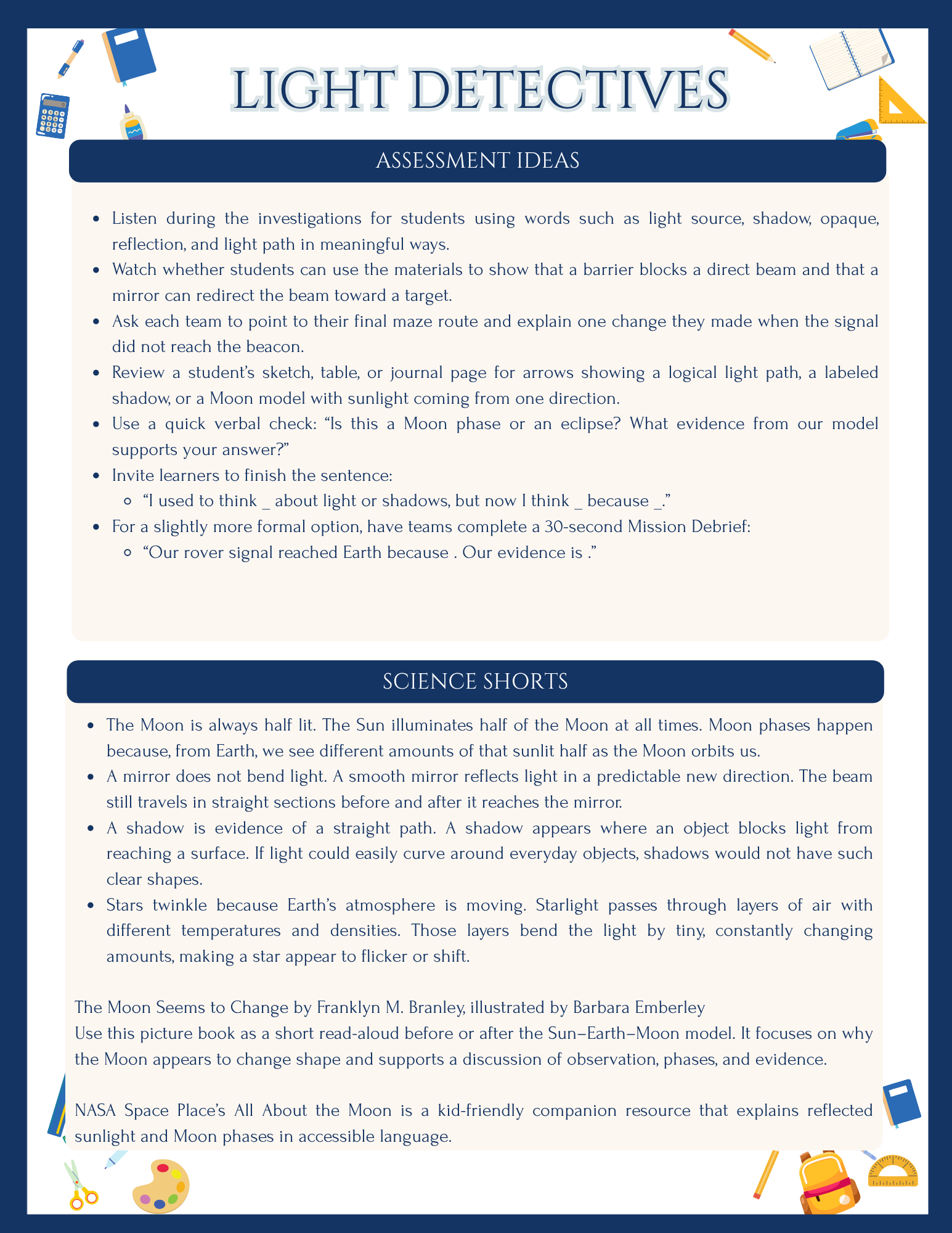
The lesson plan includes discussion prompts, troubleshooting guidance, assessment ideas, and extensions. You can use these to move beyond “the light bounced” toward an evidence-based explanation: where the beam traveled straight, where its direction changed, and which adjustment helped it reach the target.
What’s included
The homeschool workshop edition contains:
- Lesson plan with investigation sequence, facilitation prompts, troubleshooting, assessment ideas, and extensions.
- Suggested readings to support preparation and discussion instead of a lecture.
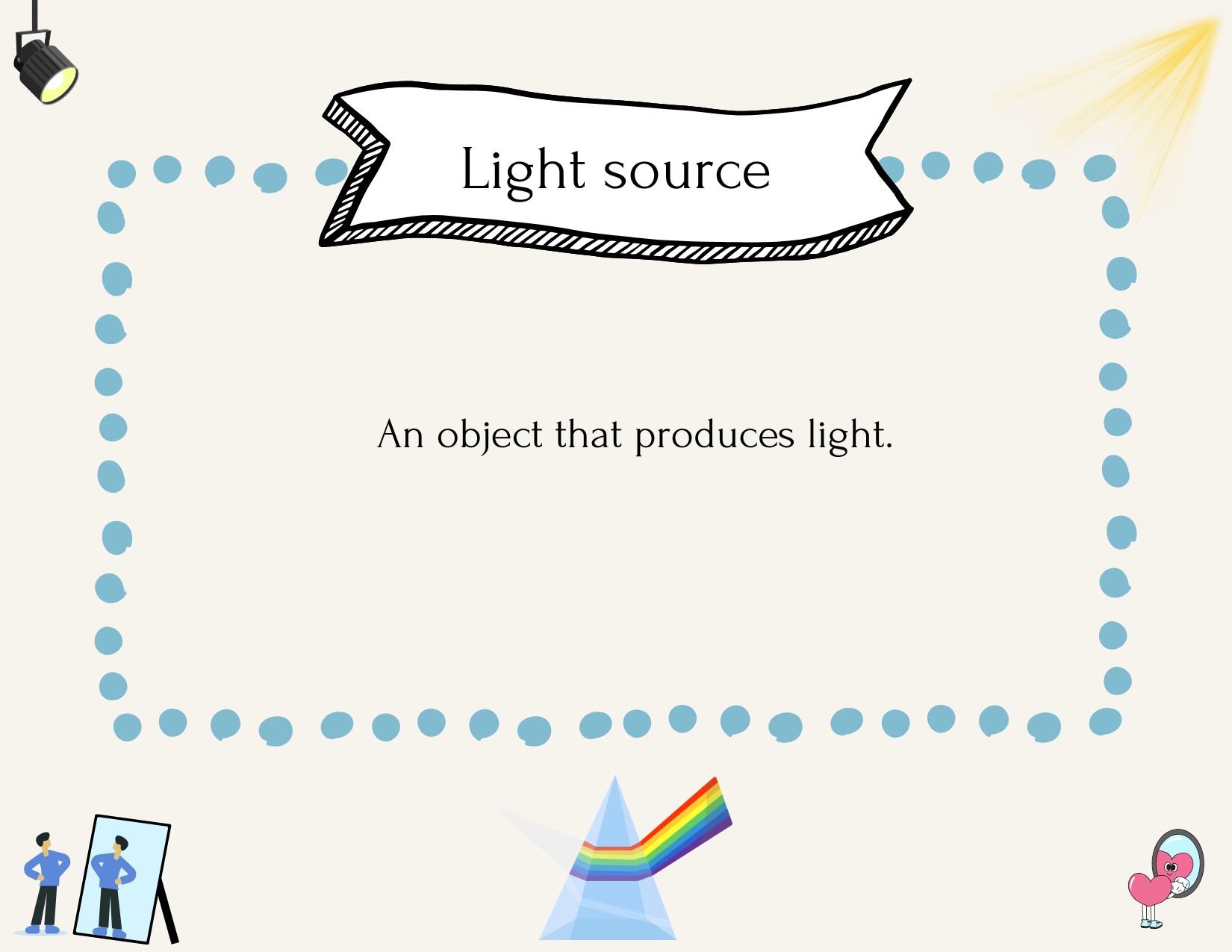
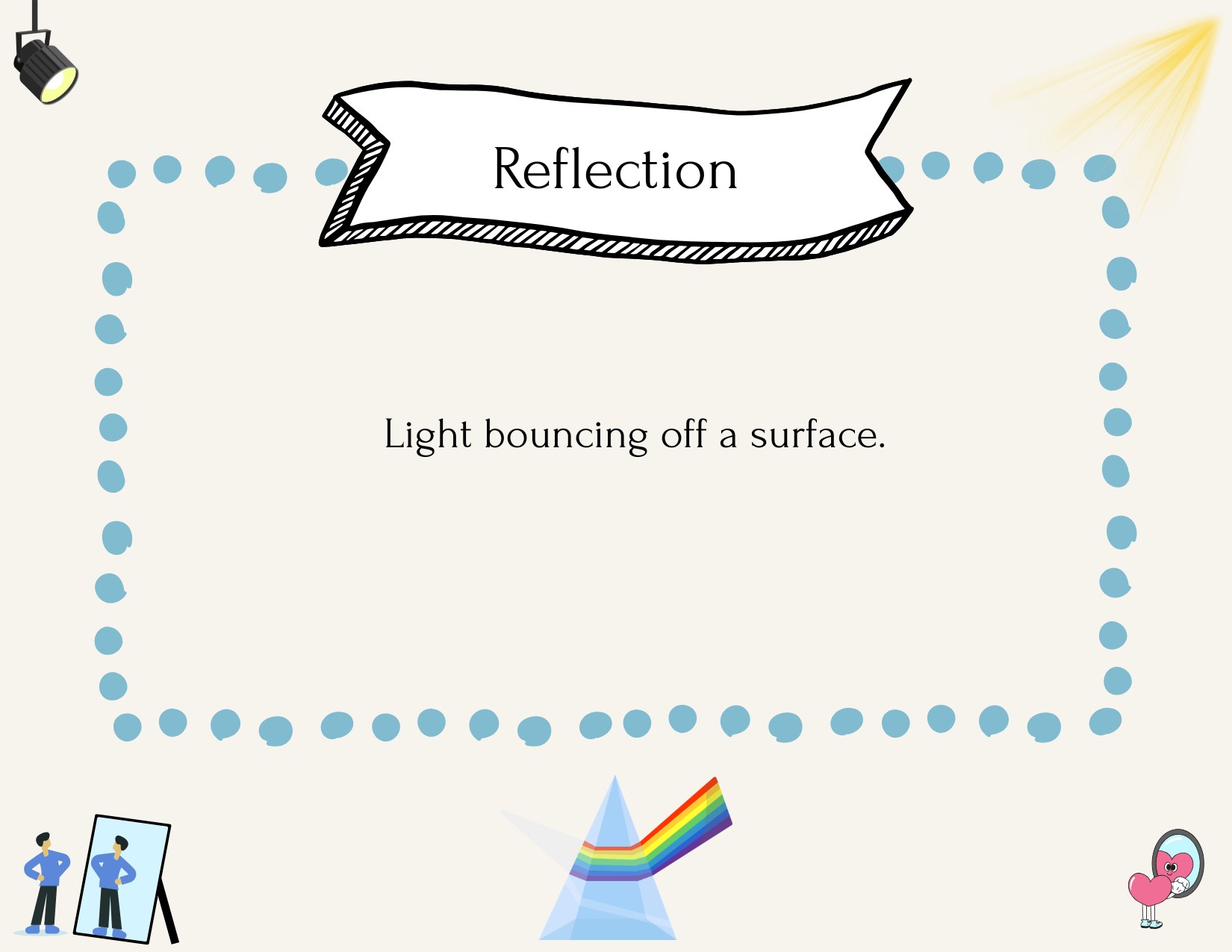
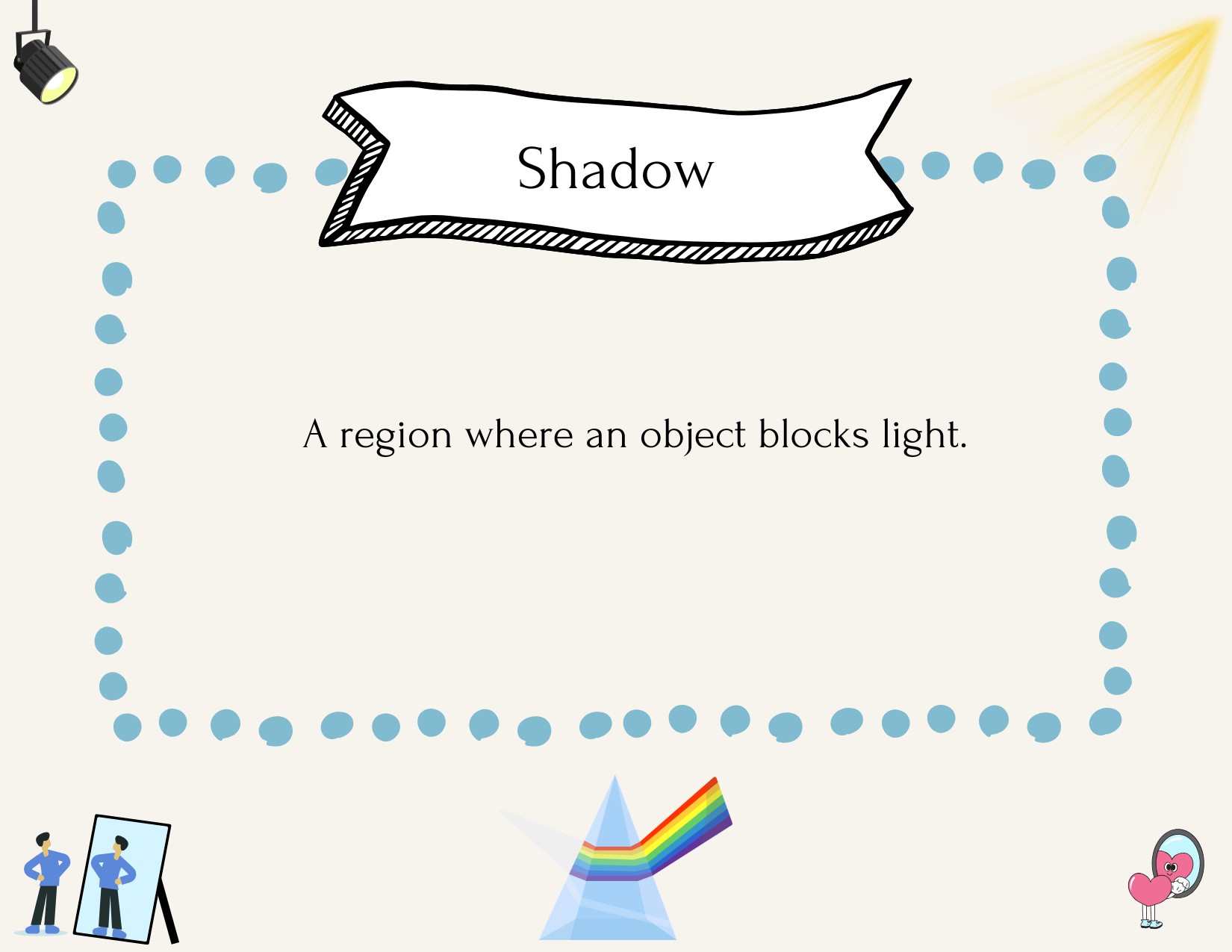
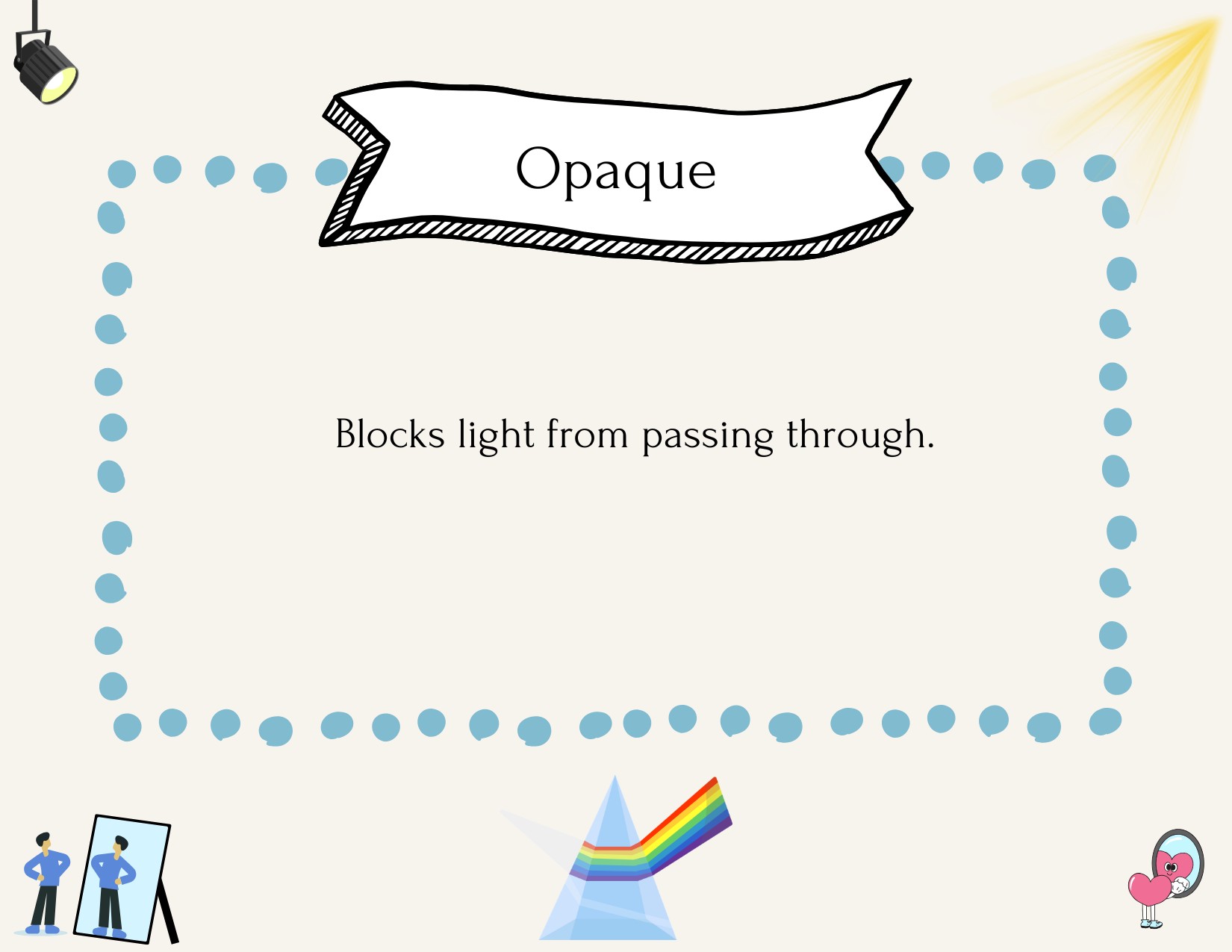
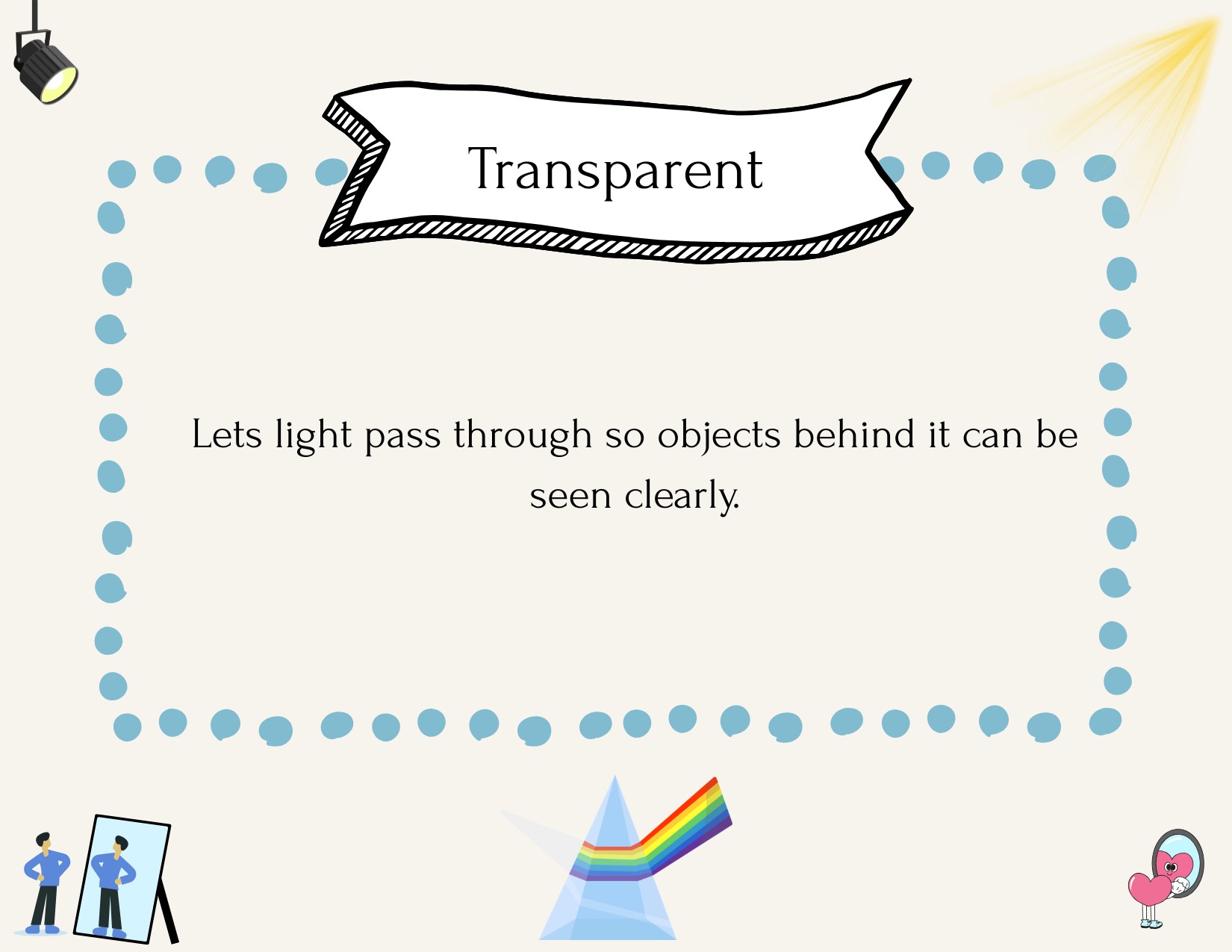
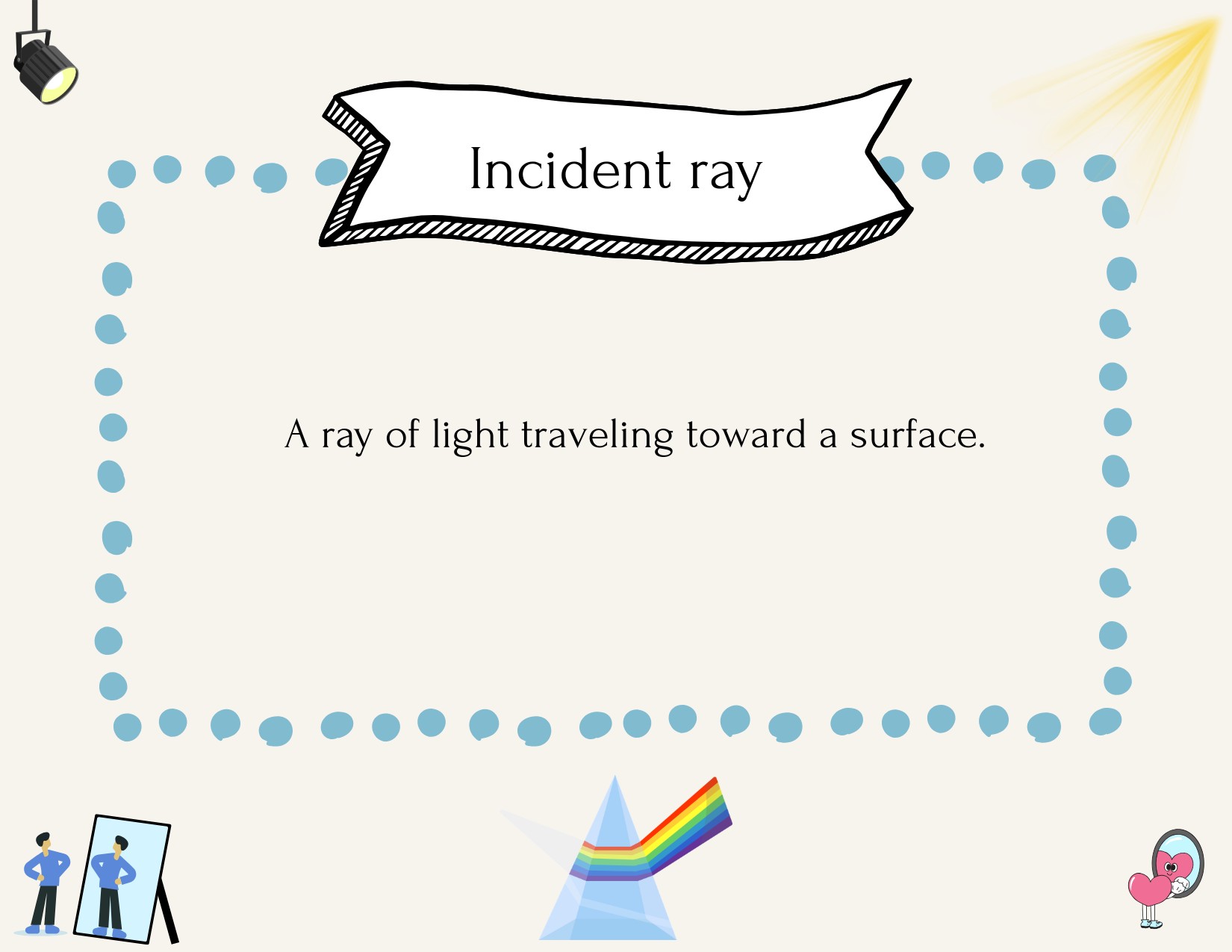
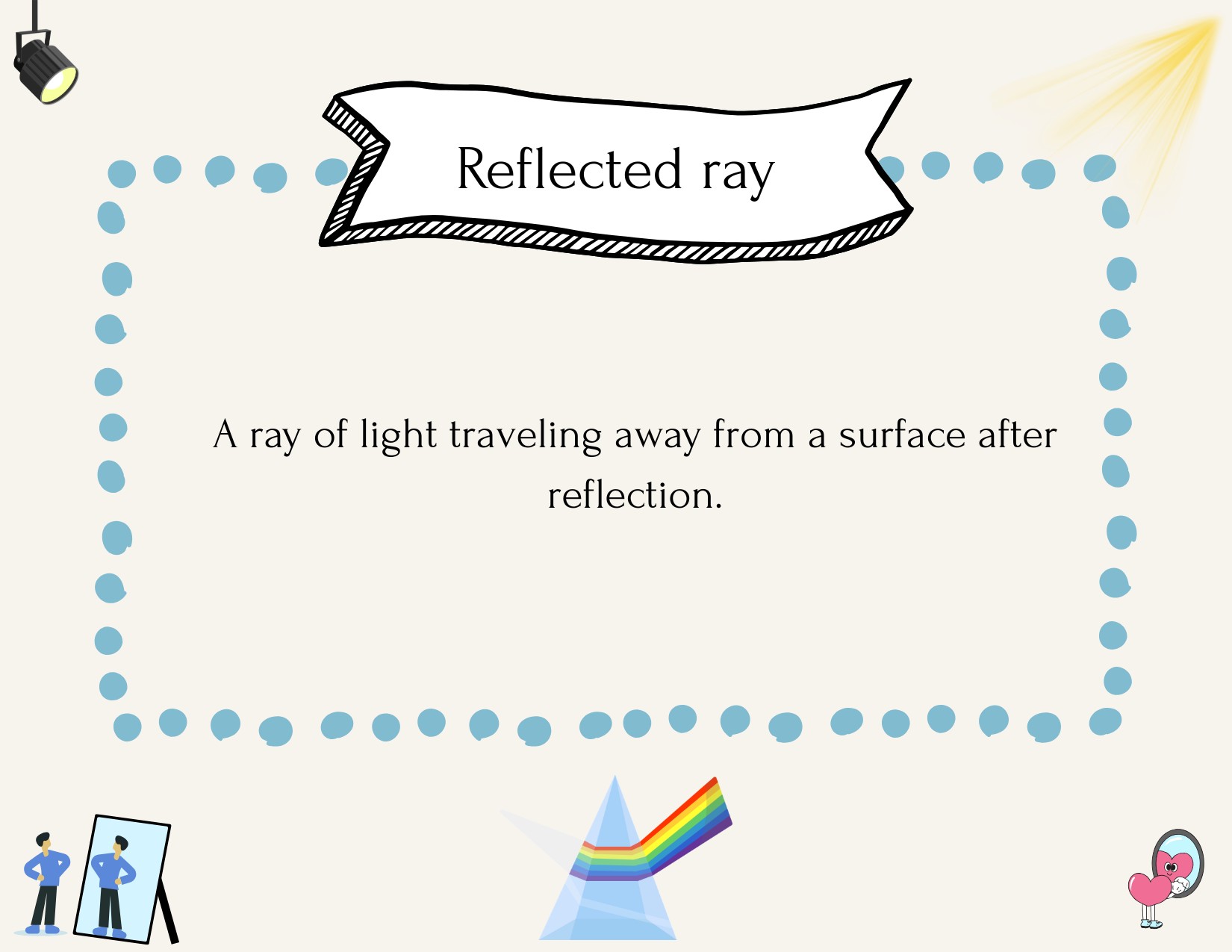
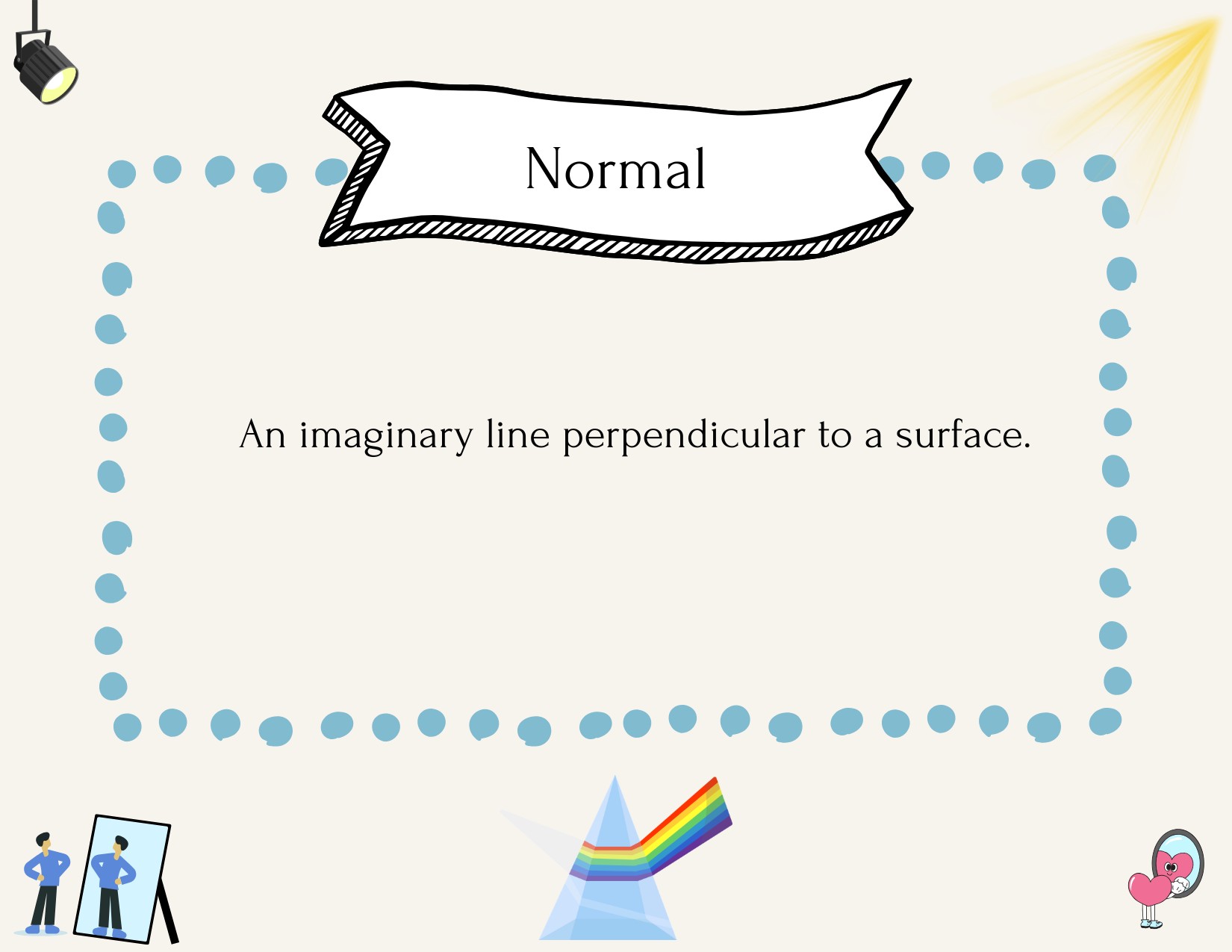
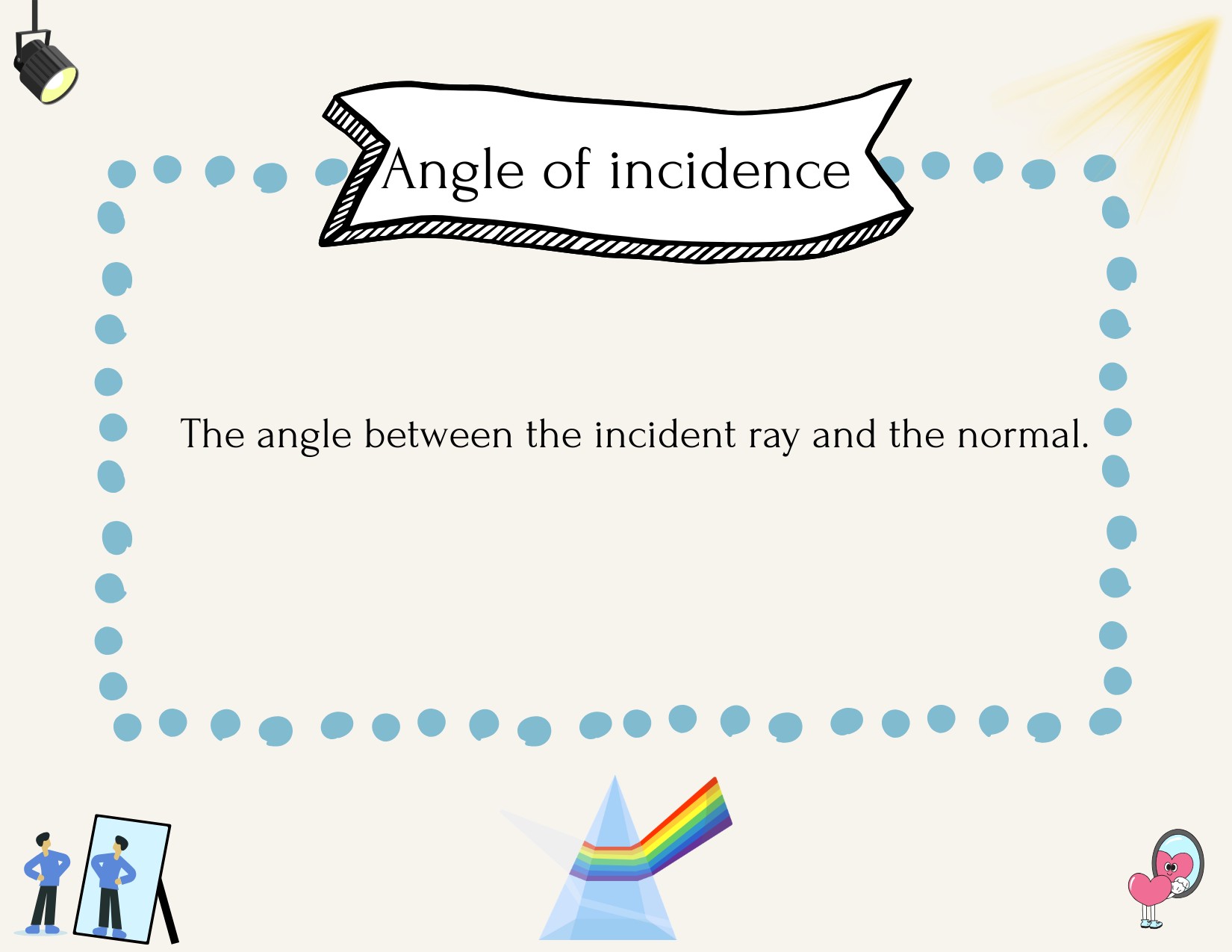
- Vocabulary cards for introducing and revisiting key terms.
- Station cards for the investigations and relay challenge.
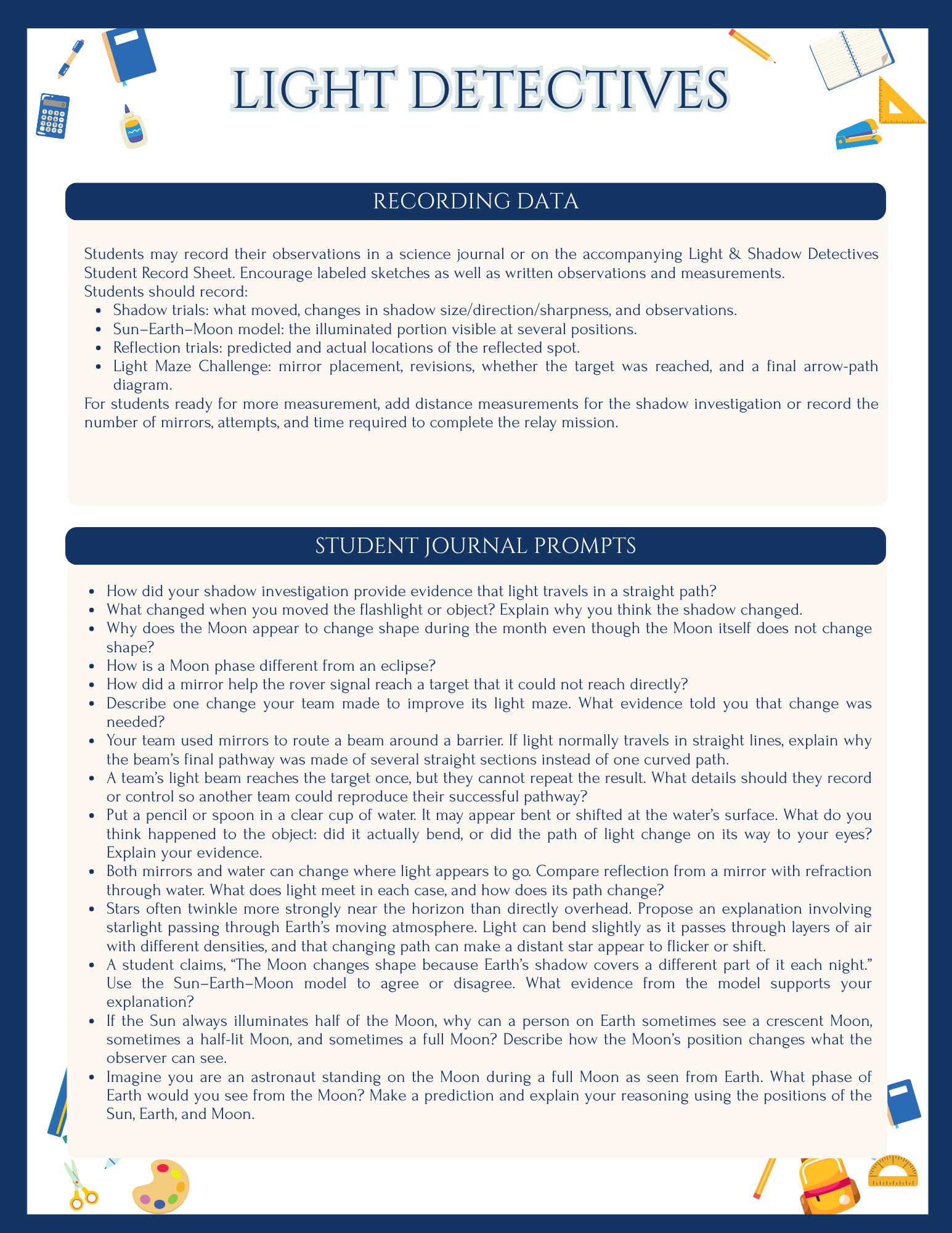
- Student worksheet for recording observations, predictions, revisions, and light-path diagrams.
This is the workshop edition; a lecture slide deck is not included. If you would like slides and extra support, please purchase the Tinker Tracks Classroom Edition.
Materials and setup
You will need flashlights, a light-colored screen or blank wall, small opaque objects, a white ball, small mirrors, and materials for supporting the mirrors and creating barriers. Binder clips, modeling clay, cardboard, folders, or books can help build the investigation space. Rulers or measuring tapes support optional measurement work.
Plan for a space where you can reduce competing light and see the reflected spot clearly. The troubleshooting guidance helps you adjust beam visibility, stabilize mirrors, and make the maze easier or more challenging. Begin with one mirror and one barrier, then add complexity as learners become more confident.
Adapt the workshop to your learners
For beginners, emphasize observations, labeled sketches, and a simple mirror pathway. Learners ready for more detail can measure distances, compare incoming and reflected angles, track the number of attempts, or explain how another group could reproduce their successful design.
The investigations also create opportunities for mathematics, scientific writing, engineering, and art: measuring shadows, organizing results, explaining evidence, and drawing a rover’s light route. Optional extensions introduce refraction and more detailed Moon-phase models without making them prerequisites for the main workshop.
Read the science behind the investigation
For background before the workshop—or answers when learners ask why the mirrors work—read Light Reflection Explained: Mirrors, Moonlight, and Everyday Surfaces.
The article explains how light reaches objects and enters our eyes, why smooth and uneven surfaces reflect differently, and how mirrors redirect a beam. Use it as an educator resource alongside the workshop’s suggested readings.
License
Licensed for use by a single household, small group, or individual educator. Please purchase additional licenses for wider program, school, or district use.
Bring together your lights, mirrors, and a little room to investigate. Then give your learners a mission they can solve through observation, testing, and thoughtful revision.




Reviews
There are no reviews yet.