
Description
Help students move beyond naming simple machines to understanding how they work.
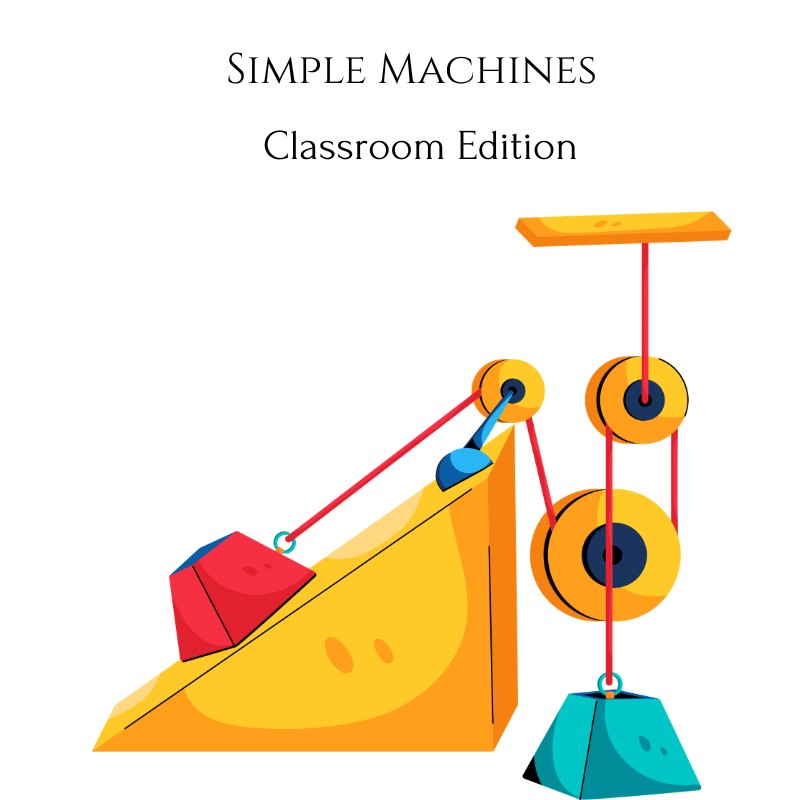
This classroom mini unit combines direct instruction, hands-on investigation, and creative engineering. Students explore levers, inclined planes, and pulleys, then apply their discoveries to design a device that uses two functional simple machines to produce one clear final action.
The core activities are theme-neutral, so you can use them with different seasonal story cards while keeping the science and lesson structure consistent.
What’s Included
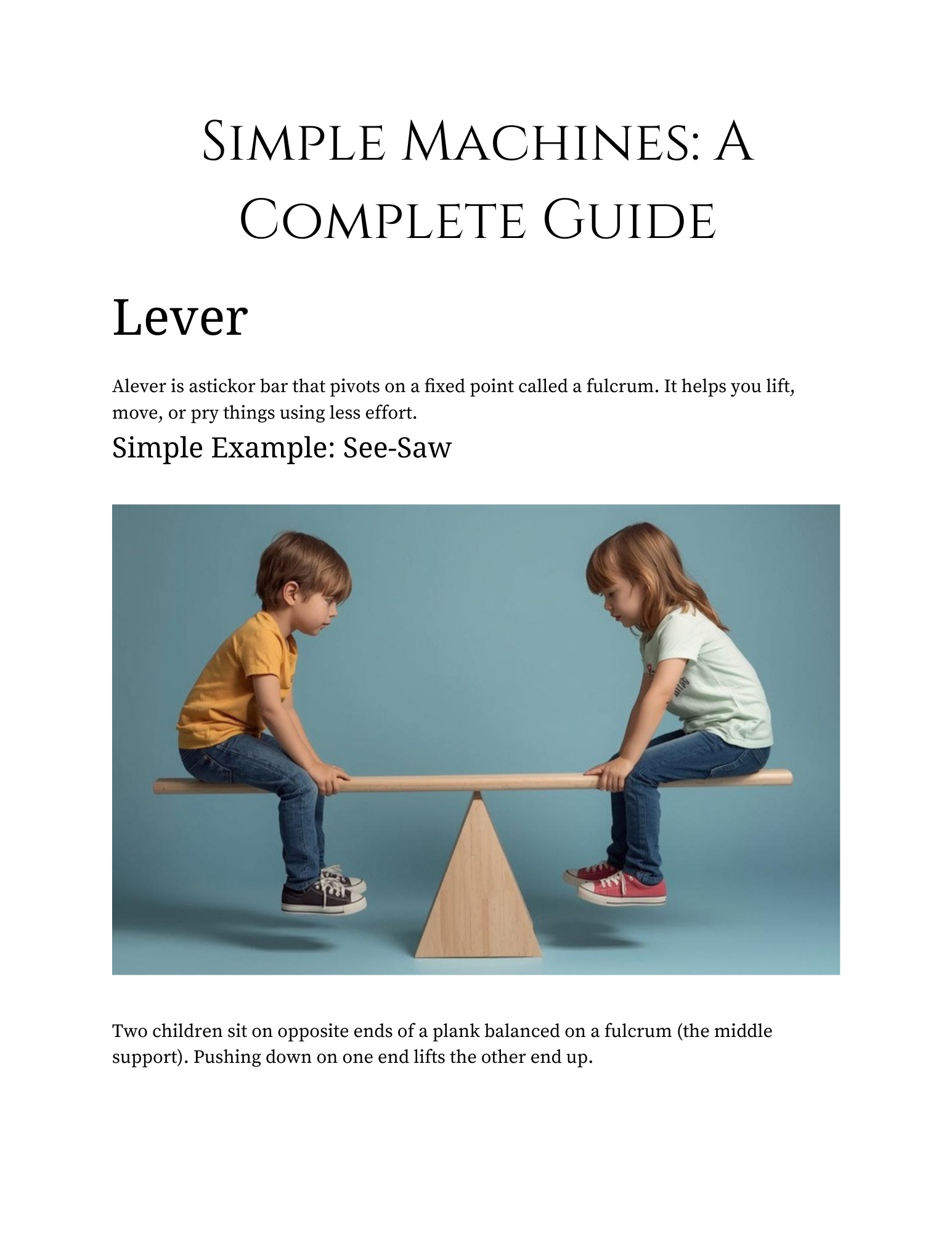
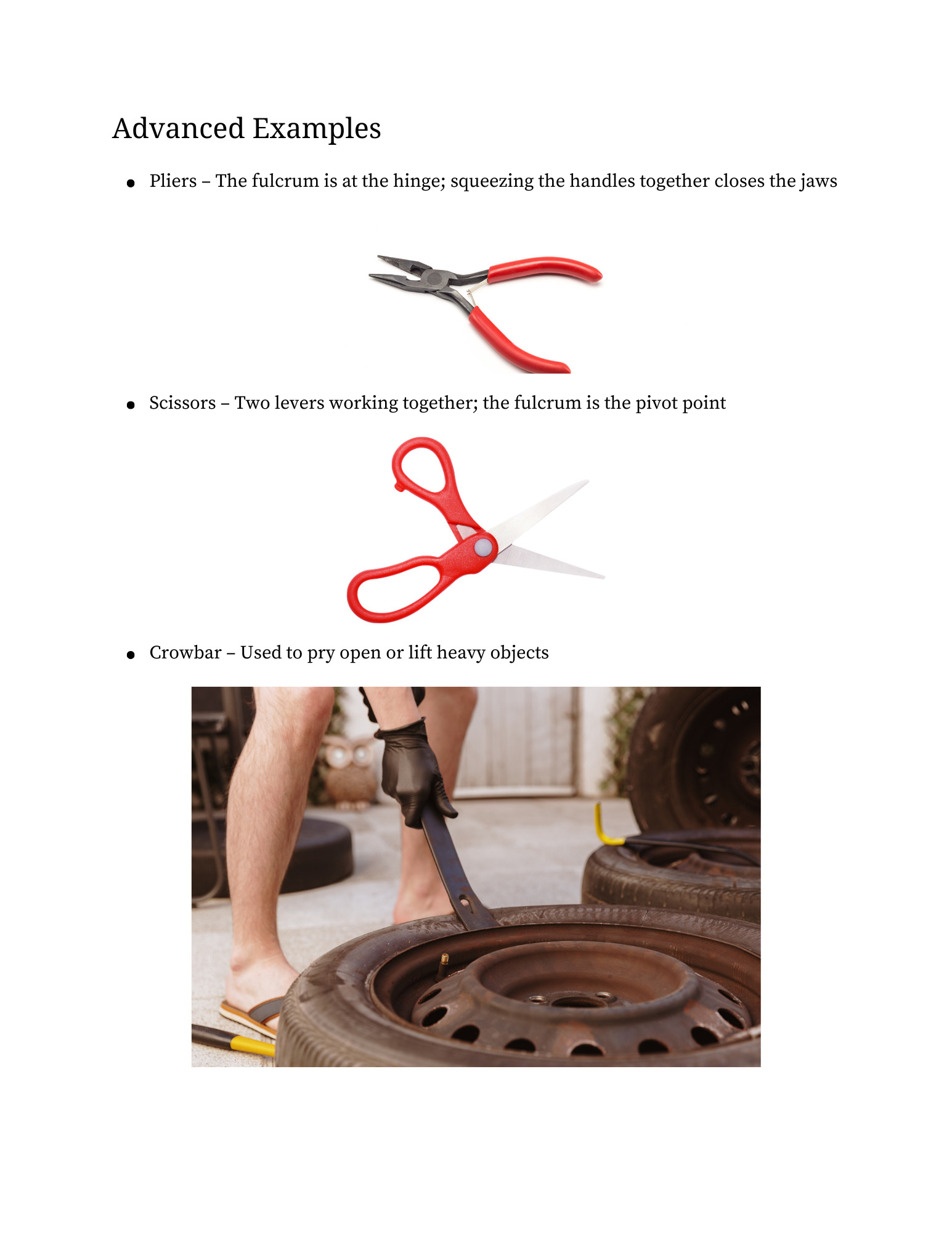
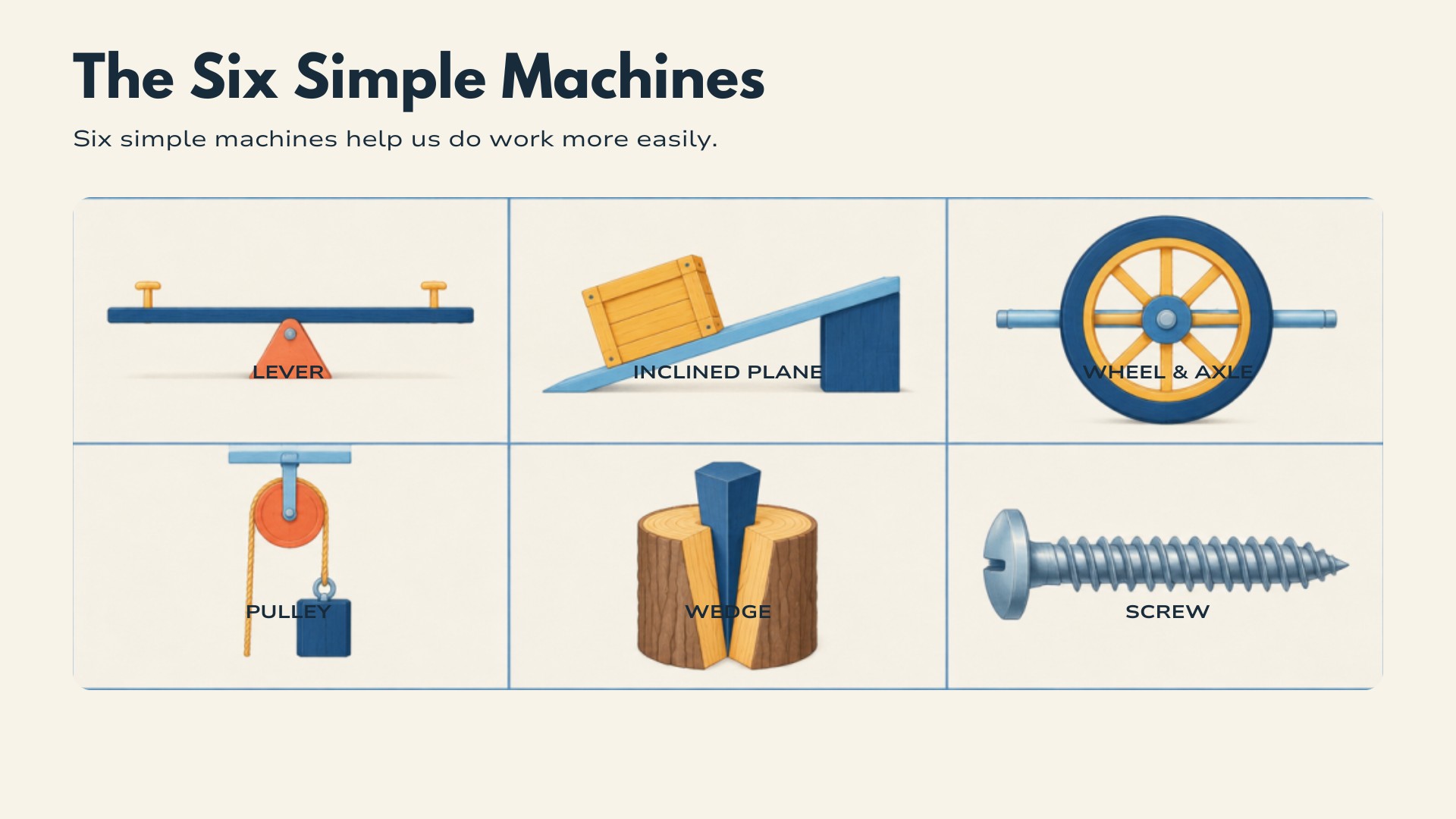
- Simple Machines Guide — Definitions, illustrations, and everyday examples of all six simple machines.
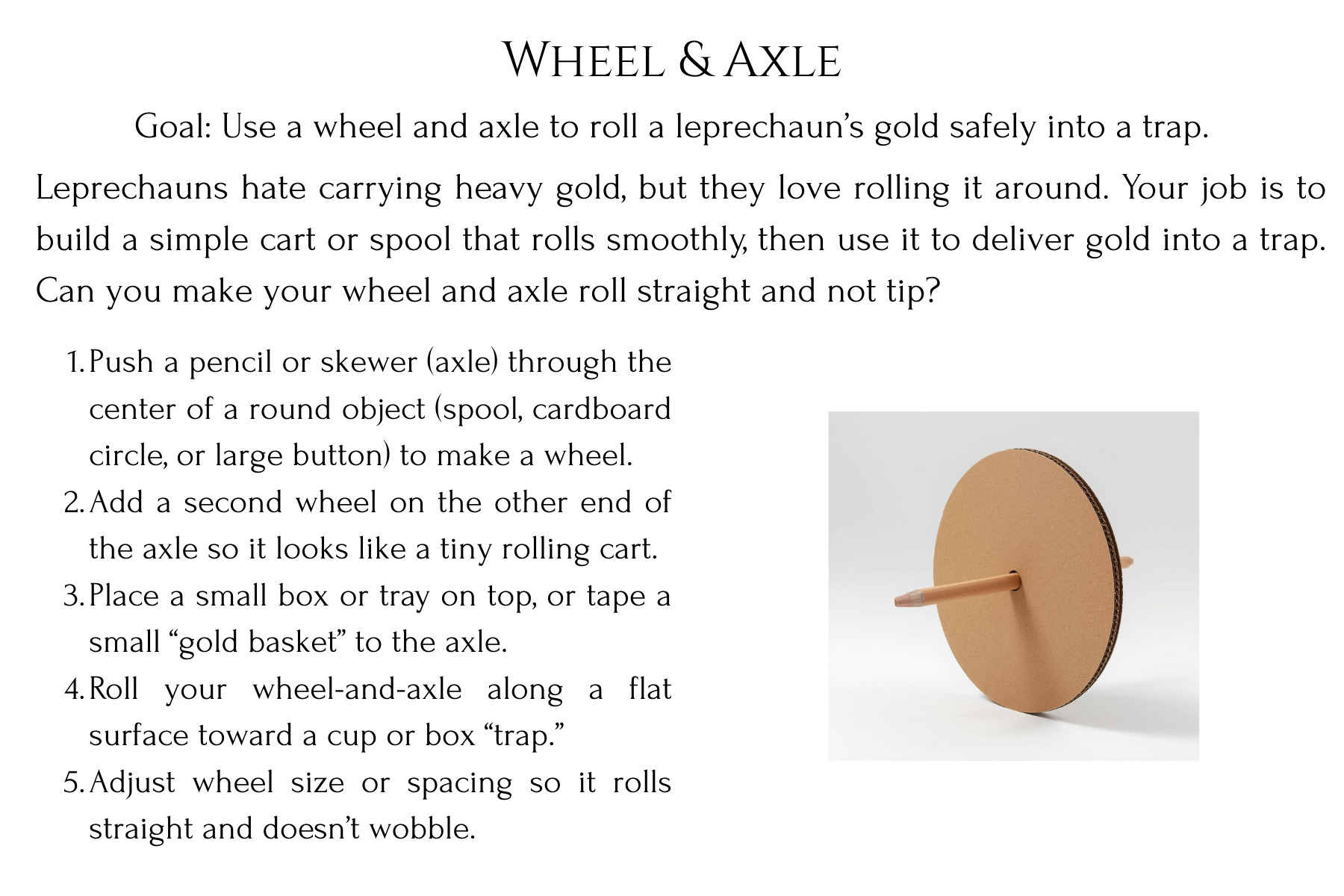
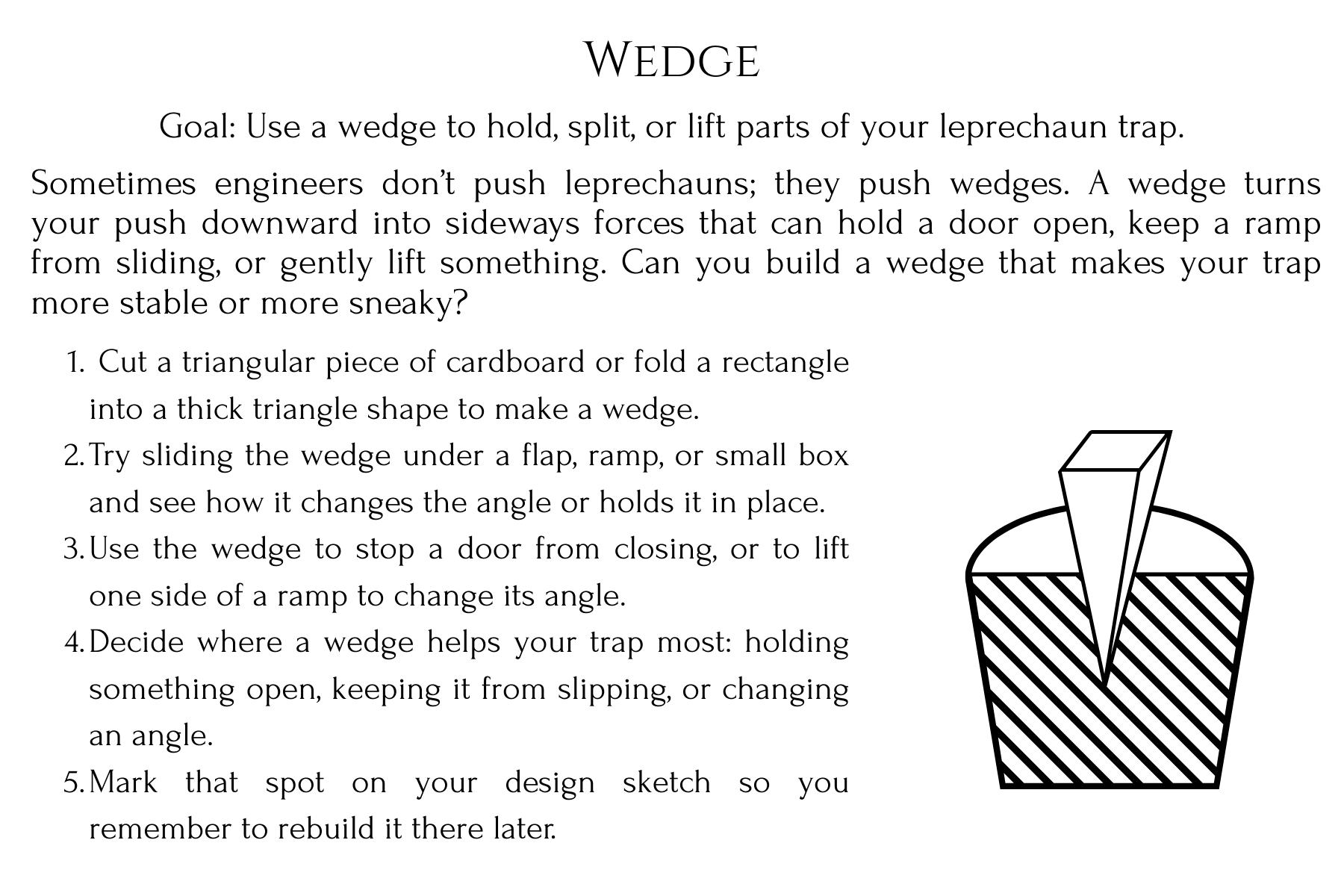
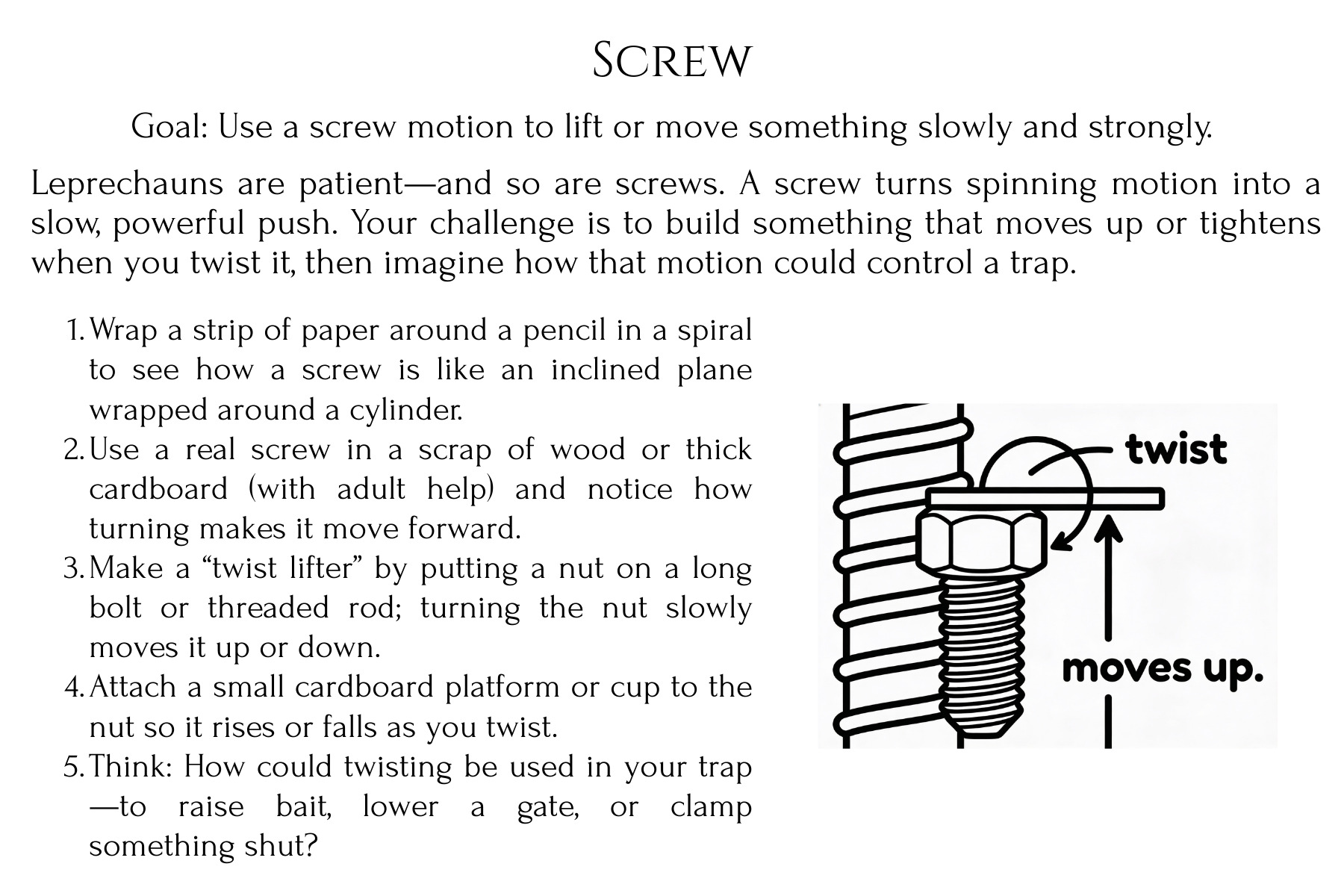
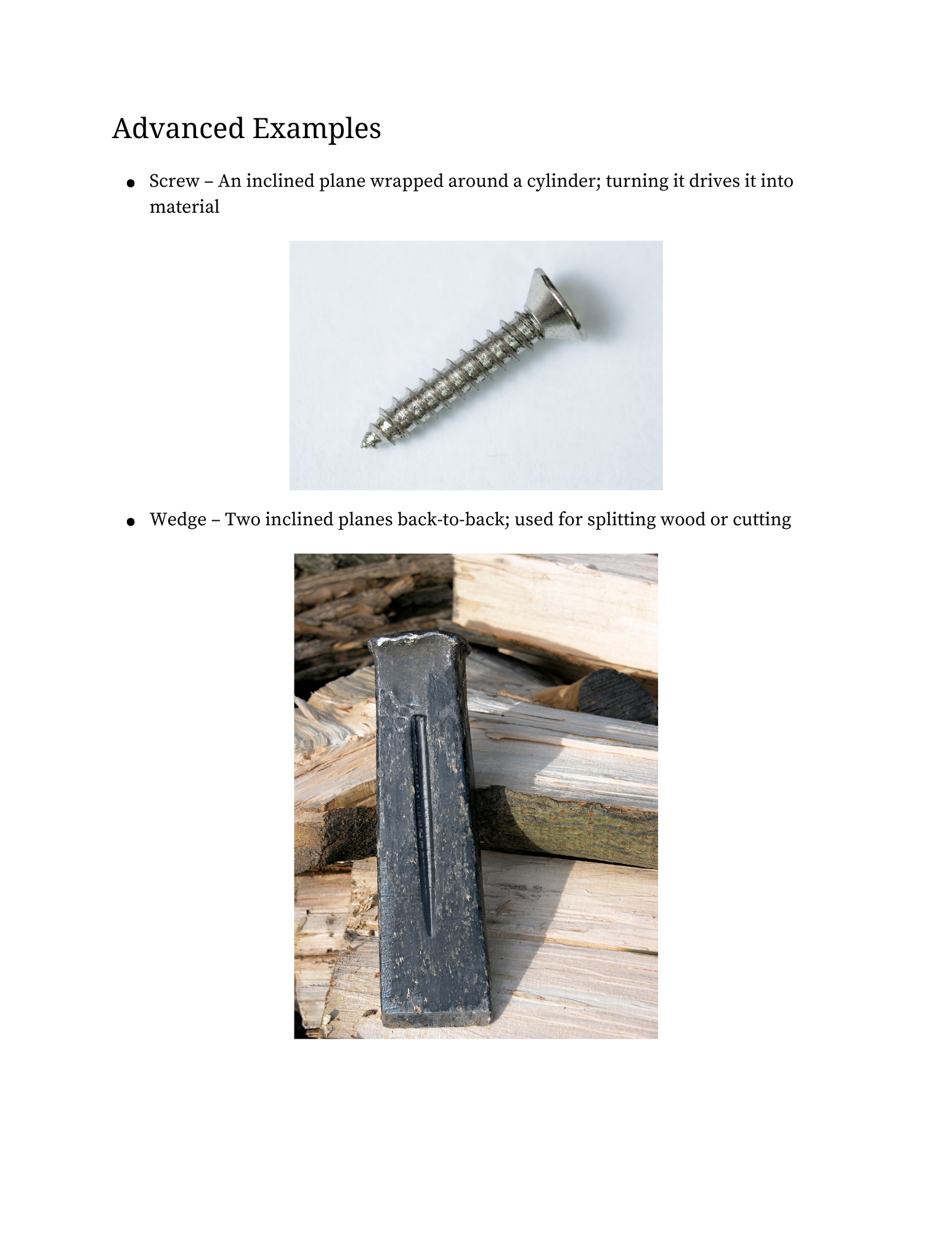
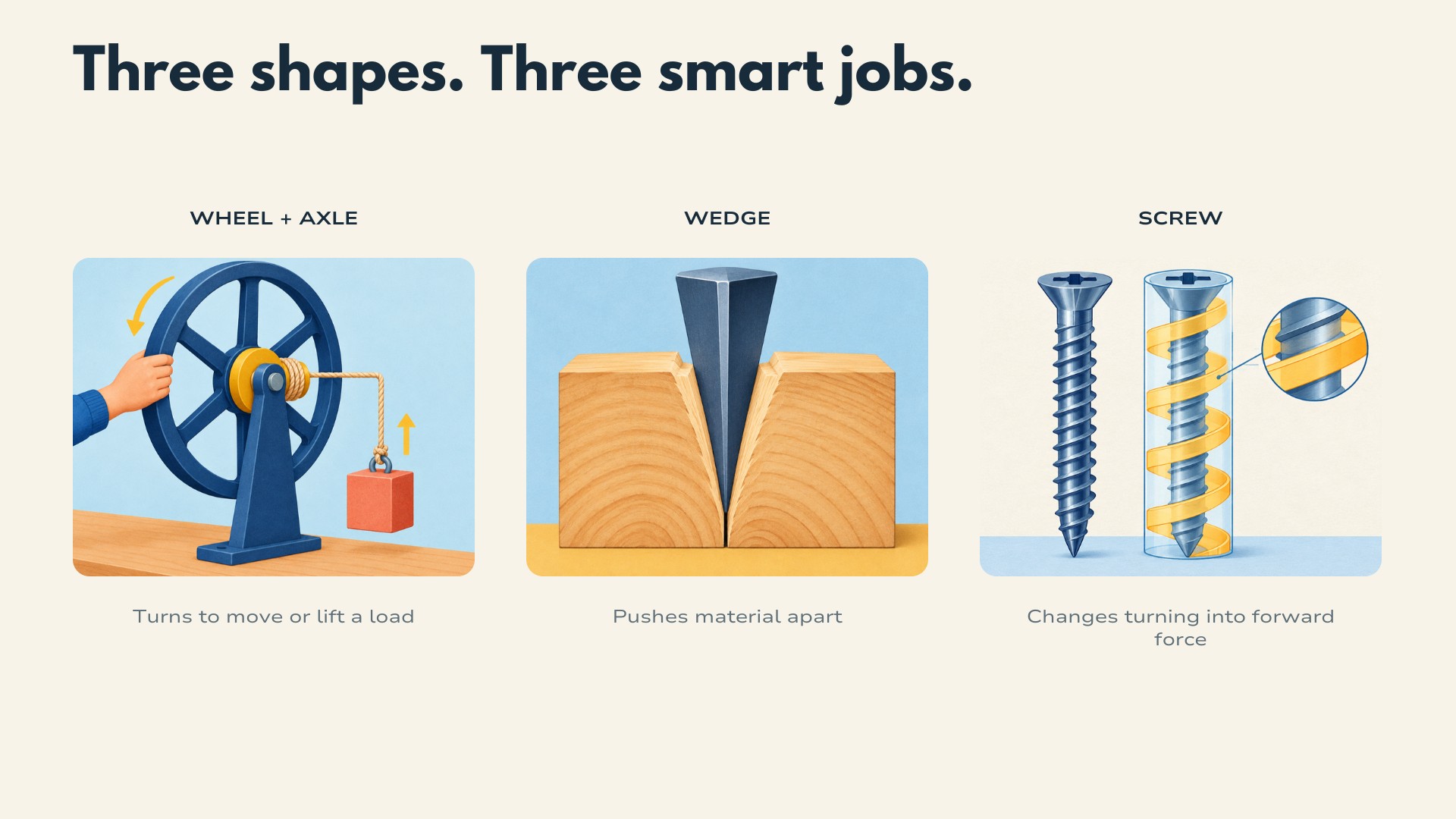
- Story Cards — Building goals, illustrated examples, and simplified instructions for levers, inclined planes, pulleys, wheels and axles, wedges, and screws.
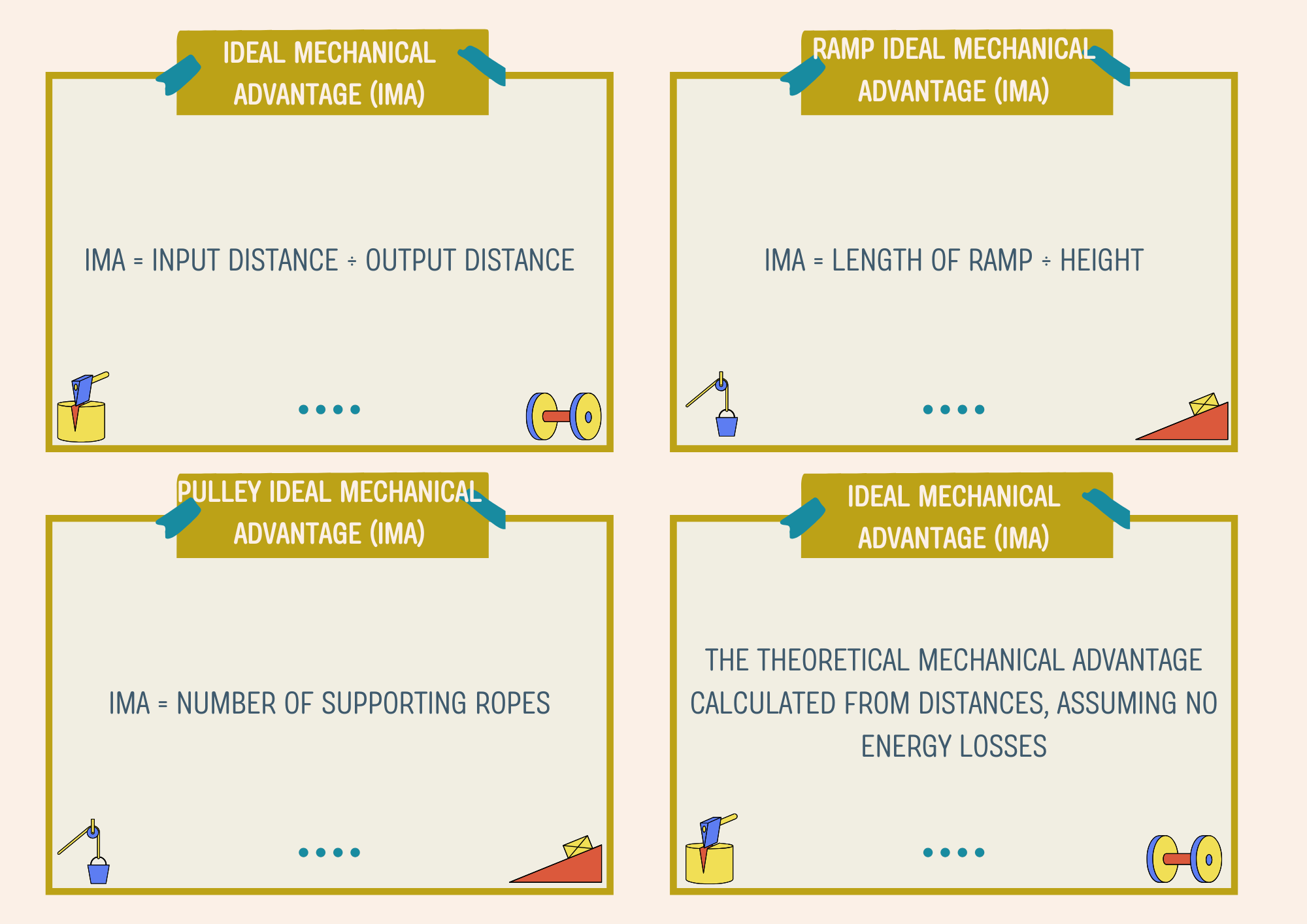
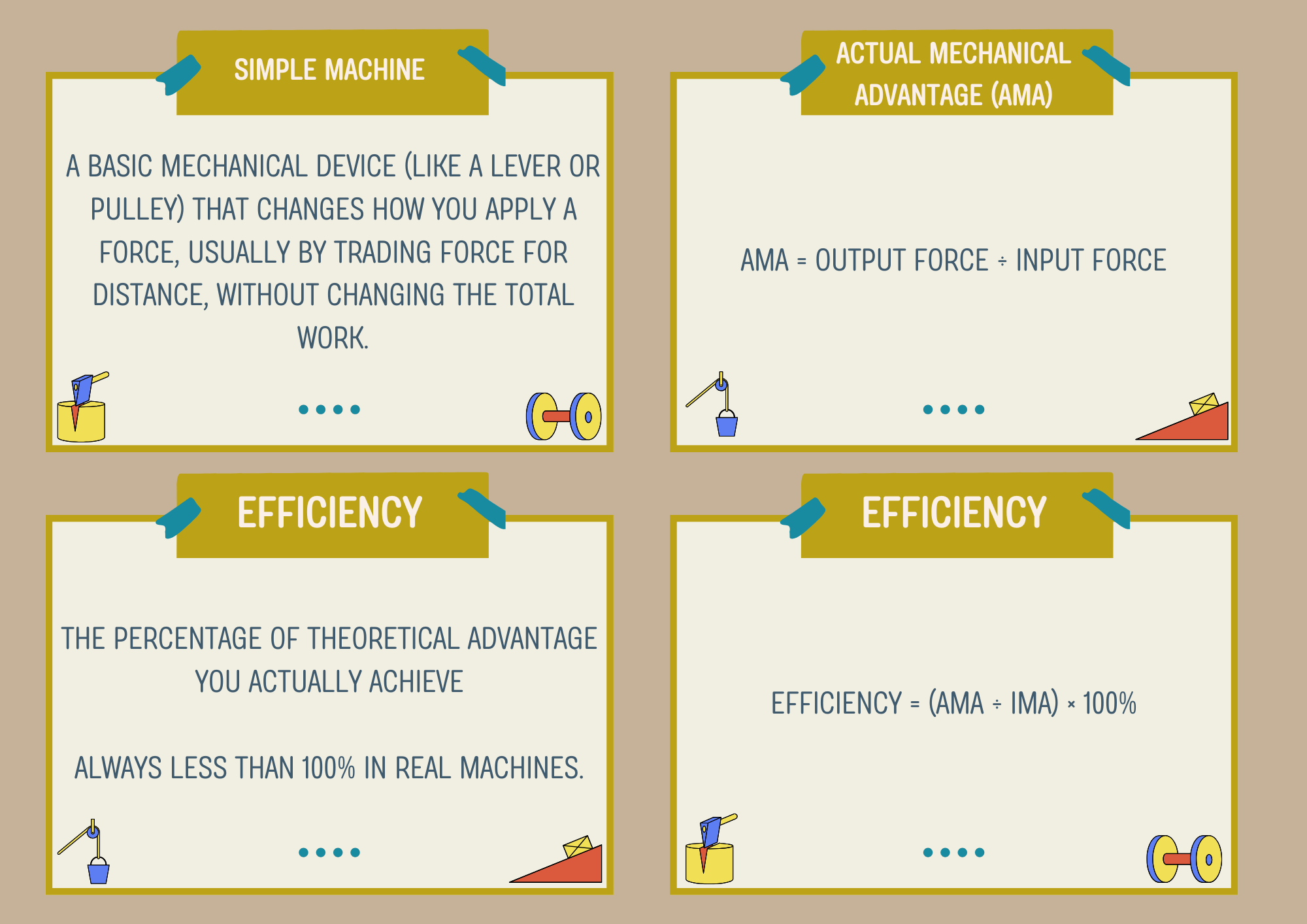
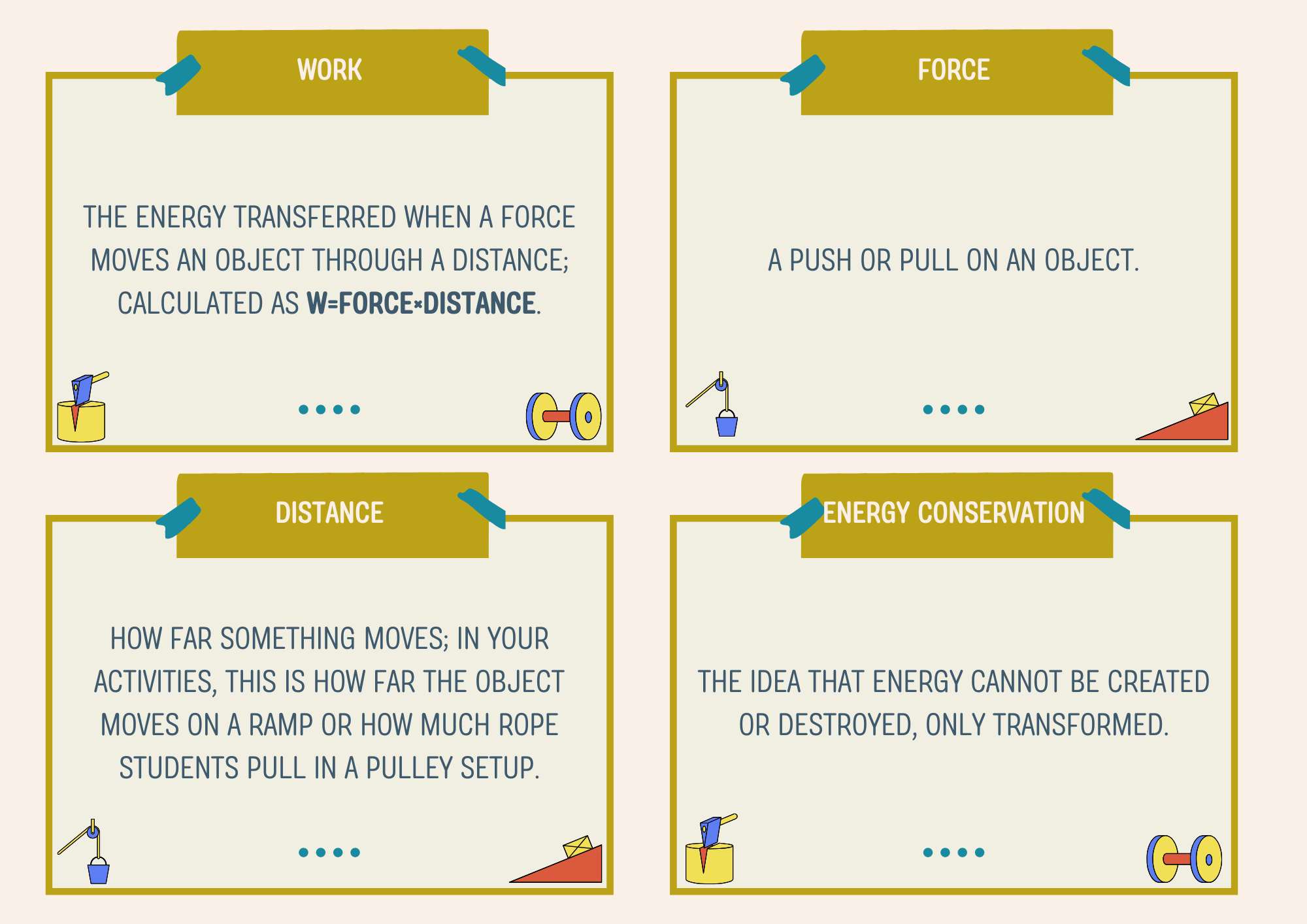
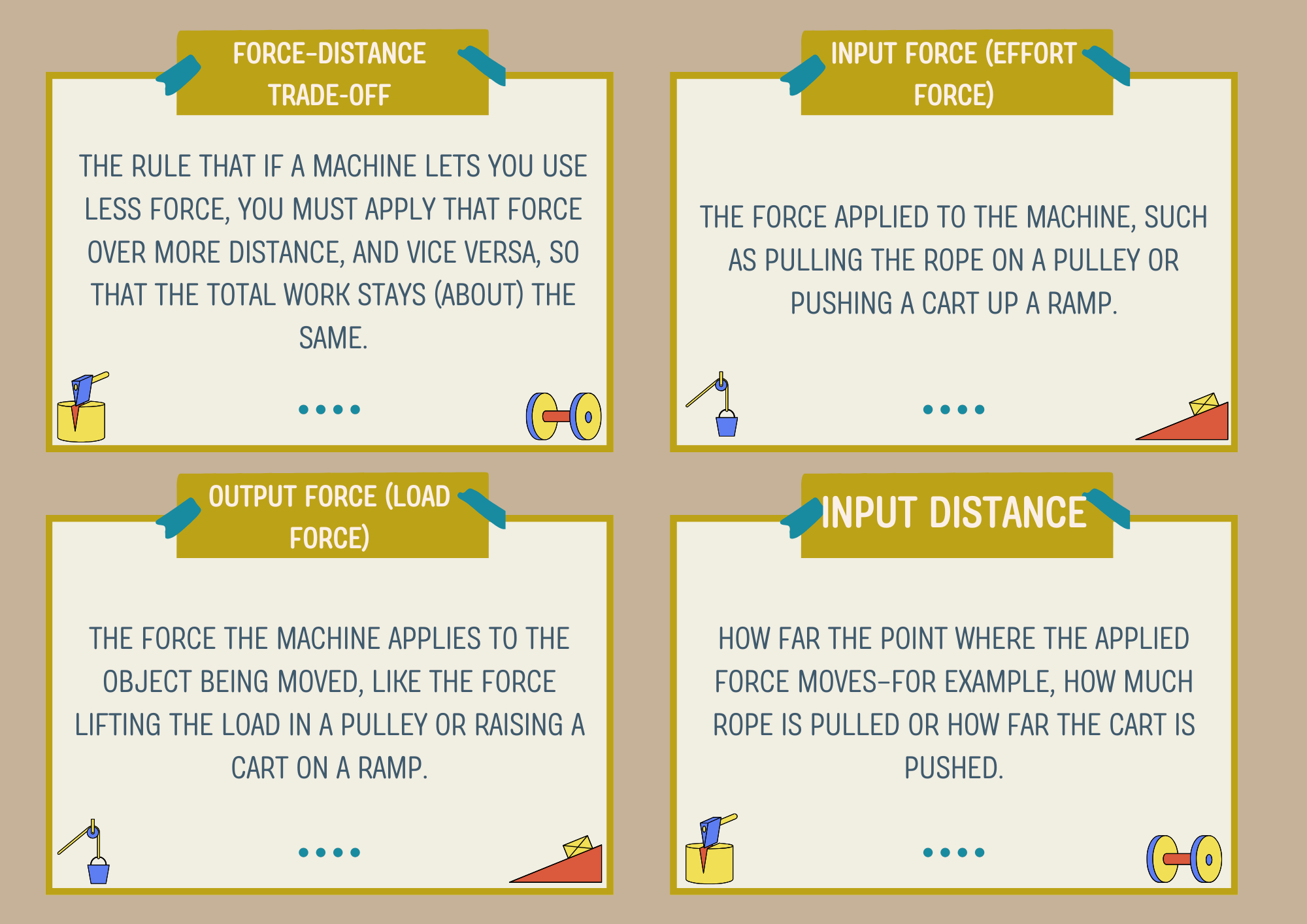
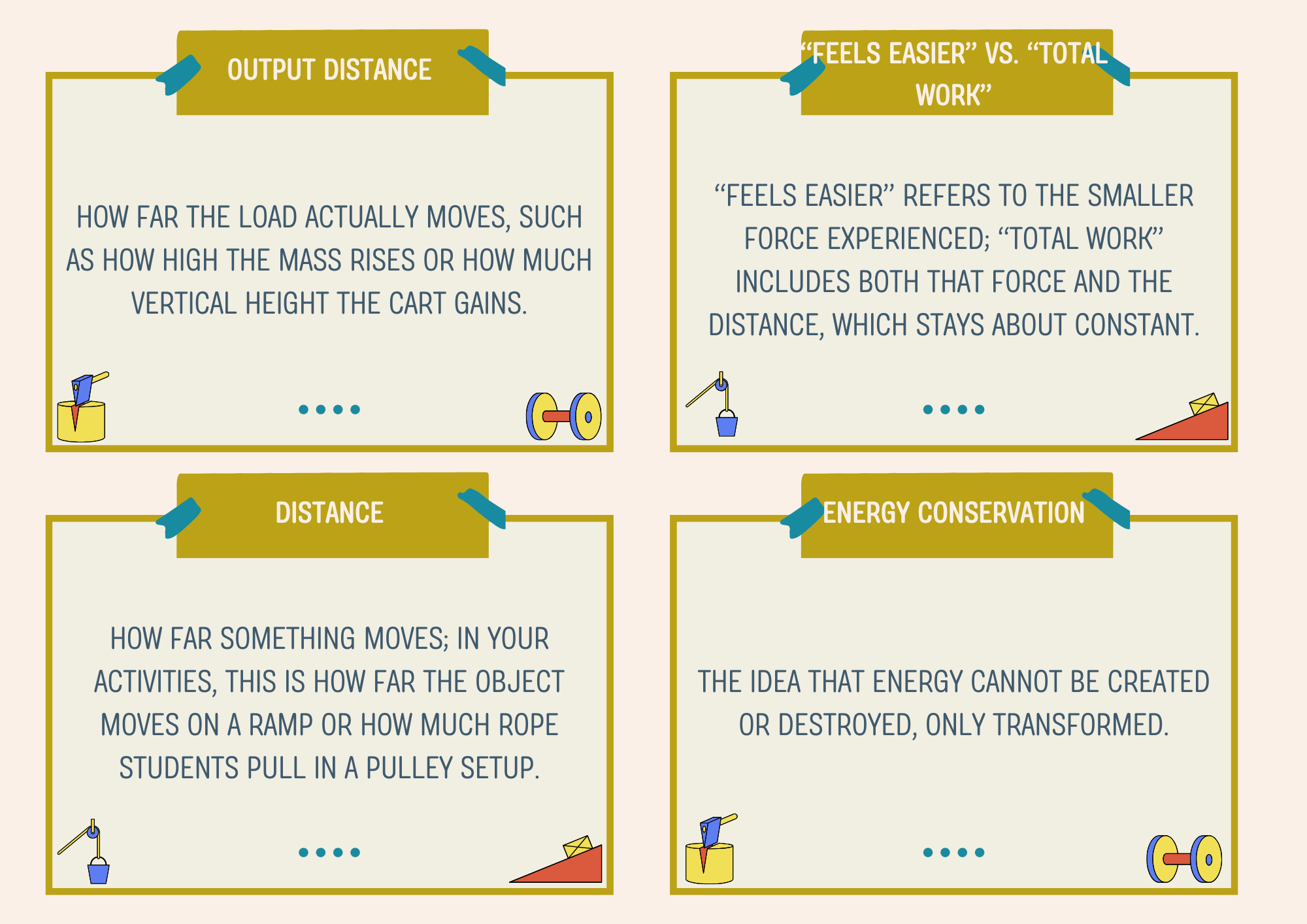
- Vocabulary Cards — Reference support for the science and engineering terms used throughout the unit.
- Lecture Slides — An introduction to the six simple machines, force–distance trade-offs, mechanical advantage, and efficiency.
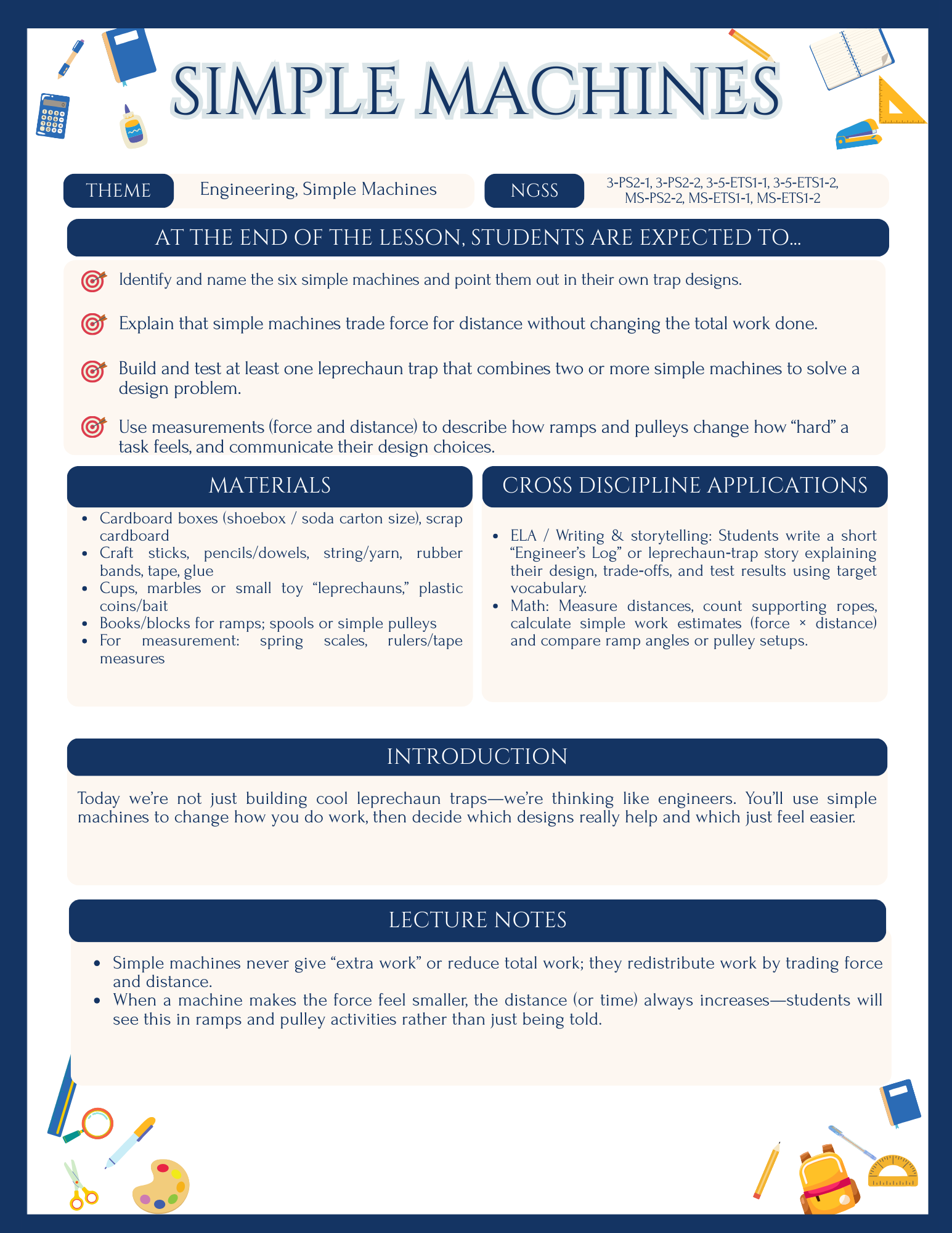
- Expanded Classroom Lesson Plan — Learning goals, NGSS connections, materials, cross-disciplinary applications, introduction, lecture notes, suggested readings, and directions for both activities.
- Recording and Reflection Options — Grade-banded data collection suggestions and journal prompts that move from observation to analysis and personal reflection.
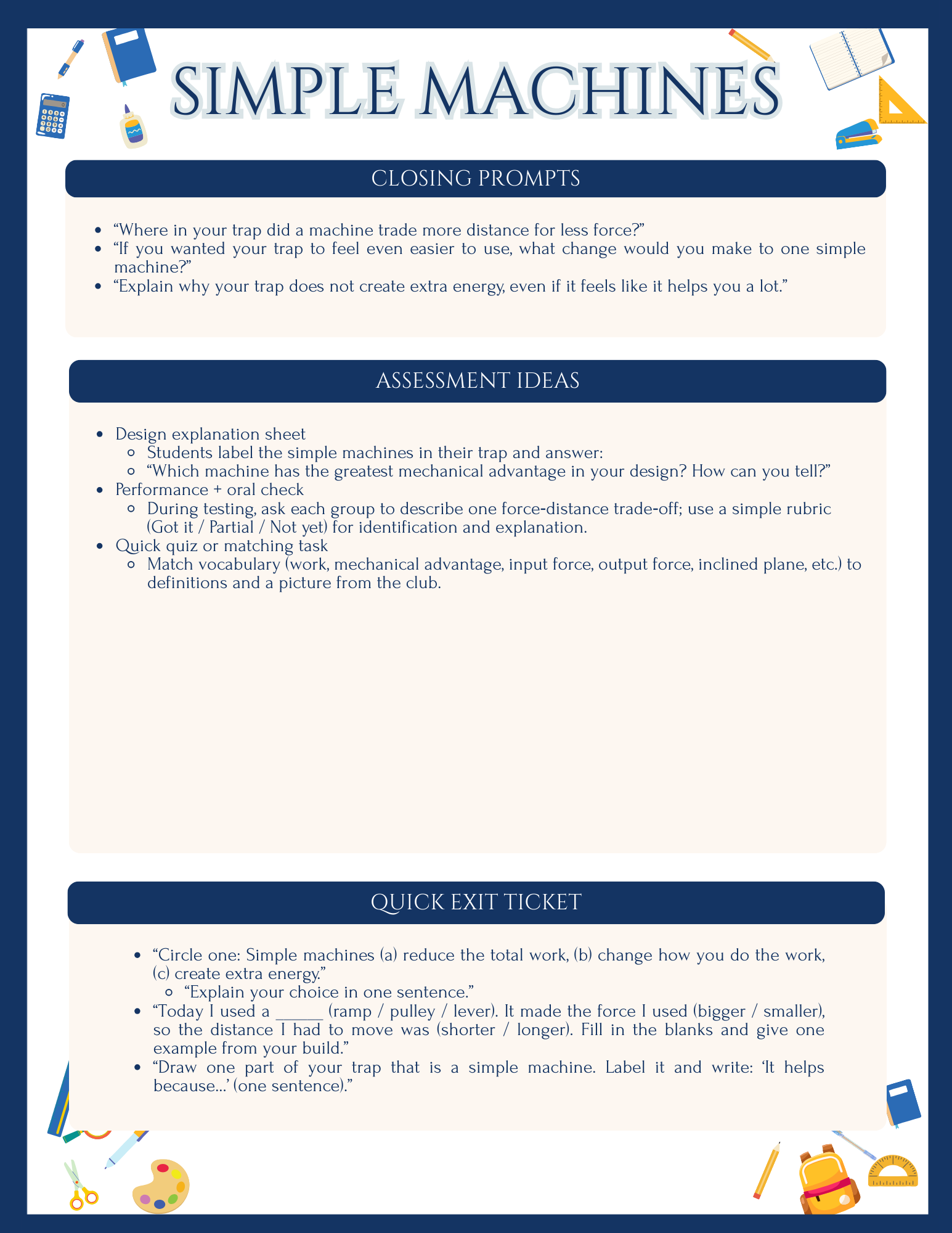
- Assessment Support — Assessment ideas, closing prompts, and quick exit tickets.
- Troubleshooting and Extensions — Practical build guidance, real-world investigations, and cross-disciplinary challenges.
- Science Cheat Sheet — Educator reference notes supporting accurate explanations and common misconception checks.
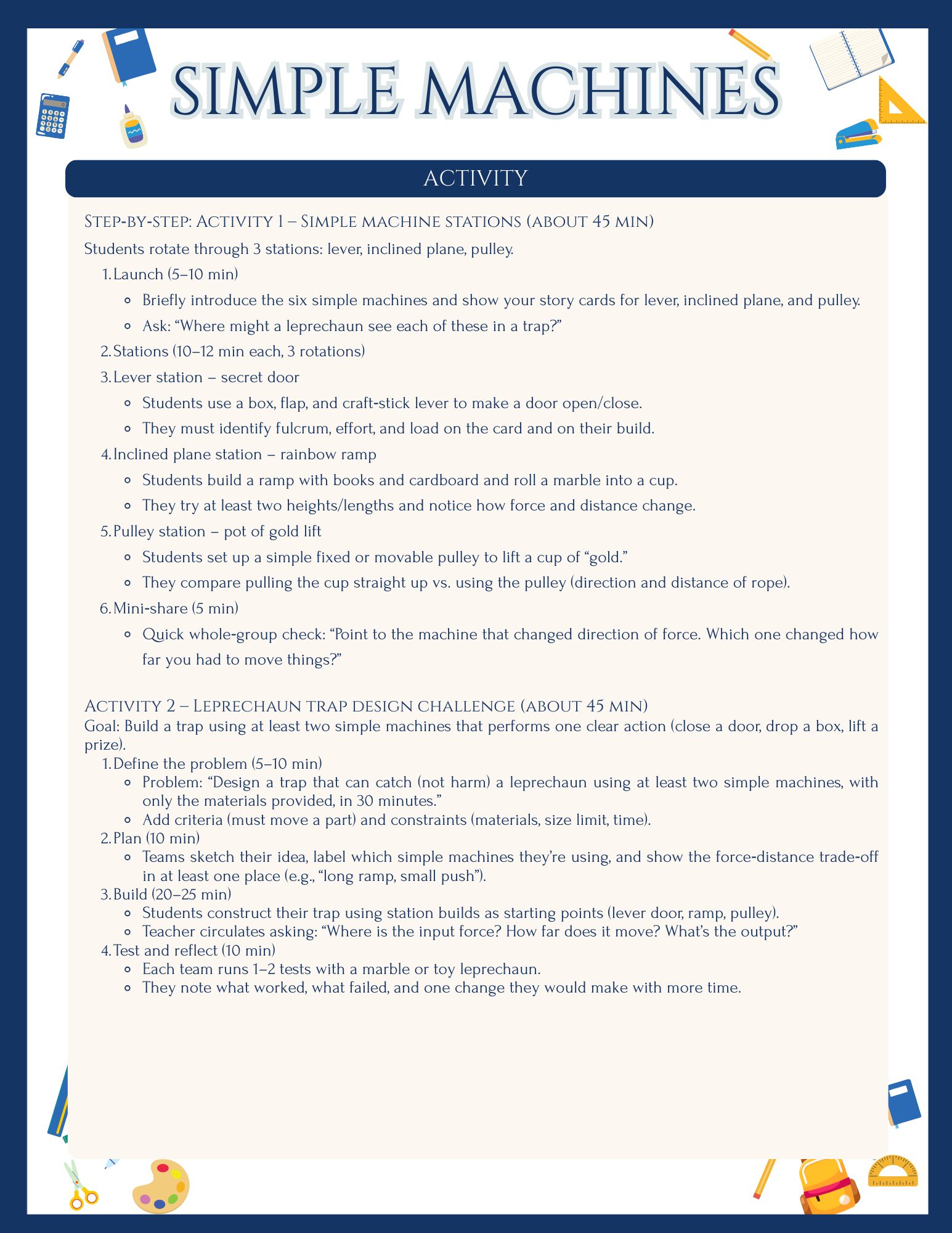
Activity 1: Simple Machine Stations
Students rotate through three stations to build and test:
- A lever-operated flap
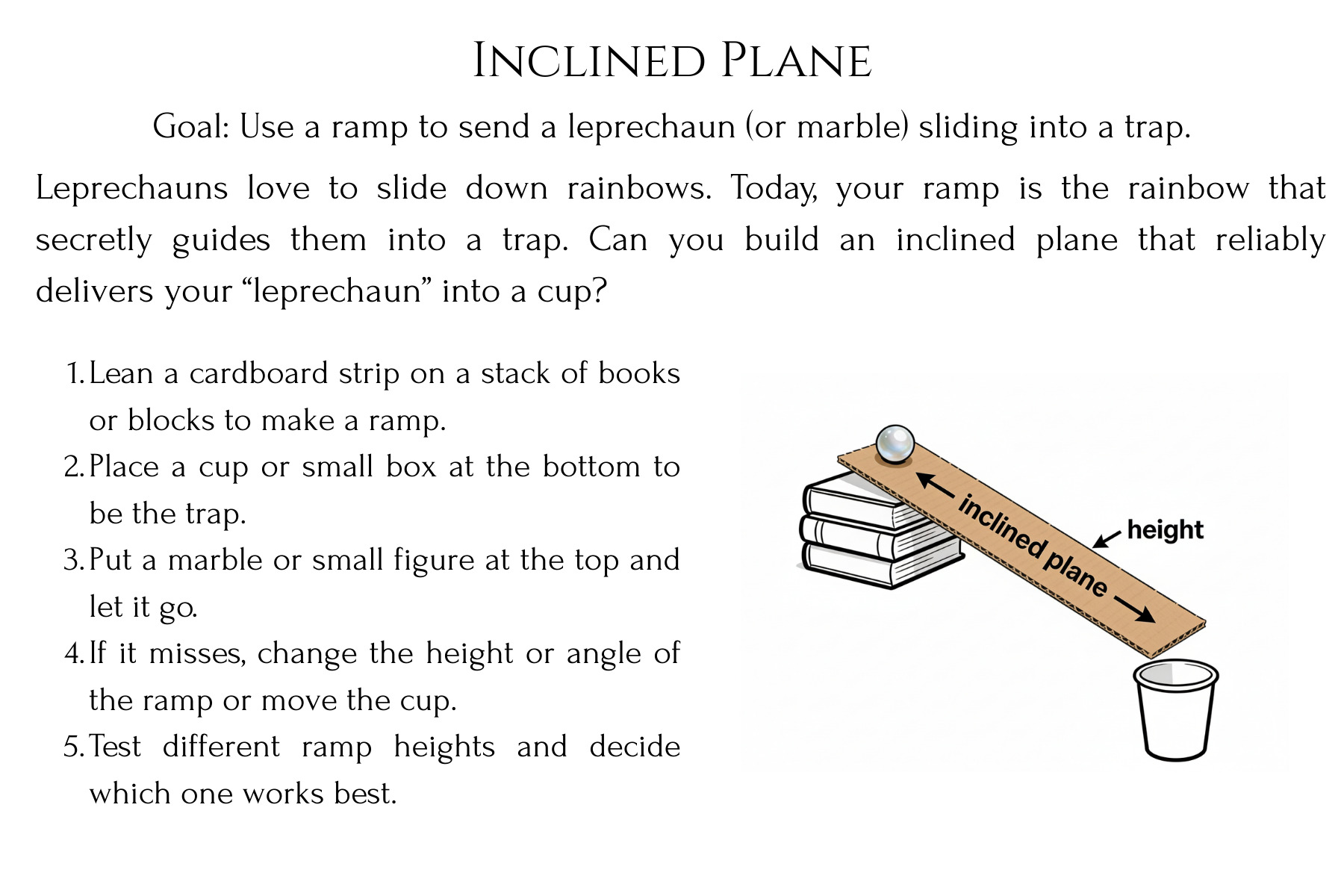
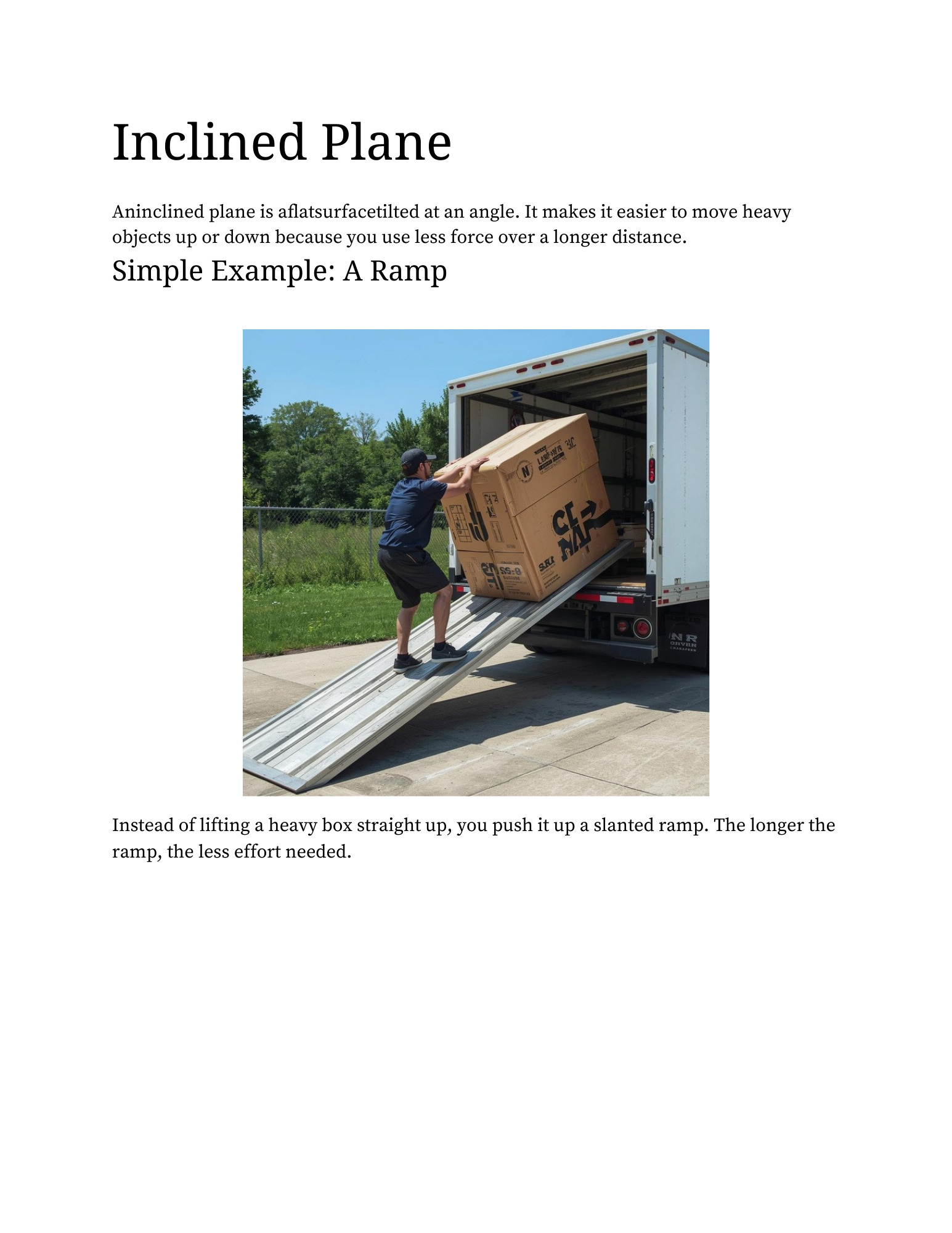
- An inclined plane that guides an object into a target
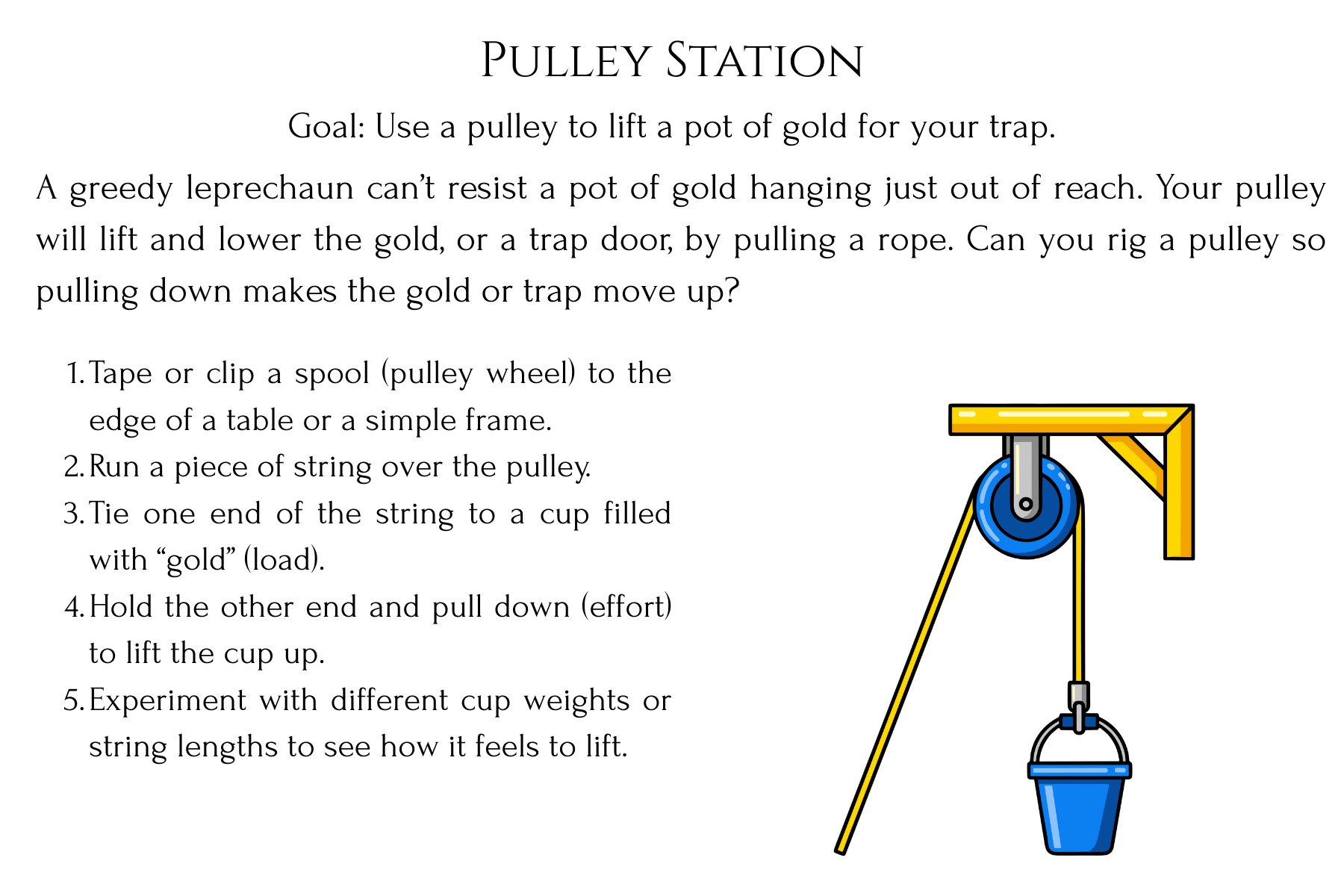
- A fixed pulley that lifts a load
They identify key components, observe what each machine changes, and make adjustments based on their tests. The story cards and completed examples provide a starting point without removing opportunities for investigation.
Activity 2: Engineering Design Challenge
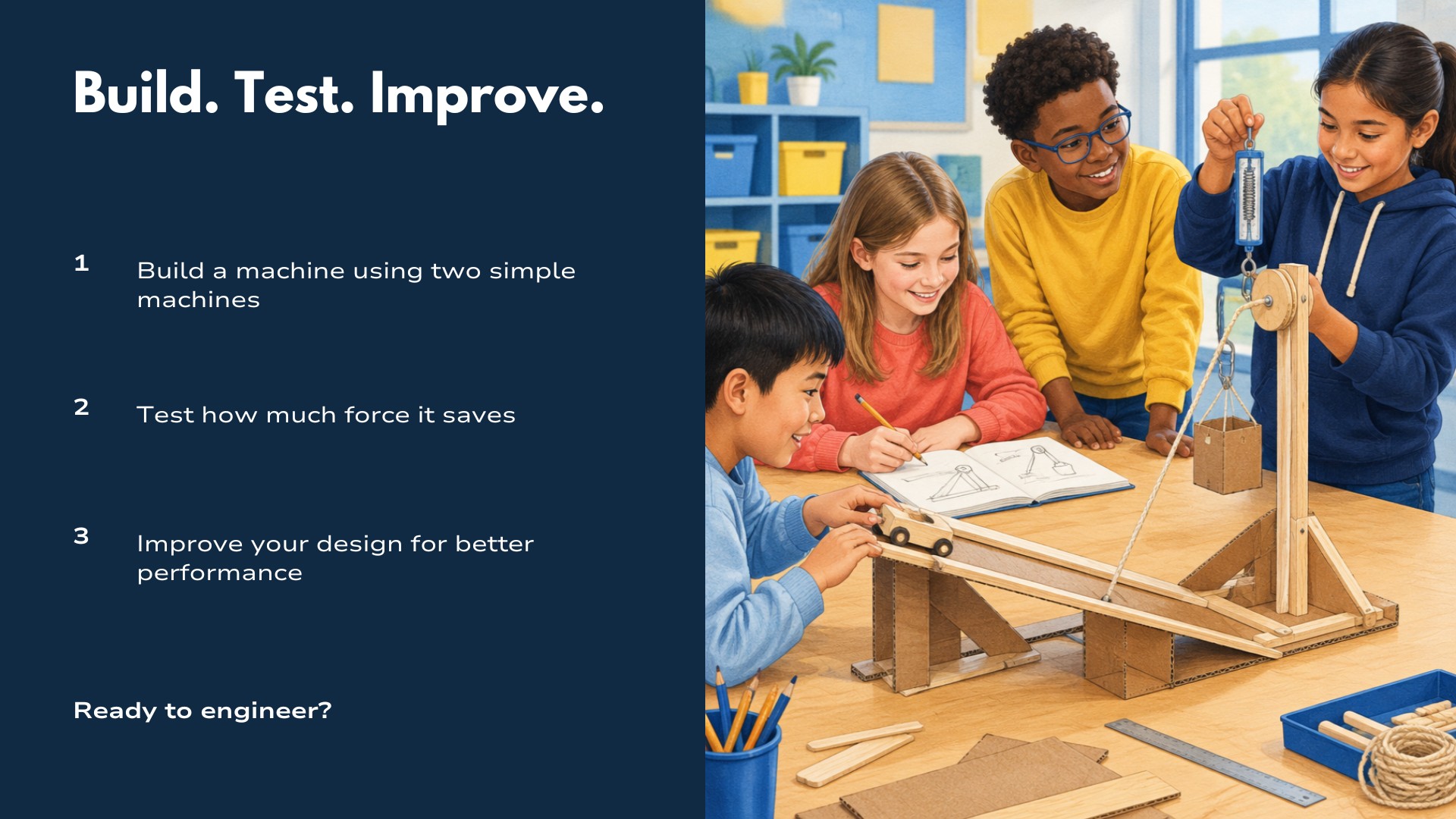
Students reuse or modify their station builds to create a device with two purposeful simple machines, one starting action, and a clear final action.
Teams sketch their plans, test the machines separately, connect them, and run repeated trials. They record where the design succeeds or stops, change one feature, and explain how their revisions affect performance.
Build Understanding Alongside the Device
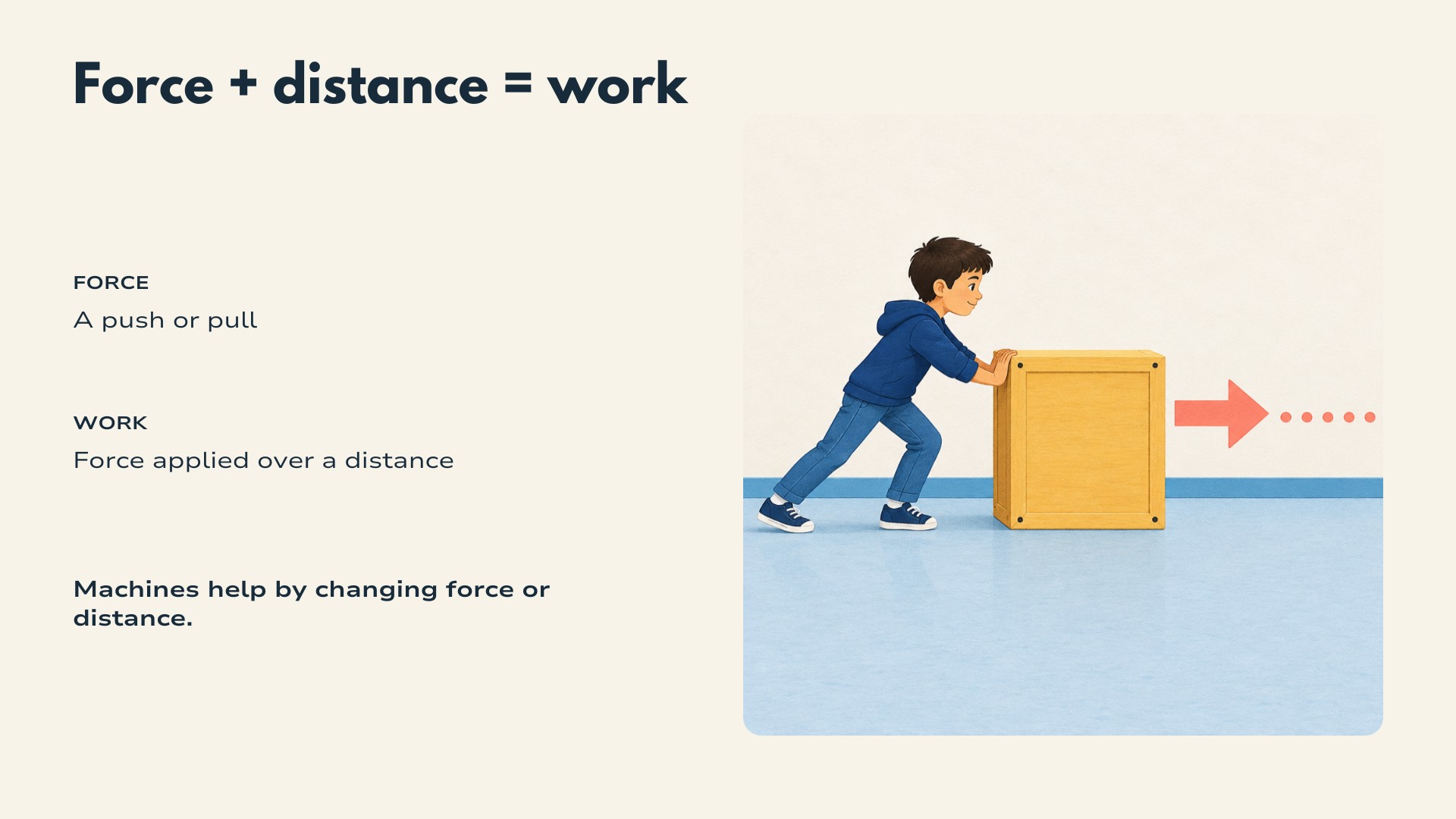
The unit connects construction to the science behind it: force, direction, distance, work, and energy. Students consider how machines make tasks more manageable without creating energy or providing “free work.”
For younger or less experienced learners, recording can focus on drawings, labels, observations, and trial results. Older students can extend their investigations with force and distance measurements, mechanical-advantage calculations, and comparisons between ideal and real performance.
Classroom Support Without a Rigid Script
The expanded lesson plan gives educators clear activity directions, discussion and reflection opportunities, troubleshooting guidance, and multiple ways to assess understanding.
Use the materials as a short classroom sequence, a science-station rotation, or a longer engineering mini unit. Extensions connect the builds to mathematics, technical writing, budgeting, and everyday technology.
Planning and Materials
The two core activities take approximately 95 minutes, with additional time needed for instruction, transitions, discussion, and cleanup. They can also be divided across class periods.
Most builds use cardboard and common craft materials. Spring scales and measuring tools support the optional quantitative investigations. Review the materials list before beginning; building supplies are not included.
Which Edition Is This?
The Classroom Edition is part of Tinker Tracks and includes lecture slides and expanded curriculum, teaching, and assessment support. The separate Quick Lab Edition offers a more streamlined lesson format.
Licensed for one educator’s use with their classes. Separate school and district licenses are required for broader use or sharing across programs.


Reviews
There are no reviews yet.