Home » Had to blow the dust off of these: Grace

Author: Grace

I'm a "dirt-ologist". I love studying the interface of human and environment interaction, often asking the rather rhetorical question: "Do we change the landscape, or does the landscape change us?"

I also captain the ISS Insanitekian, a startup adventure of a lifetime.

Ion Exchange Chromatography: History, Principles, and Real‑World Applications

Ion exchange chromatography (IEX) is a liquid chromatography technique that separates molecules by their charge using a charged stationary phase and an aqueous mobile phase. It is a workhorse for purifying proteins, nucleic acids, and inorganic ions in both research and industry .​ Brief history Early observations of ion exchange date back to 19th‑century soil …

Keep going...

From Earth to Lab: How Crystals Form and Power Our Technology

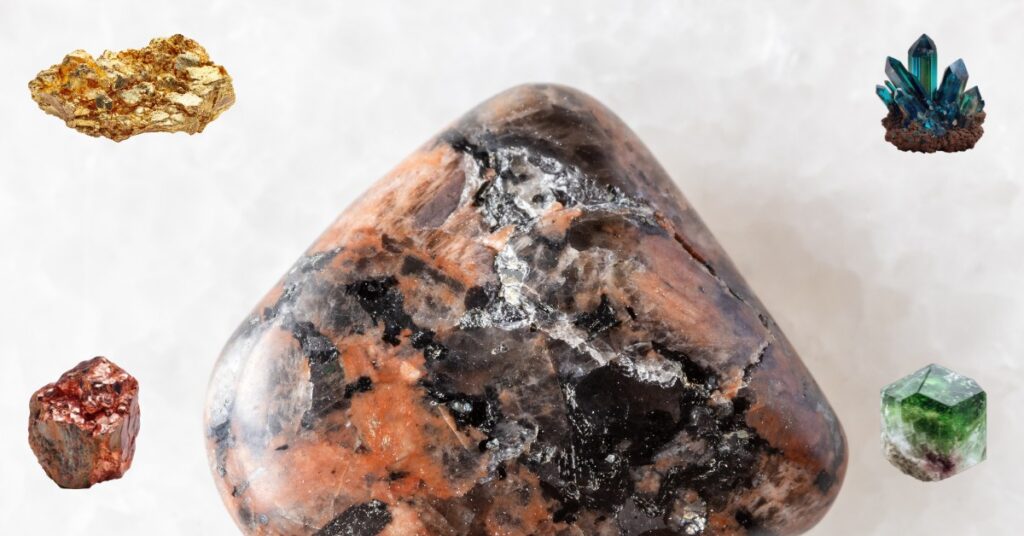
Crystals are what happens when matter gets organized. Atoms, ions, or molecules line up in repeating patterns, building solid structures that can be seen with the naked eye or only under a microscope. This invisible order is what gives crystals their characteristic shapes, colors, and properties, whether they form deep underground, in a metal pot …

Keep going...

The Art of Column Chromatography: Science in Motion

Column chromatography is one of those sweet spots where chemistry turns into both art and strategy—a scientific puzzle that rewards patience, planning, and a dash of intuition. At its core, column chromatography is a separation technique born from the principle that molecules have personalities. Some like to stick; others prefer to drift along. The method …

Keep going...

chromatography image by Geoffrey Whiteway

Thin Layer Chromatography: A simple Window into Separation

Thin Layer Chromatography (TLC) is one of the most approachable yet powerful chromatography techniques. Building on the foundations of paper chromatography, TLC offers clearer results, faster separations, and more flexibility for scientists in the lab as well as learners in the classroom. Thin Layer Chromatography: A Brief History Thin Layer Chromatography (TLC) emerged from scientific …

Keep going...

The History of Visual Mathematics

Visual mathematics, the practice of representing mathematical concepts through diagrams, drawings, or models, has played an important—though often debated—role in how humans have understood and advanced mathematics throughout history. Ancient and Classical Origins Some of the earliest traces of visual mathematics are not what you think they are. Maps, geometric diagrams, and other visual artefacts …

Keep going...

W – Method of Multiplication: History and Uses

If you’re anything like a majority of the world, you’ve never heard of visual math methods, let alone specific ones you can use as “short cuts” to make things easier. In this case, we are going to dive into the W-method of multiplication, it’s brief history, and how to use it. History of the W-Method …

Keep going...

black man holding skateboard and notebook

Does Exercise REALLY Help Students Focus and Perform Academically Better?

We hear it all the time for the elderly: Exercise increases cognitive abilities and staves off Alzheimer’s. We hear that exercise makes us age more slowly over all. But what about young people? What about people with ADHD or other cognitive “divergences.” The answer, like everything else in science, is “it’s complicated,” but it’s also …

Keep going...

How Fertilizer and Science Education Are Tied Together by Justus Liebig

Justus Liebig (1803 – 1873) was a German chemist that not only did groundbreaking work in organic chemistry and biological chemistry, he also transformed chemistry education and universities to be more inclusive of a variety of topics . The Man: Justus Liebig Justus von Liebig was born in 1803 in the south-central of Germany in …

Keep going...